2026 Best Stainless Steel Wire Options for Your Projects?
In the world of manufacturing and construction, choosing the right materials is crucial. Stainless Steel Wire has emerged as a popular choice for various applications. Renowned expert, Dr. Mark Fenwick, notes, "The right Stainless Steel Wire can determine the success of a project." His insights shed light on the importance of quality and specifications.
When selecting Stainless Steel Wire, factors like strength, corrosion resistance, and flexibility must be considered. Each project demands specific wire types. For instance, some jobs require high tensile strength, while others may need resistance to harsh environments. There’s no one-size-fits-all solution. Understanding your project’s needs is essential.
Moreover, not all suppliers provide high-standard products. Some wires may look good but fail under pressure. Clients often overlook this aspect, leading to project setbacks. It’s important to be vigilant in choosing Stainless Steel Wire suppliers. Reflecting on these details can profoundly impact your project’s outcome and success.

Overview of Stainless Steel Wire Types for Various Projects
When selecting stainless steel wire for your projects, consider the various types available. Each type serves a specific purpose. For example, 304 stainless steel is versatile and often used in general applications. It offers good corrosion resistance and durability. On the other hand, 316 stainless steel is better for marine environments due to enhanced resistance to saltwater. Choosing the right type affects your project's longevity and performance.
Tips: Always check the wire's tensile strength. It should match the demands of your project. Consider the wire's diameter too; a thicker wire provides more strength but can be harder to work with.
Welding wire has different specifications. It typically requires different handling compared to non-welding wire. Understanding these specifications is crucial. It’s easy to overlook these details, but a wrong choice can lead to project failure. Remember to analyze your project's requirements carefully before making a decision.
Key Properties of Stainless Steel Wire to Consider for Selection
When choosing stainless steel wire for your projects, focus on key properties like tensile strength, corrosion resistance, and flexibility. Tensile strength is vital. Strong wire can withstand higher loads without breaking. Reports indicate that stainless steel wire can have a tensile strength ranging from 200 to over 2,000 MPa, depending on its grade.
Corrosion resistance is another critical property. Stainless steel contains chromium, which helps form a protective layer. This layer prevents rust and prolongs the wire’s life. Research shows that grade 304 and 316 stainless steel offer excellent resistance to corrosion in various environments. However, if exposed to harsh chemicals, even stainless steel can fail.
Tip: Always consider the environment in which the wire will be used. Chemical exposure can be detrimental.
Flexibility matters, too. Some projects need wire that bends easily without breaking. The right flexibility can make a difference in how your project performs. However, flexibility often compromises tensile strength. Find a balance that meets your needs.
Tip: Test samples of different wires before making a large purchase. This can save time and money.
2026 Best Stainless Steel Wire Options for Your Projects
| Wire Type |
Diameter (mm) |
Tensile Strength (MPa) |
Corrosion Resistance |
Applications |
| Type 304 |
0.5 |
520 |
Good |
Food industry, architecture |
| Type 316 |
0.8 |
620 |
Excellent |
Marine applications, chemical processing |
| Type 430 |
1.0 |
450 |
Moderate |
Automotive, household appliances |
| Type 2205 |
0.6 |
750 |
Very Good |
Oil and gas applications |
Top Brands and Manufacturers of Stainless Steel Wire in 2026
In 2026, the landscape of stainless steel wire options is evolving. With the industry's growth projected at 5.1% annually, the focus on quality is more important than ever. Many manufacturers are striving to meet rising standards. Stainless steel wire is essential for various applications, from construction to automotive components.
Top brands prioritize innovation in material science. They push for enhanced strength and corrosion resistance. According to a recent market analysis, 70% of users prefer high-grade stainless steel for its longevity. However, not all manufacturers maintain these standards. Quality assurance remains a critical concern in the production process. Some wires fail under stress, sparking debates about reliability.
Moreover, environmental sustainability is becoming a top priority. Many manufacturers are exploring eco-friendly practices in wire production. Reports suggest a shift towards recycled materials to minimize waste. However, achieving this balance is challenging. The desire for durability often conflicts with eco-conscious methods. The continuous improvement in this sector is fueled by consumer demand and technological advancements. The future of stainless steel wire is bright, yet it requires careful attention to both quality and sustainability issues.
Application Areas for Stainless Steel Wire in Different Industries
Stainless steel wire has diverse applications across industries. It excels in
construction, automotive, and manufacturing. Its durability and resistance to
corrosion make it ideal for various projects. According to a recent market report, the global
stainless steel wire market is expected to reach $8 billion by 2026. This growth highlights the material's
increasing relevance in modern production.
In the construction industry, stainless steel wire is used for reinforcement in concrete structures. It adds strength
and longevity to buildings. Furthermore, in the automotive sector, it serves crucial roles in safety features and engine components.
Innovative designs often require high-quality wire that meets specific standards.
Sometimes, manufacturers overlook the importance of testing these wires under extreme conditions,
which can lead to failures.
Tips: When selecting stainless steel wire, consider its tensile strength
and corrosion resistance. These characteristics are essential for durability. Additionally, be wary
of the project's environmental conditions. The wire must perform well despite various challenges. Always consult technical specifications
for optimal results. Understanding these factors will enhance project outcomes.
Tips for Choosing the Best Stainless Steel Wire for Your Needs
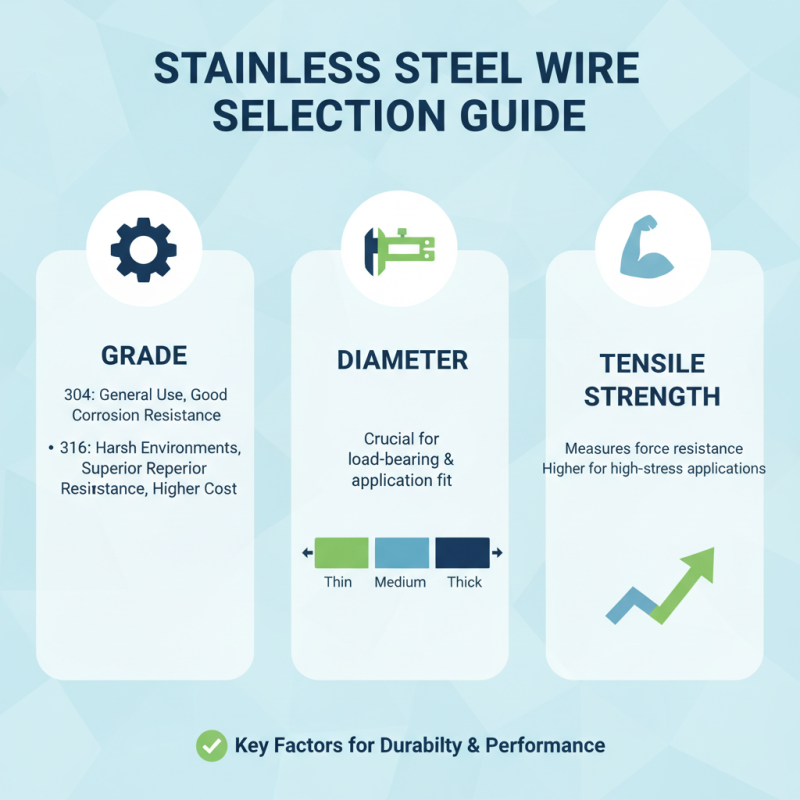
Selecting the right stainless steel wire for your projects involves several crucial factors. The wire’s grade, diameter, and tensile strength are all important considerations. According to industry reports, 304 and 316 grades are commonly used due to their excellent corrosion resistance. However, if your application involves exposure to harsher environments, 316 stainless steel wire might be the better option. It generally costs more but offers superior durability.
Diameter selection also requires careful thought. Thicker wires handle more stress, but they can be harder to work with. Conversely, thinner wires are easier to manipulate but may not support heavy loads. A study from the Metal Fabricators Association indicates that wire diameter can affect the strength-to-weight ratio significantly. As projects vary, it’s vital to choose a diameter that balances strength and ease of use.
You might also want to consider the finish of the wire. Some projects benefit from a smooth finish, while others might need textured wire for better grip. Observe these details closely. An oversight in choosing the right grade or diameter could result in project failures. Reflect on your specific needs and how they align with the properties of stainless steel wire. This will guide you to make informed decisions.

 Angle Steel
 Channel Steel
 Universal Beam (l-Beam)
 H-Beam Steel
 Galvalume Steel Coil
 Galvalume Steel Sheet
 Galvanized Steel Sheet
 Color Coated Plate
 Stainless Steel Bar
 Stainless Steel Pipe
 Steel Bar
 Wire Rope
 Carbon Steel Pipe
 Carbon Steel Plate
 Aluminum Plate
 Aluminum Coil
 Aluminum Pipe
 Aluminum Bar
 Magnesium Ingot
 Fasteners