2026 Best Carbon Steel Angle Guide for Construction and Metalwork?
In the world of construction and metalwork, the use of Carbon Steel Angle is increasingly vital. This material's strength and versatility make it an ideal choice for various applications. From framing to structural support, Carbon Steel Angle provides the durability needed in today's demanding environments.
As we look ahead to 2026, industry standards and innovations will evolve. The upcoming Canton Fair highlights these changes, particularly in advanced manufacturing and new materials. With an emphasis on quality construction products, the fair will feature options that cater to modern needs. Utilizing AI for efficient supplier searches may enhance the procurement process.
However, challenges will remain. The continuous quest for sustainability must be balanced with the demand for high-quality materials. This tension raises questions about sourcing practices and the life cycle of Carbon Steel Angle products. While progress is made, reflection on these issues will be crucial for future improvements in the industry.

Understanding Carbon Steel: Properties and Benefits for Construction
Carbon steel is a popular choice in construction and metalwork. Its durability makes it ideal for various projects. This material boasts high tensile strength, which is crucial for structural integrity. Builders often favor carbon steel due to its resistance to wear and tear. Yet, not all carbon steel types are the same. Each grade offers unique properties.
One of the major benefits of carbon steel is its versatility. It can be easily shaped and welded into different forms. This adaptability allows for a wide range of applications. However, it can be susceptible to rust if not treated properly. Proper protective coatings are often necessary to prevent corrosion. Even experienced builders sometimes overlook this crucial step.
Understanding the properties of carbon steel is vital. It has a lower price point compared to other metals. Yet, the varying grades can confuse newcomers. The differentiation is not always clear. It’s essential to choose the right type for specific needs. Take time to evaluate the performance criteria. Make informed decisions; don’t rush this process.
2026 Best Carbon Steel Angle Guide for Construction and Metalwork
This chart illustrates key properties of carbon steel that are essential for construction and metalwork. Each property is rated from 0 to 100, reflecting its importance in practical applications.
Types of Carbon Steel Angles: A Comprehensive Overview
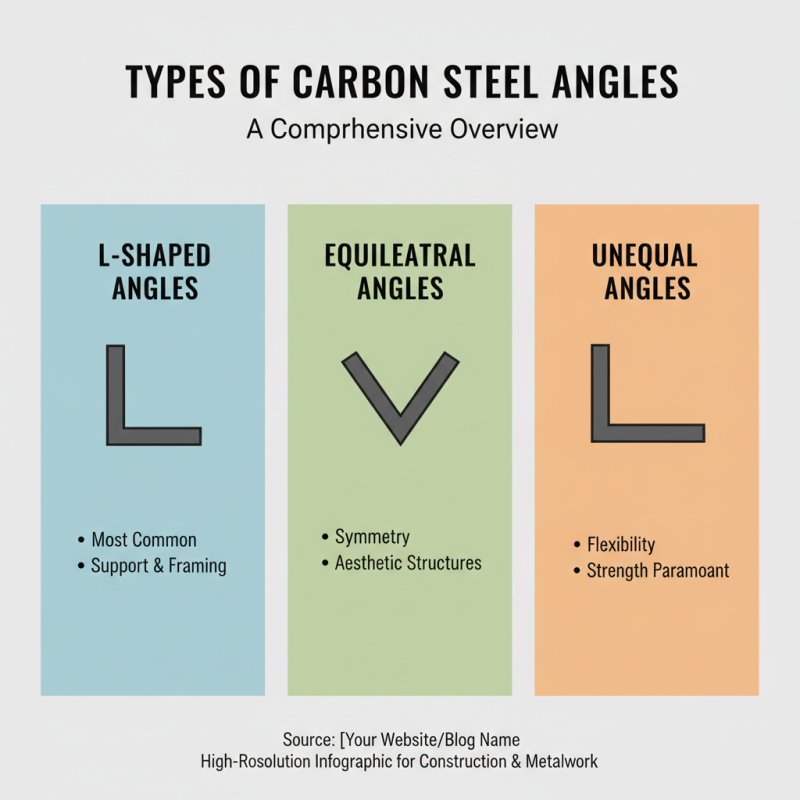
When it comes to carbon steel angles, there are various types to consider for construction and metalwork. L-shaped angles are the most common. They are ideal for support and framing. Another type is the equilateral angle, which offers symmetry. This shape is great for aesthetic structures. Lastly, unequal angles give flexibility. They can be used in moments where strength is paramount.
Choosing the right angle means more than just picking a type. Each type has specific uses and benefits. L-shaped angles are straightforward but may not be suitable for all designs. Equilateral angles can provide balance, yet they may lack the sturdiness in some applications. Unequal angles allow for creativity, but they can complicate the design process. Every choice has its pros and cons.
It is crucial to assess your project’s needs carefully. A mismatch can lead to structural issues or excess weight. Remember that not all angles fit every application perfectly. Always reflect on the decision-making process when choosing carbon steel angles. Balancing aesthetics with function can be challenging.
Applications of Carbon Steel Angles in Metalwork and Construction
Carbon steel angles are widely used in construction and metalwork due to their versatility and strength. These materials can withstand heavy loads and harsh conditions. They are often utilized in structural frameworks, providing essential support. Builders appreciate their rigidity for beams and columns. Their adaptability means they can be customized to fit various design needs.
In metalworking, these angles are crucial for fabricating components. They serve as the backbone of many projects. For instance, in manufacturing frames for machinery, carbon steel angles provide stability and durability. They are also used in braces and supports, enhancing the overall strength of the project. However, selecting the right grade and size can be challenging. Improper choices may lead to structural failures or increased costs.
Despite their beneficial properties, carbon steel angles are subject to corrosion. This issue requires careful attention, especially in outdoor environments. Protective coatings or regular maintenance can help mitigate this problem. The balance between durability and potential pitfalls makes them a vital, yet sometimes tricky, material choice in construction and metalwork.
Selecting the Right Carbon Steel Angle for Your Project Needs
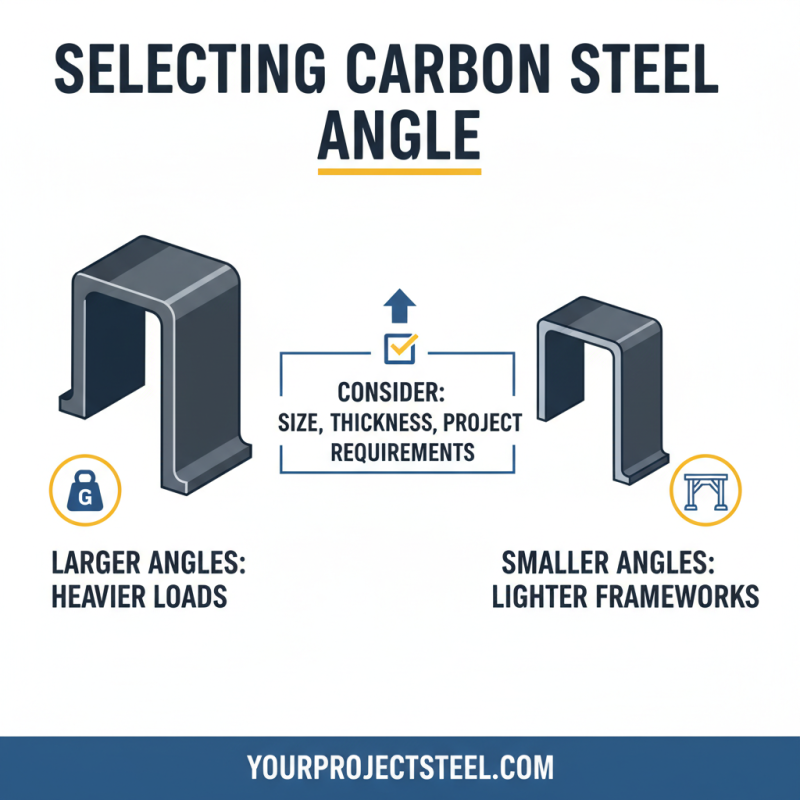
When selecting the right carbon steel angle for your projects, consider your specific requirements. Carbon steel angles come in various sizes and thicknesses. Choosing the correct dimensions is crucial. Larger angles can support heavier loads, while smaller ones are ideal for lighter frameworks.
Think about the application too. Will it be used indoors or outdoors? Exposure to moisture can lead to rust. If your project is outdoors, protective coatings may be necessary. However, these can add to costs. It's essential to balance durability with your budget.
Don’t overlook your project’s goals. Are you aiming for a simple, functional design or a more intricate structure? The aesthetic can influence your choice. Beauty and strength should coexist in your decisions. Testing different angles can help. Sometimes, what appears perfect on paper may not fit in practice. Be prepared to adjust your plans.
Best Practices for Fabrication and Maintenance of Carbon Steel Angles
When working with carbon steel angles, proper fabrication and maintenance practices are crucial for longevity and performance. Begin with clean surfaces.
This prevents impurities from affecting weld quality. Ensure that edges are straight and free from defects. Use appropriate tools for cutting and shaping. A small mistake can lead to larger structural issues later on.
Tips: Always wear protective gear. Safety should never be compromised. Keep your workspace organized to avoid accidents.
Regular inspections are important. Look for signs of corrosion or wear. Address these issues promptly to avoid costly repairs. Also, ensure proper storage. Storing angles in a dry environment helps prevent rust. Creating a maintenance schedule can help keep track of inspections and repairs.
Tips: Document your findings. Keeping records makes it easier to track issues over time. Involve your team in maintenance checks. It fosters accountability and encourages shared responsibility for quality.

 Angle Steel
 Channel Steel
 Universal Beam (l-Beam)
 H-Beam Steel
 Galvalume Steel Coil
 Galvalume Steel Sheet
 Galvanized Steel Sheet
 Color Coated Plate
 Stainless Steel Bar
 Stainless Steel Pipe
 Steel Bar
 Wire Rope
 Carbon Steel Pipe
 Carbon Steel Plate
 Aluminum Plate
 Aluminum Coil
 Aluminum Pipe
 Aluminum Bar
 Magnesium Ingot
 Fasteners