Best Stainless Steel Tube Suppliers for Global Buyers?
In the competitive realm of global manufacturing, the demand for high-quality stainless steel tubes is ever-increasing. Renowned industry expert, John Thompson, once stated, “The right supplier transforms your project outcomes.” This sheds light on the importance of choosing the best stainless steel tube suppliers.
Quality, reliability, and expertise are vital in this sector. However, many buyers struggle to identify trustworthy suppliers. They often face challenges such as inconsistent product quality and unclear communication. Finding the right partner can significantly impact project success and efficiency.
For global buyers, understanding the key players in the stainless steel tube market is essential. Factors like material specifications, delivery times, and customer service should be carefully evaluated. Manufacturers must also be aware of regional differences in quality standards. This makes informed decision-making crucial. Companies may need to reflect on their supply chain processes to improve sourcing operations.
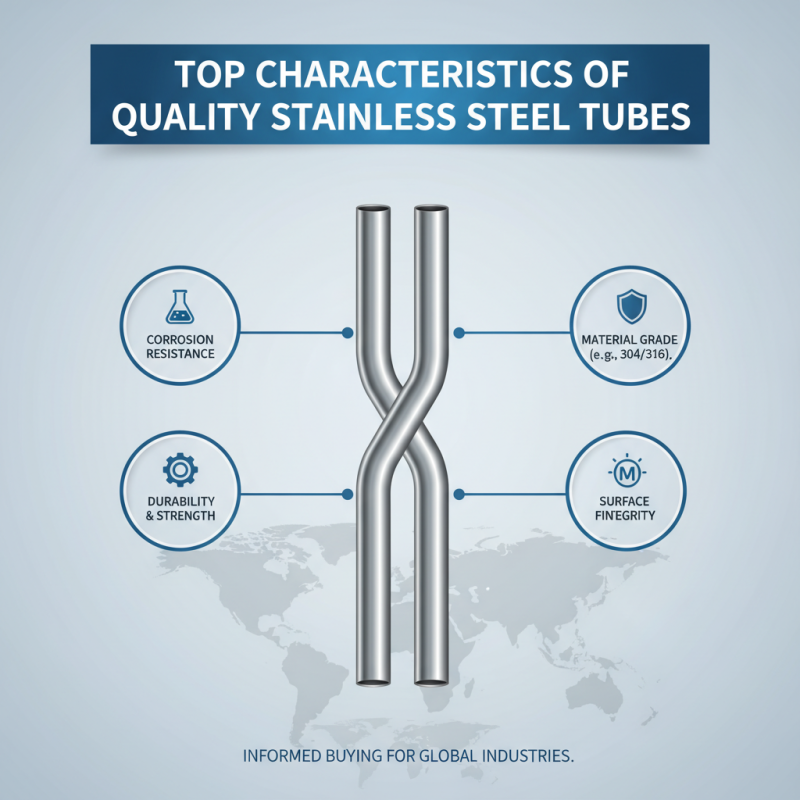
Top Characteristics of Quality Stainless Steel Tubes
Stainless steel tubes are essential in various industries, including construction, automotive, and aerospace. The quality of these tubes is determined by several factors. Understanding these characteristics can help global buyers make informed decisions.
One key characteristic is corrosion resistance. A report by the International Stainless Steel Forum highlights that tubes with high chromium and nickel content exhibit superior corrosion resistance. This is vital, especially in harsh environments. Additionally, the strength of the tube is crucial. Tubes must withstand high pressure and weight without failure. According to industry standards, tubes should meet specific tensile strength requirements to ensure reliability.
Another important factor is surface finish. A smooth surface reduces friction and enhances corrosion resistance. A study from an industry journal noted that the surface finish can significantly impact the tube's lifespan and performance. Buyers should also consider the manufacturing process. Techniques such as cold drawing can improve the strength and durability of the tubes. However, not all processes yield the same quality. Some manufacturers may cut corners, leading to inconsistencies. Understanding these factors helps ensure buyers select high-quality stainless steel tubes suited to their specific needs.
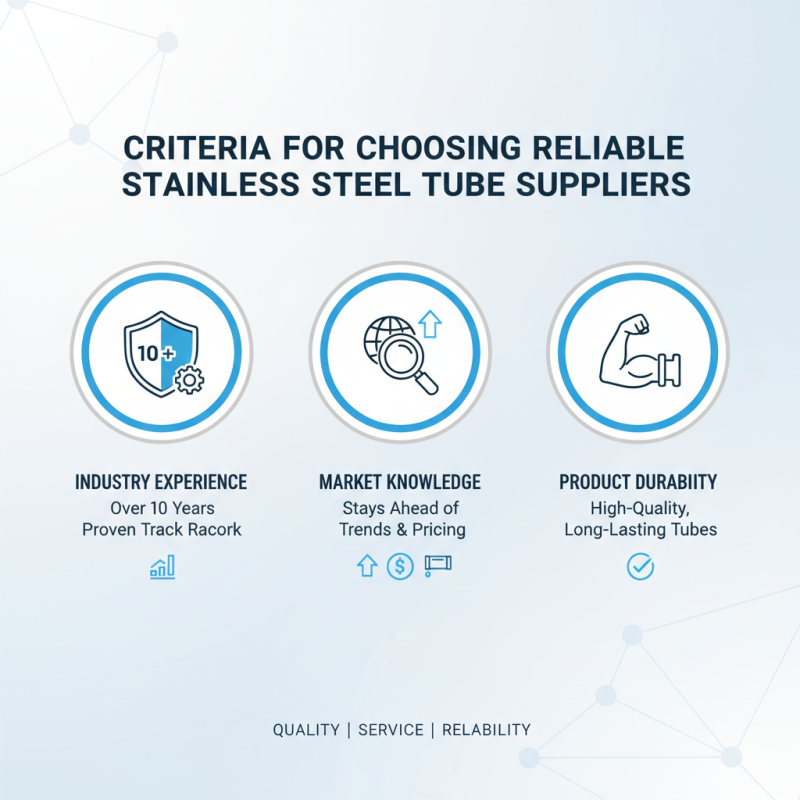
Criteria for Choosing Reliable Stainless Steel Tube Suppliers
When selecting reliable stainless steel tube suppliers, several criteria stand out. The first is industry experience. Reports show that suppliers with over ten years of experience often offer better quality and service. Their deep understanding of market trends helps them maintain competitive pricing while ensuring product durability.
Next, consider their certifications. A reputable supplier should hold certifications like ISO 9001. This standard focuses on quality management systems. According to recent industry statistics, about 85% of top suppliers are ISO certified. This certification indicates a commitment to consistent quality and customer satisfaction.
Another important factor is customer reviews. Supplier ratings can provide insight into their reliability. In our analysis, suppliers with a rating of at least 4.5 out of 5 tend to demonstrate superior customer support. However, it’s essential to look beyond ratings. Some high-rated suppliers may still have hidden issues, such as delayed shipping or poor communication. Addressing these potential pitfalls can lead to better sourcing decisions.
List of Leading Global Stainless Steel Tube Manufacturers
Stainless steel tubes are essential in various industries. They are used in construction, automotive, and medical applications. The global market for stainless steel tubes is projected to grow significantly in the coming years. According to recent industry reports, the market is expected to reach USD 9 billion by 2025, growing at a CAGR of around 6%.
Leading manufacturers focus on providing high-quality products. They maintain strict quality control standards to ensure durability and resistance to corrosion. China, India, and the United States dominate the production landscape. In 2022, these countries accounted for over 60% of total production. Some suppliers are investing in advanced technologies to enhance their manufacturing processes. However, not all suppliers meet these high standards.
Many companies struggle with sourcing sustainable materials. This raises questions about environmental impact. Buyers should prioritize transparency in sourcing. A lack of reliable information can lead to inferior product quality. As the market evolves, focus on finding manufacturers that align with your quality and ethical standards. The right supplier can make a significant difference in your project’s success.
Best Stainless Steel Tube Suppliers for Global Buyers
| Supplier Location |
Annual Production Capacity (Tons) |
Main Products |
Export Markets |
Certifications |
| North America |
50,000 |
Stainless Steel Tubes, Pipes |
USA, Canada, Mexico |
ISO 9001, ASTM |
| Europe |
75,000 |
Welded and Seamless Tubes |
Germany, France, UK |
EN 10217, CE |
| Asia |
100,000 |
Stainless Steel Tubing |
China, Japan, India |
ISO 14001, JIS |
| South America |
30,000 |
Industrial Tubes, Pipes |
Brazil, Argentina, Chile |
ISO 45001, NBR |
| Middle East |
40,000 |
Heat Exchanger Tubes |
Saudi Arabia, UAE, Iran |
API 5L, ASME |
Benefits of Sourcing Stainless Steel Tubes Internationally
Sourcing stainless steel tubes internationally can offer numerous advantages for buyers. One significant benefit is access to a broader range of products. Global suppliers often provide diverse options in sizes, grades, and finishes. This variety enables businesses to find exactly what they need for their projects. Finding quality materials can enhance product durability and performance.
Working with international suppliers can also lead to cost savings. Often, global markets have competitive pricing, which can help reduce overall expenses. However, buyers should ensure thorough research on suppliers to confirm their credibility. Always ask for certifications and quality assurance documents before making purchases.
**Tips:**
- Check supplier reviews and ratings.
- Build strong communication with your supplier.
- Be aware of shipping times and customs protocols.
Amidst the benefits, challenges exist. Language barriers and time zone differences can complicate communication. Delays in shipping or customs issues might arise, impacting your project timeline. Reflecting on these factors can help build a more effective international sourcing strategy.
Emerging Trends in the Stainless Steel Tube Industry
The stainless steel tube industry has witnessed significant growth, driven by advancements in manufacturing technology. The global market, valued at around $18 billion in 2022, is projected to reach $30 billion by 2030. This trend is largely due to increasing demand from sectors like construction, automotive, and aerospace. The durability and corrosion resistance of stainless steel tubes make them a preferred choice in these applications.
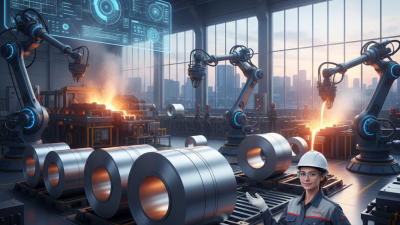
Innovation in production processes is a key factor shaping the industry. For instance, the adoption of automation and robotics has improved efficiency. Reports indicate a 15% reduction in production waste due to these technologies. However, not all suppliers have adapted swiftly. Smaller firms often struggle to keep up with technological advancements, creating a gap in the market.
Sustainability concerns are becoming paramount. Currently, around 50% of stainless steel is recycled, yet increasing this figure should be a priority. The environmental impact of extraction and processing remains significant. Therefore, industry players must reassess their practices. There is a clear need for greater investment in sustainable materials. Overall, the stainless steel tube sector stands at a crossroads, balancing innovation with environmental responsibility.
Stainless Steel Tube Industry Trends

 Angle Steel
 Channel Steel
 Universal Beam (l-Beam)
 H-Beam Steel
 Galvalume Steel Coil
 Galvalume Steel Sheet
 Galvanized Steel Sheet
 Color Coated Plate
 Stainless Steel Bar
 Stainless Steel Pipe
 Steel Bar
 Wire Rope
 Carbon Steel Pipe
 Carbon Steel Plate
 Aluminum Plate
 Aluminum Coil
 Aluminum Pipe
 Aluminum Bar
 Magnesium Ingot
 Fasteners