What is Carbon Steel Flanges and How Are They Used?
Carbon steel flanges are essential components in piping systems. These flanges connect pipes, valves, and fittings, ensuring a reliable seal. According to industry expert John Miller, a leading authority on industrial materials, "Carbon steel flanges provide strength and versatility in various applications." His insight highlights the flanges' importance in many sectors.
The versatility of carbon steel flanges is notable. They can withstand high pressure and temperature, making them suitable for demanding environments. However, users often overlook proper maintenance. Corrosion can occur if flanges are not adequately protected. This oversight can lead to costly failures and safety hazards.
Understanding carbon steel flanges also involves recognizing their limitations. While they are robust, they are not suitable for all conditions. For example, in highly corrosive environments, stainless steel flanges may be preferable. It’s crucial for engineers to evaluate the specific requirements of their projects. Proper selection prevents issues down the line. A careful approach can enhance system reliability and longevity.

What Are Carbon Steel Flanges?
Carbon steel flanges are vital components in piping systems across various industries. They create a secure connection between pipes, valves, and other equipment. These flanges are made from a steel alloy that contains carbon, which enhances their strength and durability. According to a recent report by the Global Industry Analysts, the demand for carbon steel flanges is projected to grow significantly, driven by infrastructure development and the oil & gas sector.
The properties of carbon steel, such as high tensile strength and excellent wear resistance, make these flanges ideal for high-pressure applications. They can withstand extreme temperatures and corrosive environments, often found in industries like chemical processing and power generation. A study from Technavio noted that carbon steel flanges account for over 30% of the global flange market, underscoring their widespread acceptance and usage.
Manufacturers often recommend using carbon steel flanges in conjunction with gaskets made of suitable materials for optimal sealing. It is also essential to consider the flange’s pressure rating and compatibility with the specific fluid being transported. However, not all carbon steel flanges perform equally. Some may corrode or fail under certain conditions, requiring careful selection and testing. Awareness of these nuances can lead to better installation practices and maintenance plans.
What is Carbon Steel Flanges and How Are They Used? - What Are Carbon Steel Flanges?
| Flange Type |
Standard |
Pressure Rating |
Material Grade |
Common Applications |
| Slip-On Flange |
ASME B16.5 |
150-2500 PSI |
A105 |
Piping Systems |
| Weld Neck Flange |
ASME B16.5 |
150-2500 PSI |
A105 |
High-Pressure Applications |
| Blind Flange |
ASME B16.5 |
150-3000 PSI |
A105 |
Sealing Open Ends |
| Threaded Flange |
ASME B16.5 |
150-3000 PSI |
A105 |
Low-Pressure Applications |
| Socket Weld Flange |
ASME B16.5 |
150-3000 PSI |
A105 |
Small-Dimension Piping |
Types of Carbon Steel Flanges and Their Applications
Carbon steel flanges are essential components in piping systems. These flanges provide a means to connect pipes, valves, or other equipment. They come in various types, each tailored for specific applications. Understanding these types can help in choosing the right one for your project.
Welding neck flanges are suitable for high-pressure systems. They are easy to attach and provide strong joints. Slip-on flanges are versatile and are often used for lower-pressure applications. They are simpler to install but may require additional welding for strength. Blind flanges, on the other hand, are used to seal a piping end. They are vital for maintenance and inspection processes.
Another type is the threaded flange. These flanges have threads on the inside to connect pipes. They are useful in situations where welding is not ideal. However, they may have limitations in high-pressure environments. Ultimately, selecting the right carbon steel flange requires careful consideration of both the application and the conditions in which they will be used.
Benefits of Using Carbon Steel Flanges in Industry
Carbon steel flanges play a critical role in various industries, especially in piping systems. They are used to connect pipes, valves, and tanks, ensuring a reliable seal. The durability and strength of carbon steel make it suitable for high-pressure and high-temperature applications. In fact, a recent industry report indicates that the demand for carbon steel flanges has increased by 20% over the past five years due to their widespread usage in oil and gas, chemical processing, and power generation sectors.
One significant benefit of using carbon steel flanges is their cost-effectiveness. Compared to stainless steel options, carbon steel provides similar strength and performance at a lower price point. This cost advantage has led to frequent adoption in large-scale industrial projects. According to a market analysis, carbon steel flanges comprise approximately 40% of the total flange market. However, they require proper maintenance to prevent corrosion in certain environments. Regular inspections can mitigate potential failures, underscoring the importance of proper usage and application.
In terms of mechanical properties, carbon steel flanges exhibit excellent tensile strength and ductility. This allows them to withstand substantial pressure and stress, making them inherently reliable. However, they are not immune to issues like fatigue under extreme conditions. Balancing the advantages with potential drawbacks is essential. Decision-makers must consider environmental factors when selecting materials. Hence, the use of carbon steel flanges remains a thoughtful choice in many industrial applications.
Installation and Maintenance of Carbon Steel Flanges
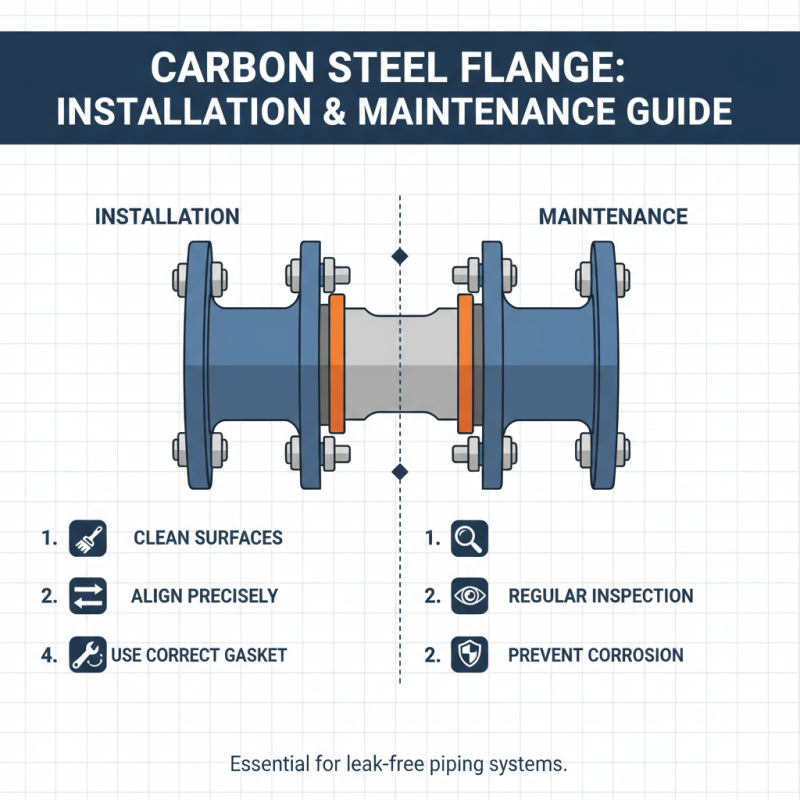
Carbon steel flanges are essential components in piping systems. They create a tight seal between pipes to prevent leaks. Installing these flanges requires precision. First, ensure the surfaces are clean and free from debris. Misalignment can cause issues down the line. Use appropriate gaskets for sealing, as they significantly affect performance. Tightening bolts must be done evenly. Over-tightening can lead to flange deformation.
Maintenance is crucial for carbon steel flanges. Regular inspections help identify wear and tear early. Look for signs of corrosion or rust. These can weaken the flange over time. Proper lubrication can minimize friction between components. Replace gaskets as needed to maintain a proper seal. Often, operators neglect this step, leading to costly repairs.
Understanding the importance of correct installation and regular upkeep is vital. Without it, even the best materials can fail. Knowledge of proper handling will enhance the longevity of the system. Awareness of potential pitfalls is key. Simple mistakes can create significant problems in the future.
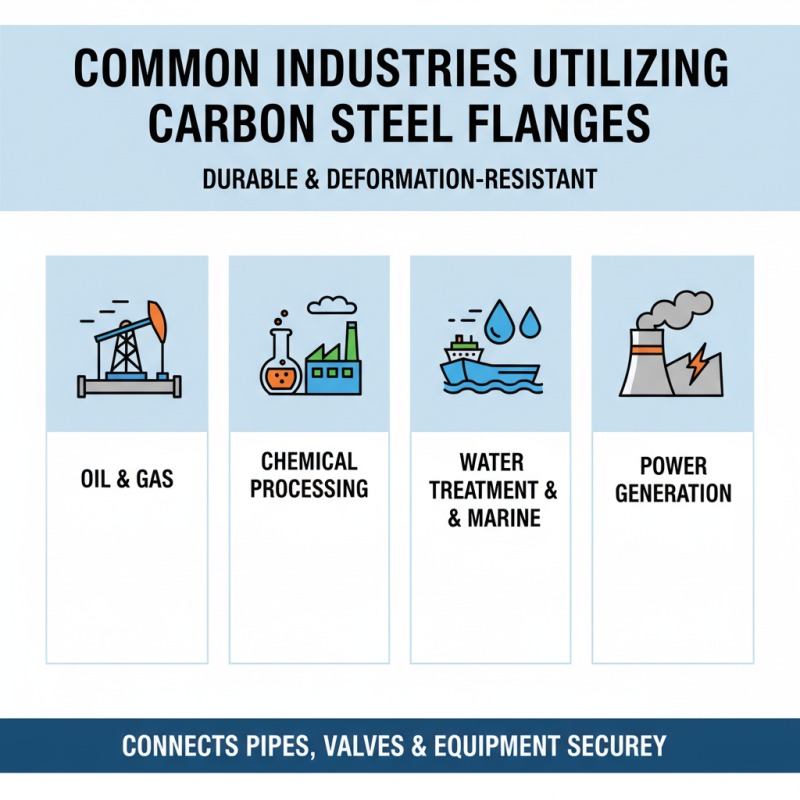
Common Industries Utilizing Carbon Steel Flanges
Carbon steel flanges are vital components in many industries. They connect pipes, valves, and other equipment, ensuring a secure and leak-proof connection. Their durability and resistance to deformation make them popular choices across various sectors.
Common industries utilizing carbon steel flanges include oil and gas, construction, and chemical manufacturing. In the oil and gas sector, flanges join high-pressure pipelines reliably. Construction projects use carbon steel flanges to support structural integrity. Similarly, the chemical manufacturing industry relies on these flanges to handle corrosive substances safely.
Tips for choosing carbon steel flanges: Always consider the pressure ratings. Look closely at the environment where they will be used. Proper selection can prevent failures. Regular inspection is crucial to maintain performance and safety. Reflect on past experiences when selecting materials; they can guide future decisions.

 Angle Steel
 Channel Steel
 Universal Beam (l-Beam)
 H-Beam Steel
 Galvalume Steel Coil
 Galvalume Steel Sheet
 Galvanized Steel Sheet
 Color Coated Plate
 Stainless Steel Bar
 Stainless Steel Pipe
 Steel Bar
 Wire Rope
 Carbon Steel Pipe
 Carbon Steel Plate
 Aluminum Plate
 Aluminum Coil
 Aluminum Pipe
 Aluminum Bar
 Magnesium Ingot
 Fasteners