Top Carbon Steel Flanges Types and Their Uses Explained?
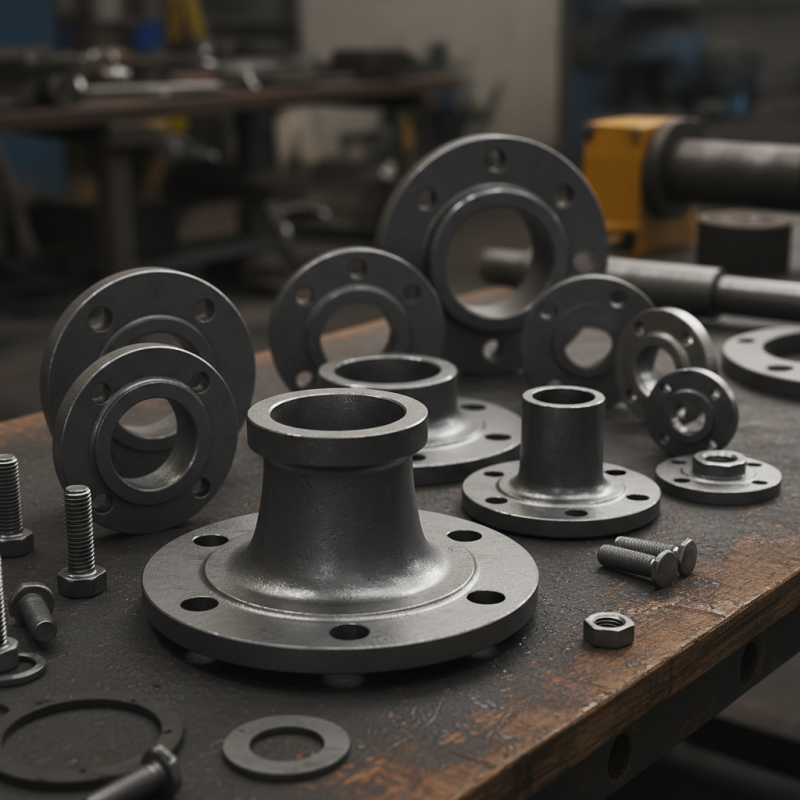
Carbon Steel Flanges are essential components in various piping systems. They provide structural integrity and facilitate connections. Understanding the different types of carbon steel flanges can help in making informed decisions for your projects.
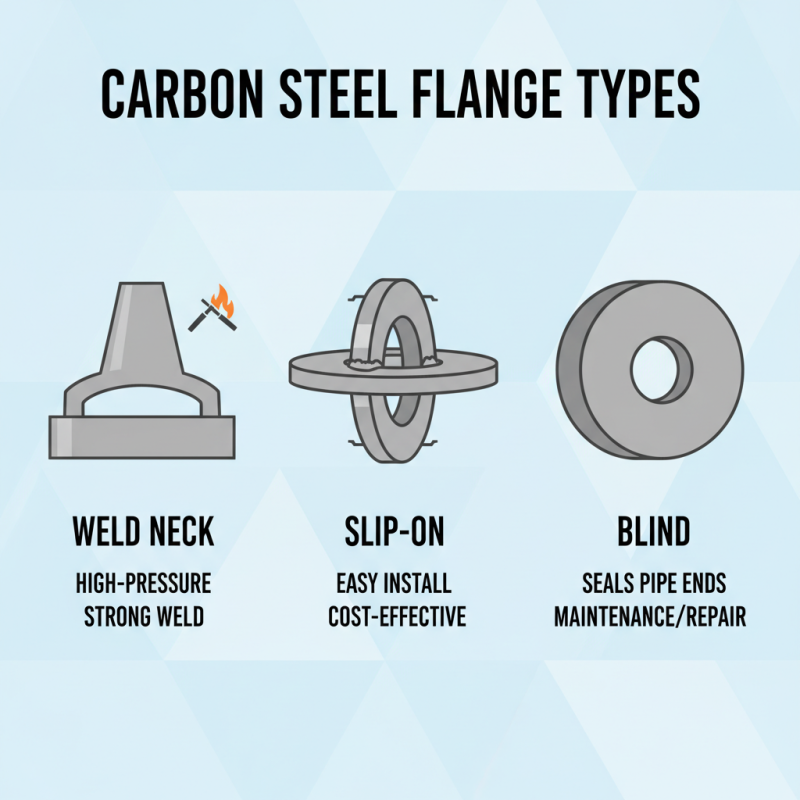
These flanges come in various shapes and dimensions. Each type serves specific purposes. For instance, weld neck flanges are ideal for high-pressure applications. In contrast, slip-on flanges are easier to install, making them more versatile.
However, selecting the right flange is not always straightforward. Factors such as pressure ratings and material compatibility must be considered. In some cases, a wrong choice can lead to failures. This highlights the need for careful evaluation when using carbon steel flanges.
Types of Carbon Steel Flanges: A Comprehensive Overview
Carbon steel flanges come in various types, each serving unique purposes in different applications. The most common types include weld neck, slip-on, and blind flanges. Weld neck flanges have a tapered neck that allows for easy welding. These flanges are often used in high-pressure situations due to their strength. Slip-on flanges are easier to install and are generally more cost-effective. They fit over the pipe and are welded on both sides.
Blind flanges are solid disks with no opening. They seal off ends of piping systems, preventing fluid from leaking out. Each flange type offers specific benefits and drawbacks. For instance, while weld neck flanges offer strength, they require more precise welding skills. Slip-on flanges are easier to work with but may not handle extreme conditions as well. Understanding the exact needs of your project is vital for selecting the right type of flange. Consider factors like pressure, temperature, and installation environment. Making the right choice can lead to better longevity and fewer failures.
Material Properties of Carbon Steel and Its Impact on Flange Design
Carbon steel is a popular choice in flange design due to its excellent mechanical properties. With a tensile strength of around 370 MPa to 800 MPa, carbon steel flanges can withstand significant pressure and temperature variations. They are primarily used in pipelines and industrial applications. However, the carbon content can influence their ductility and hardness. Higher carbon percentages can lead to brittleness, which may compromise flange integrity.
The design of carbon steel flanges must consider corrosion resistance. A report from the American Iron and Steel Institute highlights that carbon steel can corrode if not properly coated or treated. This necessitates the application of protective layers to prolong flange life. An effective coating can reduce corrosion risks significantly, improving durability. Industry studies indicate that flanges with proper surface treatment can last up to three times longer than untreated ones.
Moreover, the impact of heat treatment cannot be overlooked. Heat-treated carbon steel flanges exhibit improved performance under extreme conditions. However, improper heat treatment can lead to unwanted results, such as warping. As engineers design these flanges, they face challenges in balancing cost and performance. It raises questions about how the industry continuously adapts to these material properties.
Common Applications of Carbon Steel Flanges in Various Industries
Carbon steel flanges play a vital role in various industries. They are essential for connecting pipes, valves, and other equipment. Many sectors rely on these flanges for their durability and strength. In oil and gas, for example, they withstand high pressures and temperatures. They ensure safety and reliability in critical operations.
The manufacturing industry uses carbon steel flanges in assembly lines. They facilitate easy maintenance and replacement of components. In the water treatment sector, these flanges help manage water flow. Their resistance to corrosion is a significant advantage here. However, improper installation can lead to leaks. Maintenance is often overlooked, but it is crucial.
Construction also benefits from carbon steel flanges. They support structures and allow for easier modifications. In heating and cooling systems, these flanges help maintain efficiency. Yet, not all flanges are created equal. Choosing the right type is sometimes confusing. Users must consider pressure ratings and material specifications. Without proper knowledge, mistakes can happen.
Top Carbon Steel Flanges Types and Their Uses Explained
| Flange Type |
Description |
Common Applications |
| Weld Neck Flange |
A flange with a long neck that is welded to the pipe. |
Oil & gas pipelines, chemical processing. |
| Slip-On Flange |
A flange that slips over the pipe and is welded on top. |
Water supply systems, low-pressure applications. |
| Blind Flange |
A solid flange used to block off a piping system. |
Maintenance accesses, pressure testing. |
| Lap Joint Flange |
Used with a stub end to allow for easy assembly. |
Transportation of fluids in the food and beverage industry. |
| Socket Weld Flange |
A flange that is inserted into a pipe and welded. |
Applications with high-pressure systems. |
| Threaded Flange |
A flange with internal threads for screwing onto a pipe. |
Oil pipelines, gas pipelines, and water systems. |
Standards and Specifications Governing Carbon Steel Flange Manufacturing
Carbon steel flanges are essential components used in piping systems. Understanding the standards and specifications that govern their manufacturing is crucial for ensuring safety and performance. Various organizations like ASME, ASTM, and ANSI outline the requirements that manufacturers must adhere to. These standards cover aspects like material quality, dimensional accuracy, and mechanical properties. For example, ASTM A105 is a common specification for forged carbon steel piping components.
Manufacturers must focus on these standards to produce reliable flanges. Non-compliance could lead to failures in the system. Flanges might not fit correctly, or they could corrode faster than expected. Attention to detail is crucial in this process. It helps prevent costly downtime and repairs.
Tip: When selecting flanges, always check for relevant certifications. This small step can vastly improve safety. Talk to your supplier about the standards they follow. Knowing this can save you from potential issues down the line. Remember, understanding specifications is just as important as choosing the right type of flange.
Advantages and Limitations of Using Carbon Steel Flanges
Carbon steel flanges are widely used in various industries due to their cost-effectiveness and strength. One significant advantage is their ability to withstand high pressure and temperature conditions. According to industry reports, carbon steel flanges can endure pressures of up to 20,000 psi. They are often ideal for oil and gas pipelines, where durability is crucial.
However, there are limitations to consider. Carbon steel is susceptible to corrosion when exposed to moisture and chemicals. This vulnerability can lead to maintenance issues, requiring regular inspections and potential replacements. Failure to address corrosion can result in leaks or even catastrophic failures.
Tips: To mitigate corrosion, consider applying protective coatings. Regular maintenance can extend the lifespan of carbon steel flanges. Always assess the operating environment before installation.
Overall, while carbon steel flanges offer many benefits, their limitations cannot be overlooked. It's crucial to weigh their strengths against potential vulnerabilities. This balance is essential for successful application and long-term performance.
Top Carbon Steel Flanges Types and Their Uses Explained
This chart illustrates the distribution of different types of carbon steel flanges used in various industries. Weld neck flanges are the most commonly used, making up 30% of the total, followed by slip-on and blind flanges, while threaded flanges account for the least usage at 10%.

 Angle Steel
 Channel Steel
 Universal Beam (l-Beam)
 H-Beam Steel
 Galvalume Steel Coil
 Galvalume Steel Sheet
 Galvanized Steel Sheet
 Color Coated Plate
 Stainless Steel Bar
 Stainless Steel Pipe
 Steel Bar
 Wire Rope
 Carbon Steel Pipe
 Carbon Steel Plate
 Aluminum Plate
 Aluminum Coil
 Aluminum Pipe
 Aluminum Bar
 Magnesium Ingot
 Fasteners