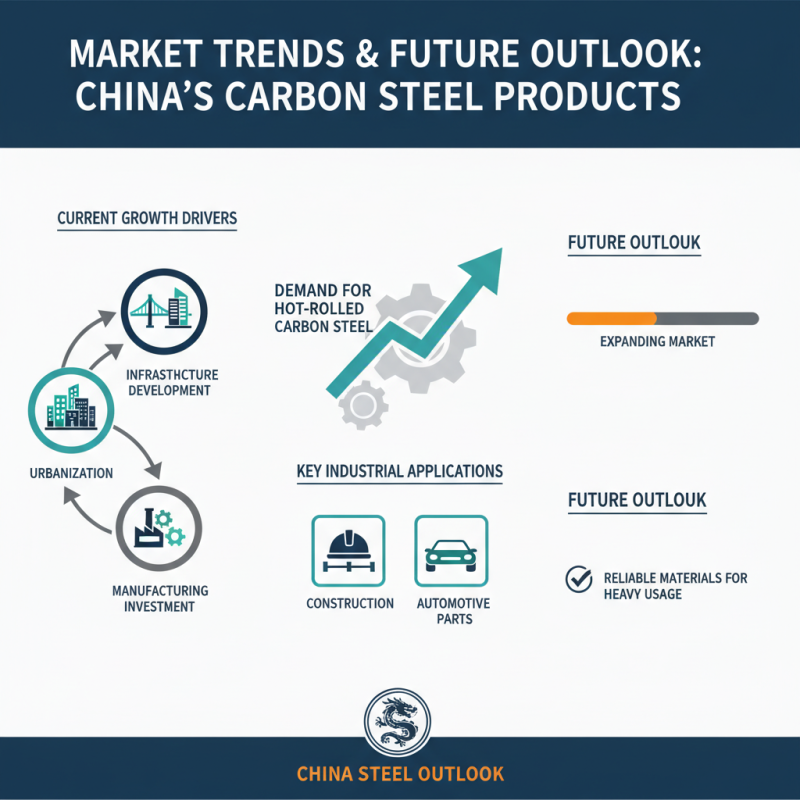
China Top 10 Hot Rolled Carbon Steel Products for Industrial Applications?
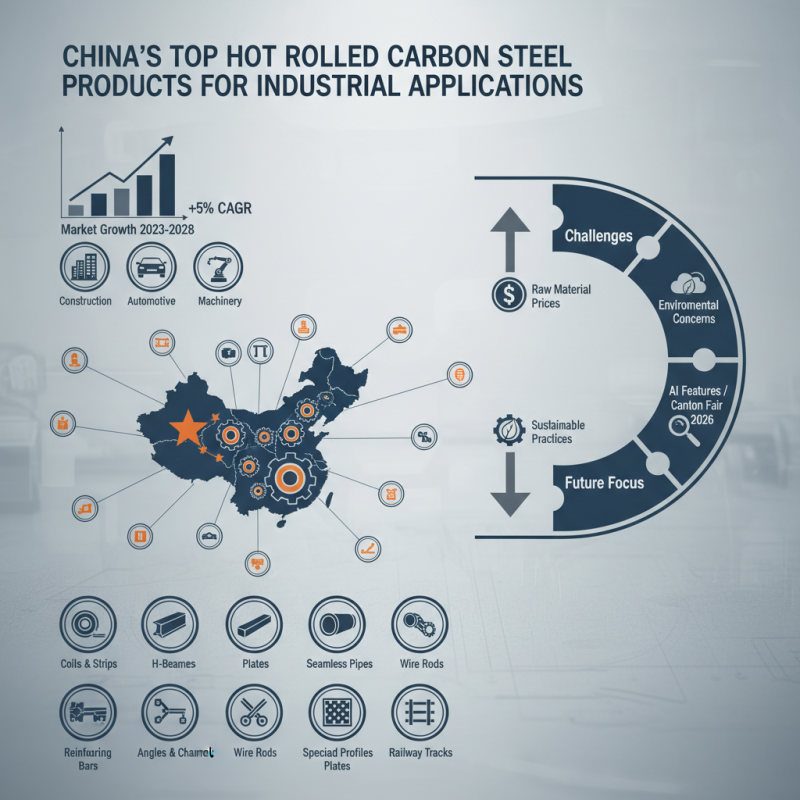
Hot Rolled Carbon Steel is a crucial material in various industrial applications. In recent years, its demand has surged due to advancements in manufacturing technology. According to industry reports, the global hot rolled carbon steel market is expected to grow at a CAGR of 5% between 2023 and 2028. This growth can be attributed to its versatility in construction, automotive, and machinery sectors.
China, as one of the largest producers, offers a wide range of hot rolled carbon steel products. These products are essential for creating durable structures and machinery components. However, the industry faces challenges, such as fluctuating raw material prices and environmental concerns. The push for sustainable practices is leading manufacturers to rethink their processes and sourcing strategies.
The upcoming 2026 Canton Fair will showcase innovations in hot rolled carbon steel and other emerging materials. With the introduction of AI features, buyers can efficiently navigate the vast exhibition space, enhancing their ability to identify quality suppliers. As the market evolves, companies must adapt and focus on sustainable solutions while maintaining competitive pricing and high-quality standards.
Top 10 Hot Rolled Carbon Steel Products Used in Chinese Industries
In the rapidly evolving industrial landscape of China, hot rolled carbon steel products play a crucial role. These materials are vital for construction, manufacturing, and automotive industries. A recent report from the China Iron and Steel Association highlighted that hot rolled carbon steel accounts for approximately 30% of total steel consumption in the industrial sector.
Among the top products, hot rolled coils are the most widely used. They are essential for structural applications. Furthermore, I-beams and H-beams are indispensable in construction projects across the country. In 2021, the demand for these products surged, leading to a production increase of about 12%. However, this boom raises questions about sustainability and resource management in steel production.
Unexpectedly, the reliance on hot rolled steel may lead to oversupply in certain regions. Industry analysts predict that this could result in a price drop. This situation necessitates a careful evaluation of production strategies. Regulations must adapt to encourage efficient usage. Balancing production and demand is essential for a stable market environment in China’s industrial sectors.
Overview of Hot Rolled Carbon Steel and Its Industrial Importance
Hot rolled carbon steel plays a vital role in various industrial applications. Its unique properties make it a preferred choice in manufacturing sectors. According to the Global Steel Report, hot rolled carbon steel accounts for over 60% of the total steel production worldwide. This significant figure highlights its indispensable nature.
The versatility of hot rolled carbon steel is evident in construction and automotive industries. For example, it offers easy fabrication and welding properties. In construction, this type of steel is used in beams, columns, and reinforcements. A report by the World Steel Association states that construction alone consumes about 50% of global steel output. Yet, the fluctuating quality of raw materials can lead to inconsistencies in the final products, raising concerns for manufacturers.
Despite its advantages, there are challenges. Some manufacturers struggle with precise dimensional tolerances. This can affect the performance and reliability of finished products. Poor quality control can lead to significant material waste. Continuous improvement in production techniques is essential. Hence, despite its industrial importance, there's room for reflection and enhancement in how the hot rolled carbon steel is produced and used.
Top 10 Hot Rolled Carbon Steel Products for Industrial Applications
This chart illustrates the distribution of various hot rolled carbon steel products commonly used in industrial applications. The data reflects the average usage in metric tons across different categories.
Key Manufacturers and Market Share in China's Carbon Steel Sector
China's carbon steel sector has seen rapid growth. The market is vibrant, with numerous players competing for share. Core products include hot rolled carbon steel plates, sheets, and bars. These products serve industries such as construction, automotive, and manufacturing. In recent years, low-cost production has driven many suppliers to expand their offerings.
Key manufacturers dominate the market landscape. Their strategies often focus on innovation and efficiency. Yet, quality can vary across different suppliers. Buyers need to be vigilant when choosing partners. Some companies may cut corners to reduce costs. This could lead to inconsistent quality. Understanding the production process can provide valuable insights.
Tips: Always request product samples. Compare multiple suppliers. Evaluate their production capacity. This helps mitigate risks. Staying informed about market trends is essential. Consider visiting factories when possible. Personal interaction can reveal much about a supplier's integrity and reliability.
Applications of Hot Rolled Carbon Steel in Construction and Manufacturing
Hot rolled carbon steel is crucial in both construction and manufacturing industries. It is produced at high temperatures, which enables it to be shaped easily. This versatility makes it an essential choice for various applications. According to a recent industry report, demand for hot rolled carbon steel is projected to grow by 5% annually.
In construction, hot rolled carbon steel is often used for structural beams, columns, and reinforcements. Its strength and durability make it suitable for building high-rise structures. Manufacturing industries utilize it for machinery frames, automotive components, and appliances. The material can be easily welded and fabricated, allowing efficient assembly processes.
Tip: Ensure that you choose the right type of hot rolled carbon steel for your specific application. Not all grades offer the same performance.
However, there are challenges. The material’s properties can vary significantly based on the production process. Flaws in the rolling process can lead to inconsistencies. This can impact the structural integrity of finished products. Therefore, it’s crucial to source from reputable suppliers. Regular testing is necessary to avoid potential failures in construction or manufacturing.
Tip: Always conduct quality control checks before using hot rolled carbon steel in critical applications. This reduces risks and increases safety.
China Top 10 Hot Rolled Carbon Steel Products for Industrial Applications
| Product Type |
Specification |
Applications |
Typical Mechanical Properties |
Market Demand (Tons) |
| Hot Rolled Plate |
Thickness: 3-100mm |
Construction, Heavy Machinery |
Yield Strength: 235 MPa |
500,000 |
| Hot Rolled Coil |
Thickness: 1.5-12mm |
Automotive, Construction |
Tensile Strength: 400-550 MPa |
800,000 |
| Hot Rolled Strip |
Width: 20-600mm |
Structural Components |
Elongation: 15% |
350,000 |
| Hot Rolled Beam |
Size: 100-900mm |
Building Frames |
Yield Strength: 300 MPa |
600,000 |
| Hot Rolled Rebar |
Diameter: 8-40mm |
Concrete Reinforcement |
Tensile Strength: 500 MPa |
1,200,000 |
| Hot Rolled Profile |
Various Shapes |
Industrial Structures |
Yield Strength: 250 MPa |
400,000 |
| Hot Rolled Tube |
Diameter: 20-100mm |
Pipelines, Furniture |
Tensile Strength: 350 MPa |
300,000 |
| Hot Rolled Wire |
Diameter: 5-12mm |
Fencing, Reinforcement |
Tensile Strength: 600 MPa |
200,000 |
| Hot Rolled Slab |
Thickness: 150-300mm |
Metal Sheets |
Yield Strength: 270 MPa |
150,000 |
| Hot Rolled Channel |
Size: 50-400mm |
Structural Supports |
Elongation: 20% |
250,000 |

 Angle Steel
 Channel Steel
 Universal Beam (l-Beam)
 H-Beam Steel
 Galvalume Steel Coil
 Galvalume Steel Sheet
 Galvanized Steel Sheet
 Color Coated Plate
 Stainless Steel Bar
 Stainless Steel Pipe
 Steel Bar
 Wire Rope
 Carbon Steel Pipe
 Carbon Steel Plate
 Aluminum Plate
 Aluminum Coil
 Aluminum Pipe
 Aluminum Bar
 Magnesium Ingot
 Fasteners