How to Choose the Right Carbon Steel Angle for Your Project?
Choosing the right Carbon Steel Angle for your project can be daunting. Industry expert John Smith, a structural engineer with over 20 years of experience, once said, “The right angle can make a world of difference in structural integrity.” Understanding your project’s needs is crucial.
When selecting a Carbon Steel Angle, consider factors like load capacity and environmental conditions. Each project is unique, and a one-size-fits-all approach rarely works. For example, a shallow angle may suffice for lighter loads, but heavier equipment demands a sturdy option. Take time to review specifications thoroughly. This may require research and consultation.
The nuances in Carbon Steel Angle choices can lead to significant challenges. Choosing incorrectly could lead to structural failure. Reflect on past experiences where improper selection caused issues. Balancing quality and cost is essential, but so is ensuring safety and functionality. Careful analysis and consideration could prevent future mistakes.

Identifying the Specifications of Your Project Needs
Choosing the right carbon steel angle for your project starts with understanding the specifications required. Carbon steel angles come in various sizes, grades, and finishes, making it crucial to identify what fits your needs best. The American Institute of Steel Construction notes that the weight per foot and dimensions significantly impact the performance in structural applications. For example, a common steel grade such as ASTM A36 has a yield strength of 36 ksi, making it suitable for various construction uses.
Consider the role of the angle in your project. Is it for framing, support, or reinforcement? A lighter angle may suffice for non-load-bearing applications, while heavier specifications will be essential for structural integrity. It's essential to be aware of environmental factors too. Carbon steel is susceptible to corrosion, which could affect its longevity in certain conditions. According to industry reports, nearly 30% of steel structures suffer from premature failure due to insufficient protection against corrosion.
Tips: Evaluate the maximum load your project will encounter. Be mindful of local building codes and standards, as they can guide your choices. Always consult with experts when uncertain. Understanding project specifications can save time and resources while ensuring safety and compliance.
Carbon Steel Angle Specifications for Different Projects
Understanding the Different Grades of Carbon Steel Angle
Choosing the right carbon steel angle for your project involves understanding its various grades. Carbon steel angles come in different compositions and properties, which suit different applications. Grades like A36, A992, and A572 have unique characteristics. For instance, A36 is common in construction. It offers good weldability and strength. It has a yield strength of 36,000 psi, which is sufficient for general structural use.
On the other hand, A572 grades, particularly grade 50, provide higher strength. It boasts a yield strength of up to 50,000 psi. This makes it ideal for projects requiring heavier loads. In contrast, A992, typically used in steel framing, gives better performance in high-stress situations. It is crucial to match the grade with your specific needs.
However, it is not always straightforward. Many factors, such as environmental conditions and load requirements, can influence your choice. A grade that performs well in one scenario may not be suitable in another. A lack of understanding of these nuances can lead to project failures or increased costs. Always consider consulting with a structural engineer for an informed decision.
Evaluating the Size and Dimensions for Structural Integrity
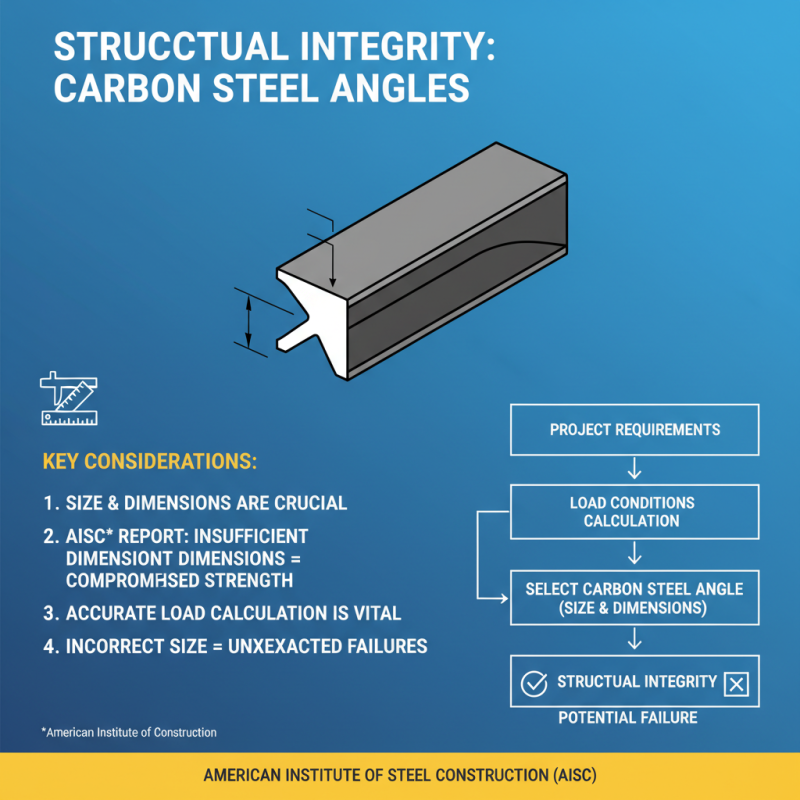
When selecting carbon steel angles for a project, size and dimensions are crucial. Structural integrity often depends on the choice of dimensions. According to a report from the American Institute of Steel Construction (AISC), using insufficient dimensions may compromise strength. It is vital to calculate loading conditions accurately before making a selection. If the size is incorrect, it can lead to unexpected failures.
Furthermore, industry standards dictate specific guidelines. The AISC recommends using angles that can withstand expected stresses without bending or fracturing. For instance, the minimum leg length for angles used in typical applications is often around 2 inches. Using angles that are too small may lead to increased deflection. This could impact the overall stability of your structure.
Evaluating the load requirements is essential. High loads necessitate larger dimensions. Conversely, lighter loads may allow for smaller angles. Engineers also emphasize the importance of considering the environment. Corrosion-resistant finishes may be needed in harsh conditions. Neglecting these factors can affect the longevity of the structure and may require costly repairs. Planning and careful consideration of these elements can establish a solid foundation for your project.
Considering Corrosion Resistance and Coatings Options
Choosing the right carbon steel angle for your project involves understanding its resistance to corrosion and available coating options. Corrosion resistance is vital for durability and longevity. Carbon steel, by default, is prone to rust and degradation, especially in harsh environments. Without proper protection, it can falter quickly.
One effective way to enhance corrosion resistance is through coatings. Various coatings can provide a barrier against moisture and chemicals. For instance, galvanization is a popular method that involves coating steel with zinc. This not only protects the underlying metal but also offers a unique aesthetic. Other options include paint or polymer coatings, which can provide both visual appeal and additional protection. It's crucial to assess the environmental conditions the steel will face, as this influences the coating choice.
However, not all coatings are perfect. Some may wear off faster than expected, especially in abrasive settings. Regular maintenance checks can help you identify when the coating needs refreshing. Investing time in understanding these aspects can lead to better decisions in your project. Ultimately, weighing the pros and cons of each coating option will ensure that your carbon steel angle meets the project's demands effectively.
Assessing Availability and Cost for Your Budget Constraints
When selecting a carbon steel angle for your project, cost becomes a crucial factor. Not all suppliers provide the same pricing, even for similar products. Researching multiple suppliers can reveal significant price differences. Understanding the market can help you make better financial decisions. Set a clear budget to guide your selection process.
Consider the availability of carbon steel angles. Some sizes and grades may be easier to find than others. This can affect your project timeline. If a specific angle isn't readily available, your costs may rise due to expedited shipping or sourcing from distant suppliers. Be flexible with your specifications to increase your options. Sometimes, adjusting your project parameters may lead to savings.
Finally, keep in mind that quality should not be sacrificed for price. Lower-cost options may lack durability or resist corrosion. Seek suppliers with good reviews and reliable support. Balancing cost with quality is essential. While you aim for savings, ensure that your choice meets project requirements. Reflect on your selections to ensure they align with both your budget and project success.
How to Choose the Right Carbon Steel Angle for Your Project? - Assessing Availability and Cost for Your Budget Constraints
| Angle Size (inches) |
Material Grade |
Availability (Stock) |
Cost (per lb) |
Common Applications |
| 1 x 1 x 1/8 |
A36 |
Available |
$0.75 |
Frames, Brackets |
| 1.5 x 1.5 x 1/8 |
A36 |
Available |
$0.80 |
Support Structures |
| 2 x 2 x 1/4 |
A992 |
Limited Stock |
$1.10 |
Construction, Steel Beams |
| 3 x 3 x 1/4 |
A992 |
Limited Stock |
$1.20 |
Heavy Machinery, Frames |
| 1 x 1 x 1/4 |
A36 |
Available |
$0.70 |
Supports, Trusses |

 Angle Steel
 Channel Steel
 Universal Beam (l-Beam)
 H-Beam Steel
 Galvalume Steel Coil
 Galvalume Steel Sheet
 Galvanized Steel Sheet
 Color Coated Plate
 Stainless Steel Bar
 Stainless Steel Pipe
 Steel Bar
 Wire Rope
 Carbon Steel Pipe
 Carbon Steel Plate
 Aluminum Plate
 Aluminum Coil
 Aluminum Pipe
 Aluminum Bar
 Magnesium Ingot
 Fasteners