How to Choose the Best Stainless Strips for Your Project?
Choosing the right stainless strips for your project can be challenging. Stainless strips are versatile materials used in various applications, from construction to art. Their durability and resistance to corrosion make them a popular choice. However, not all stainless strips are created equal.
When you start to look for stainless strips, consider the specific needs of your project. Are you using them for structural support or perhaps for decorative purposes? Different grades and finishes can affect both function and aesthetics. Even small choices can have significant impacts. It's crucial to evaluate the size, thickness, and finish of the stainless strips you need.
Many assume that all stainless strips will perform the same. This is a misconception that can lead to usability issues later on. Conducting thorough research and consulting with experts can help avoid potential pitfalls. Paying attention to details now can save you frustration down the line. The right stainless strips can elevate your project and fulfill its requirements effectively.

Understanding the Different Types of Stainless Steel Strips Available
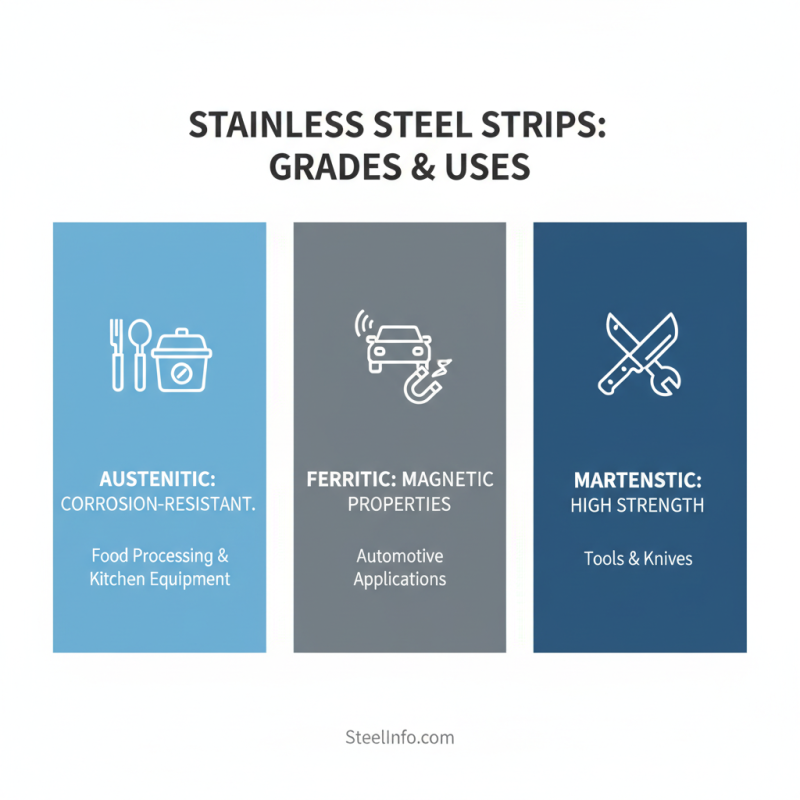
When it comes to stainless steel strips, understanding the different types is crucial. There are mainly three grades: austenitic, ferritic, and martensitic. Austenitic stainless steel, known for its corrosion resistance, is widely used in food processing and kitchen equipment. Ferritic stainless steel, with its magnetic properties, is often utilized in automotive applications. Lastly, martensitic stainless steel offers high strength, making it ideal for tools and knives.
Choosing the right type can be challenging. Here are some tips: Assess your project requirements carefully. If corrosion resistance is vital, opt for austenitic. For magnetic needs, ferritic is your best bet. Data shows that austenitic steel makes up about 70% of stainless steel production. This highlights its popularity and versatility in various applications.
Another aspect to consider is thickness. Stainless steel strips come in various gauges. Thinner strips are more flexible but less durable. A gauge of 16 to 18 is standard for many applications, providing a balance between strength and workability. Remember, an overly thin strip may not withstand high-stress environments. Ensure that the thickness aligns with your project demands.
Key Factors to Consider When Selecting Stainless Steel Strips
Choosing the right stainless steel strips requires careful consideration of several critical factors. The grade of stainless steel is vital. For example, common grades like 304 and 316 offer different corrosion resistance levels. According to industry reports, 304 is suitable for indoor applications, while 316 is often preferred in marine environments. Understanding the specific application can prevent costly mistakes.
Thickness also plays a crucial role. Standard thickness ranges from 0.1 mm to 6 mm, but the choice depends on strength requirements. Thicker strips bear more load but can be harder to manipulate. A study indicates that many projects fail due to mismatched thickness, leading to stress and deformation.
Surface finish can impact both aesthetics and performance. Different finishes like polished or matte affect corrosion resistance and appearance. A recent survey revealed that 78% of users prefer a brushed finish for architectural projects. However, achieving the desired finish might require additional processing, often overlooked during budgeting. Evaluating these factors thoroughly can improve project outcomes significantly.
Assessing the Thickness and Width of Stainless Steel Strips for Your Needs
Choosing the right thickness and width for stainless steel strips is crucial for any project. The thickness determines strength and durability. Thicker strips can withstand higher stress, while thinner strips offer flexibility. Consider your project’s demands carefully. If you need rigidity, go for thicker options. For applications requiring bending, thinner strips may serve you better.
Width is equally significant. A wider strip covers more area, which is ideal for structural support. Conversely, narrower strips allow for intricate designs and precise work. Analyzing the specific needs of your project will guide your decision. A incorrect width can lead to wasted material and potential rework.
Reflect on your choices; not every project will fit typical standards. Personal experimentation may lead to better results. Keep in mind the balance between cost and quality. Sometimes, investing a bit more in the right dimensions pays off. Trust your instincts but stay open to adjustments along the way.
How to Choose the Best Stainless Strips for Your Project? - Assessing the Thickness and Width of Stainless Steel Strips for Your Needs
| Thickness (mm) |
Width (mm) |
Common Applications |
Corrosion Resistance |
| 0.3 |
10 |
Electronics, Decorative Trim |
Good |
| 0.5 |
20 |
Kitchen Appliances, Light Covers |
Very Good |
| 0.8 |
30 |
Furniture, Signage |
Excellent |
| 1.0 |
50 |
Industrial Applications, Structural Parts |
Exceptional |
| 1.5 |
100 |
Heavy Machinery, Automotive Components |
Excellent |
Evaluating the Corrosion Resistance and Finish Options for Stainless Steel Strips
When selecting stainless steel strips, corrosion resistance is critical. Different environments can affect the performance of these strips. For example, coastal areas with salty air can lead to faster corrosion. Consider the grade of stainless steel you choose. Higher grades often resist corrosion better but can be costlier.
Another important factor is the finish of the stainless steel strips. A polished finish may look appealing, but it can show fingerprints easily. On the other hand, a matte or brushed finish can hide imperfections. Different finishes can also affect how well the material resists wear and tear.
Choosing the right strip requires balancing aesthetics and functionality. Sometimes, a practical choice may not align with your initial vision. Reflecting on these aspects will help you make a better decision for your project. Think about the long-term implications of your choice.
Budgeting and Sourcing: Finding the Best Deals on Stainless Steel Strips
When budgeting for stainless steel strips,
it's crucial to factor in the total cost, not just the price per unit.
Look for suppliers who offer bulk discounts.
The price can vary significantly from one vendor to another.
Research is key. Prices may fluctuate based on market conditions and demand.
Tip: Always compare multiple suppliers. Create a simple spreadsheet to track prices and attributes.
This visual aid helps identify the best deals swiftly. Don’t forget shipping costs—they can add up quickly.
Sometimes, local suppliers may charge more upfront but save you on delivery costs.
Consider quality over quantity.
Cheap strips might save money but could lead to more issues later.
Reflect on your specific project needs. If longevity is essential, invest in higher-quality strips.
Aim for a balance between cost and durability.
Sometimes it's worth spending a bit more upfront to avoid future headaches.

 Angle Steel
 Channel Steel
 Universal Beam (l-Beam)
 H-Beam Steel
 Galvalume Steel Coil
 Galvalume Steel Sheet
 Galvanized Steel Sheet
 Color Coated Plate
 Stainless Steel Bar
 Stainless Steel Pipe
 Steel Bar
 Wire Rope
 Carbon Steel Pipe
 Carbon Steel Plate
 Aluminum Plate
 Aluminum Coil
 Aluminum Pipe
 Aluminum Bar
 Magnesium Ingot
 Fasteners