How to Select the Best Cold Rolled Steel for Your Project?
When choosing materials for construction and manufacturing, Cold Rolled Steel stands out as a vital option. It has gained preference in industries due to its superior strength and finish. According to a report from the Steel Manufacturers Association, the demand for cold rolled products is expected to increase by 5% annually over the next five years. This growth highlights the need for careful selection based on project requirements.
Expert John Smith, a leading figure in the Cold Rolled Steel industry, emphasizes, "Understanding the unique properties of Cold Rolled Steel is crucial for optimal performance." Different grades and finishes can significantly affect durability and machining capabilities. However, selecting the wrong specification can lead to costly delays and performance issues.
It is essential to consider factors like thickness, surface finish, and chemical composition. The choices made can impact the project's success. Reflecting on these elements can guide you in making educated decisions. Remember, even industry leaders face challenges in choosing the right Cold Rolled Steel for their needs. Careful evaluation of options can prevent common pitfalls.

Understanding Cold Rolled Steel and Its Applications
Cold rolled steel is a versatile material used in various industries. It undergoes a process that enhances its strength and surface finish. This makes it ideal for applications requiring precision. Reports estimate the global cold rolled steel market will reach $685 billion by 2027. This growth reflects increasing demand in automotive and construction sectors.
In automotive manufacturing, cold rolled steel is favored for its high tensile strength. This property ensures durability in structural components. A study indicates that about 60% of automotive parts utilize cold rolled steel. However, the selection process can sometimes be flawed. Factors like thickness and yield strength must align with project requirements. Overlooking these aspects might lead to product failures.
Construction also heavily relies on cold rolled steel, especially for framing and support. It provides excellent support for buildings, yet is often not the first choice for many designers. Certain projects might benefit more from alternatives. Understanding the specific needs of your project is crucial. Not every application is suited for cold rolled steel, thus careful evaluation is necessary.
Cold Rolled Steel Applications and Usage Statistics
Key Properties of Cold Rolled Steel to Consider
When selecting cold rolled steel for your project, several key properties are vital to consider. A major aspect is yield strength, which measures how much stress the steel can withstand before deforming. Cold rolled steel typically boasts higher yield strength compared to hot rolled steel. This property is essential for applications requiring durability and stability.
Another crucial property is surface finish. Cold rolled steel has a smooth surface that greatly enhances its appearance. This makes it ideal for projects where aesthetics matter, such as in furniture or automotive design. However, while its smoothness is appealing, it can sometimes make welding and machining more challenging.
Additionally, consider the steel's formability. Cold rolled steel can be shaped into complex forms without losing strength. This flexibility is a major advantage. Yet, if not handled properly, it may lead to unexpected issues, such as cracks or uneven surfaces. Evaluating the specific requirements of your project against these properties can ensure you select the best cold rolled steel. Always reflect on the trade-offs involved in your choice.
How to Select the Best Cold Rolled Steel for Your Project? - Key Properties of Cold Rolled Steel to Consider
| Property |
Description |
Typical Values |
| Thickness |
The measure of how thick the steel sheet is. |
0.2 mm to 3 mm |
| Yield Strength |
The stress at which a material begins to deform plastically. |
250 MPa to 500 MPa |
| Tensile Strength |
The maximum stress that a material can withstand while being stretched or pulled. |
350 MPa to 600 MPa |
| Elongation |
The measure of the material's ability to deform under tensile stress. |
10% to 30% |
| Surface Finish |
The quality of the surface finish which can impact appearance and corrosion resistance. |
Smooth, Glossy |
| Coating Options |
Various coatings available to enhance durability and resistance. |
Zinc (Galvanized), Phosphate |
Evaluating Thickness and Gauge for Your Project Needs
When selecting cold rolled steel for your project, evaluating thickness and gauge is crucial. Thickness affects the steel's strength and weight. A thinner gauge may flex under pressure. A thicker gauge offers more stability. It’s essential to balance these factors based on your project requirements.
Tip: Measure the intended load carefully. This ensures you choose the correct thickness. For lightweight applications, a thinner gauge might suffice. For structural applications, opt for a thicker option.
Consider the environment where the steel will be used. Will it face corrosion? Thinner steel may not hold up in harsh conditions. This could lead to premature failures. Reflect on the long-term implications of your choice.
Tip: Conduct tests if uncertain about gauge selection. A simple load-bearing test can provide insights. Make adjustments before finalizing your decision. Learning from initial choices can improve your outcome significantly.
Comparing Different Grades of Cold Rolled Steel
When choosing cold rolled steel, understanding its different grades is crucial. Cold rolled steel is classified into various grades, each offering specific properties. For instance, Grade 1018 is popular for its excellent weldability and machinability. This steel has a carbon content of around 0.18%, making it ideal for applications where strength is important.
On the other hand, Grade 1020 is often chosen for parts requiring good tensile strength and ductility. It contains slightly more carbon than 1018. Reports from industry standards indicate that 1020 offers an ultimate tensile strength of roughly 410 MPa. However, the choice between these grades is not always clear. The variability in carbon content can lead to different performance outcomes. A little oversight here could affect a project's success.
Lastly, Grade 1045 is another option with higher hardness levels. It is favored for applications where wear resistance is essential. But, this strength comes with trade-offs. While its durability is notable, it can be more challenging to machine. Ultimately, comparing the specific requirements of your project with the properties of each grade is vital for making an informed decision.
Tips for Sourcing and Purchasing Cold Rolled Steel Effectively
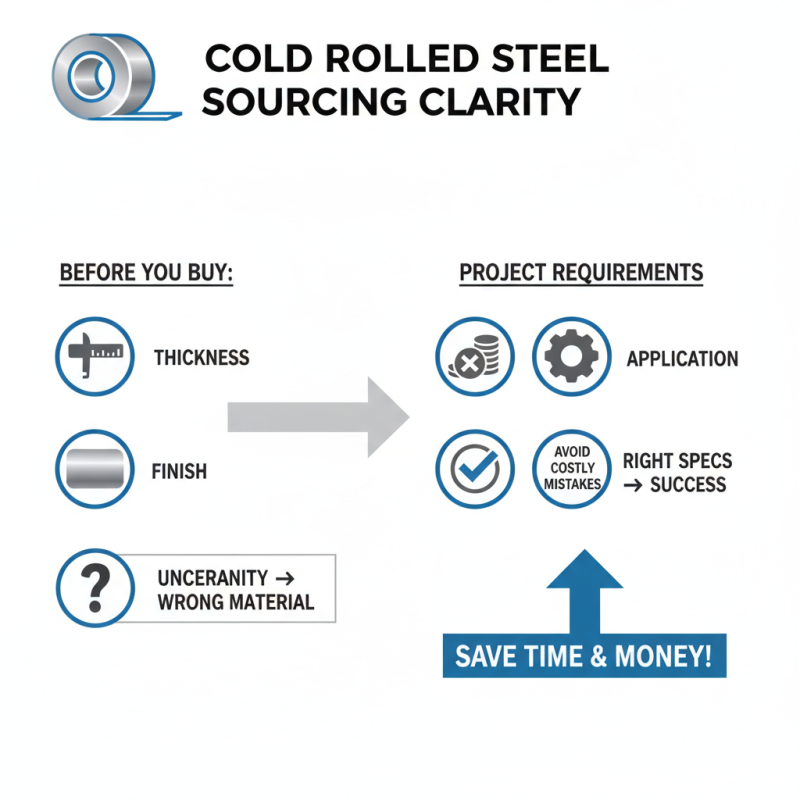
When sourcing cold rolled steel, clarity is crucial. Identify your project's specific requirements first. Consider the thickness, width, and finish necessary for your application. If you're unsure about these specifications, it can lead to purchasing materials that do not meet your needs. Misjudgment in these areas is common and can result in unexpected costs down the line.
Next, establish a reliable network of suppliers. Look for local distributors who understand your industry. Communication is key; ask questions about their sourcing practices and production standards. Don't hesitate to request samples. Sometimes, the surface appearance or texture may not be suitable for your design, which can only be confirmed through physical inspection.
Finally, consider pricing but don’t let it be your only focus. While it's tempting to go for the cheapest option, cheaper does not always mean better. Reflect on the long-term benefits of quality products. Compare quotes, but weigh the benefits of durability and reliability. Balancing cost with quality can be challenging, yet it is essential for the success of your project.

 Angle Steel
 Channel Steel
 Universal Beam (l-Beam)
 H-Beam Steel
 Galvalume Steel Coil
 Galvalume Steel Sheet
 Galvanized Steel Sheet
 Color Coated Plate
 Stainless Steel Bar
 Stainless Steel Pipe
 Steel Bar
 Wire Rope
 Carbon Steel Pipe
 Carbon Steel Plate
 Aluminum Plate
 Aluminum Coil
 Aluminum Pipe
 Aluminum Bar
 Magnesium Ingot
 Fasteners