Top Uses of Stainless Steel Tube in Modern Applications?
In today's world, the significance of the Stainless Steel Tube is undeniable. Many industries rely on its durability and versatility. As John Smith, a leading expert in metallurgy, aptly states, “Stainless Steel Tubes provide unmatched strength and resistance, essential for modern applications.” This highlights their role in various sectors.
From construction to automotive, these tubes are everywhere. They are often chosen for their corrosion resistance and aesthetic appeal. Engineers find creative uses that push boundaries. However, challenges in sourcing high-quality stainless steel remain a concern. The inconsistency in manufacturing can lead to unexpected failures.
Moreover, the environmental impact of stainless steel production raises questions. Companies must balance their needs with sustainability. While the advantages of Stainless Steel Tubes are clear, a responsible approach is essential. Looking at their top uses helps us appreciate both their benefits and limitations. The future trends signal exciting possibilities but also reflect the pressures of our time.

Key Properties of Stainless Steel Tubes
Stainless steel tubes are known for their impressive properties. They resist rust and corrosion effectively. This makes them suitable for various environments. They maintain structural integrity even in high-stress situations. Additionally, they offer excellent thermal conductivity. Such characteristics enhance their utility in modern applications.
Another key property is their strength-to-weight ratio. Stainless steel tubes can withstand high pressure while being relatively lightweight. This is important in industries like aerospace and automotive. They are essential for fluid transport due to their durability. Yet, the manufacturing processes can introduce inconsistencies. This requires thorough quality checks to ensure reliability.
Moreover, these tubes are highly versatile. They can be molded into different shapes and sizes. This adaptability allows their use in unique settings. However, the costs can sometimes be a barrier for smaller projects. Balancing budget constraints with needs remains a challenge for many.
Common Manufacturing Processes for Stainless Steel Tubes
Stainless steel tubes are widely used in various industries due to their strength and corrosion resistance. The manufacturing process for these tubes is crucial to their quality. One common method is seamless tube production. This process begins with a solid round billet. The billet is heated and pierced, creating a hollow tube. This technique ensures the tube has no welded seams, providing greater durability.
Welded stainless steel tubes are another popular option. In this process, flat sheets of stainless steel are rolled into a cylindrical shape and then welded along the seam. While this method is often quicker, it can introduce weaknesses where the weld occurs. Quality control measures are essential here to minimize defects. Sometimes, the welds may not meet the necessary standards, leading to failures.
Another interesting process is the drawn-over-mandrel (DOM) technique. This comprises pulling a tube over a mandrel to achieve desired specifications. Although it offers precision, it can be more challenging to execute. The risks of creating inconsistencies exist, so skilled technicians are vital. Balancing efficiency with quality can be an ongoing challenge in stainless steel tube manufacturing.
Industrial Applications of Stainless Steel Tubes
Stainless steel tubes are crucial in many industrial applications. They offer durability, corrosion resistance, and strength. According to a report by Grand View Research, the stainless steel tube market was valued at over $7 billion in 2021, indicating robust demand across sectors.
In the construction industry, stainless steel tubes serve as structural components. They are favored for their ability to withstand harsh environmental conditions. In chemical processing, these tubes are vital for transporting liquids and gases safely. The American Institute of Steel Construction states that stainless steel’s resistance to corrosion enhances project longevity.
The energy sector also relies heavily on stainless steel tubes. They are used in oil and gas pipelines, where high pressure is common. However, some challenges remain. Not all stainless steel grades are suited for every application. Misapplication can lead to failures, necessitating careful selection based on the specific environment and requirements. Balancing performance and cost-efficiency is an ongoing discussion in the industry.
Top Uses of Stainless Steel Tube in Modern Applications
| Application |
Material Type |
Industry |
Key Properties |
| Fluid Transport |
316L Stainless Steel |
Oil and Gas |
Corrosion Resistance, Strength |
| Construction |
304 Stainless Steel |
Architecture |
Durability, Aesthetic Appeal |
| Automotive Components |
430 Stainless Steel |
Automotive |
Lightweight, Heat Resistance |
| Food Processing |
308 Stainless Steel |
Food and Beverage |
Hygienic, Non-reactive |
| Medical Equipment |
316L Stainless Steel |
Healthcare |
Biocompatibility, Sterilization |
Stainless Steel Tubes in Construction and Architecture
Stainless steel tubes are becoming increasingly popular in construction and architecture. Their strength and durability make them ideal for various applications. Architects appreciate their sleek appearance, which enhances modern designs. Buildings with stainless steel elements often stand out with a contemporary look.
One common use is in structural frameworks. Stainless steel tubes provide support while keeping the design open and airy. They resist corrosion, ensuring longevity in harsh environments. This quality is crucial for both skyscrapers and bridges. Another application is in handrails and staircases. They offer safety without compromising style. When polished, they can reflect light beautifully, adding elegance to any space.
While the benefits are clear, challenges exist. The cost can be higher compared to other materials. Fabrication requires skilled labor to ensure quality joints and connections. Designers must consider the weight and load-bearing capacity carefully. Despite these complexities, the versatility of stainless steel tubes in architecture shines through. They remain a preferred choice for many innovative projects, blending form and function effectively.
Medical Uses of Stainless Steel Tubes in Healthcare
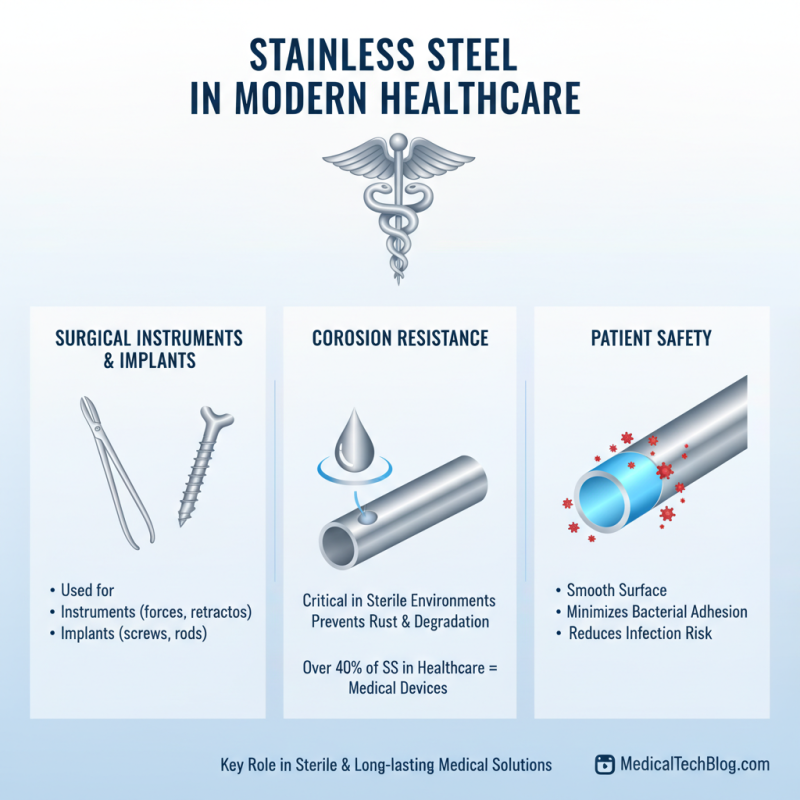
Stainless steel tubes play a crucial role in modern healthcare. In surgical settings, they are used for instruments and implants. Their ability to resist corrosion is vital in sterile environments. Research shows that over 40% of stainless steel's use in healthcare goes toward medical devices, especially in surgeries. The smooth surface of these tubes minimizes bacteria adhesion, enhancing patient safety.
Tips: Always consider the material's grade. Not all stainless steel is equal. Some grades are more suitable for specific applications. Consult with experts to ensure you choose the right type for your needs.
Another significant application is in diagnostic equipment. Stainless steel tubes can withstand high pressures, making them ideal for various tools. For example, in blood sampling devices, durable tubes are essential for accurate results. The demand for such equipment continues to rise. A recent report noted a projected growth of 7% annually in the medical device market.
Tips: Pay attention to maintenance. Even stainless steel needs proper care to stay hygienic. Regular cleaning and inspection can prevent issues later.

 Angle Steel
 Channel Steel
 Universal Beam (l-Beam)
 H-Beam Steel
 Galvalume Steel Coil
 Galvalume Steel Sheet
 Galvanized Steel Sheet
 Color Coated Plate
 Stainless Steel Bar
 Stainless Steel Pipe
 Steel Bar
 Wire Rope
 Carbon Steel Pipe
 Carbon Steel Plate
 Aluminum Plate
 Aluminum Coil
 Aluminum Pipe
 Aluminum Bar
 Magnesium Ingot
 Fasteners