
 Angle Steel
 Channel Steel
 Universal Beam (l-Beam)
 H-Beam Steel
 Galvalume Steel Coil
 Galvalume Steel Sheet
 Galvanized Steel Sheet
 Color Coated Plate
 Stainless Steel Bar
 Stainless Steel Pipe
 Steel Bar
 Wire Rope
 Carbon Steel Pipe
 Carbon Steel Plate
 Aluminum Plate
 Aluminum Coil
 Aluminum Pipe
 Aluminum Bar
 Magnesium Ingot
 Fasteners
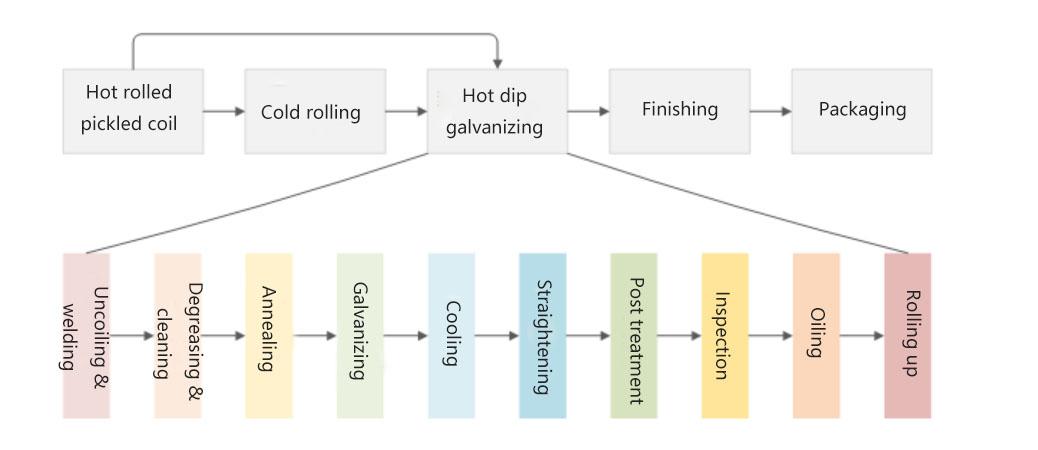
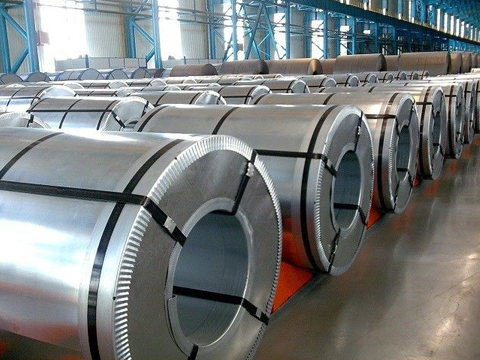
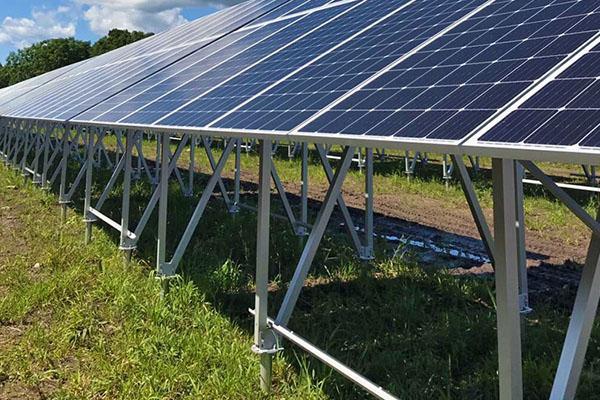
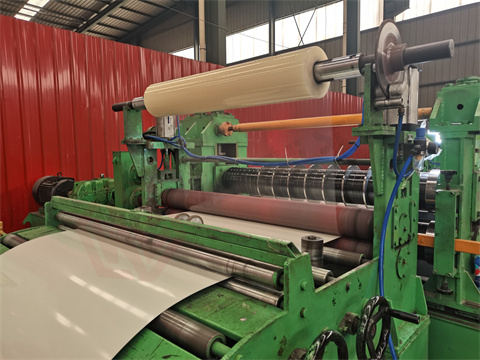



Wire Rod Production Process Introduction Diagram
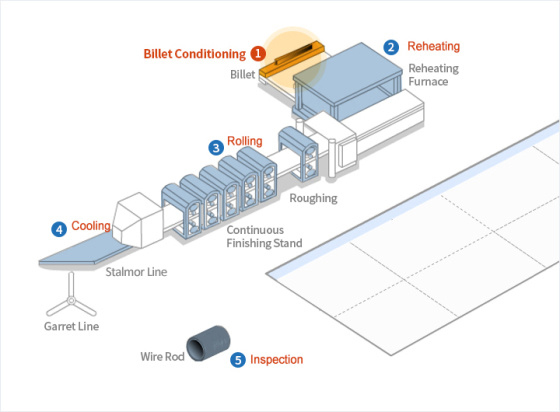
1. Billet Conditioning: This important process involves a thorough inspection of the surface quality of the billet and removal of any defects. Shot peening is used to remove surface scale, while magnetic particle testing and visual inspection help identify and resolve defects using a grinder. In addition, ultrasonic testing as well as dimensional and geometric inspections are an integral part of the internal quality assurance process.
2. Reheating: The temperature and duration of furnace reheating are customized based on the specific application of the product. To prevent decarburization from affecting surface quality, the billet is preheated at a controlled low temperature before entering the heating furnace. To achieve this, the ratio of fuel to air needs to be tightly controlled.
3. Rolling: Accurately control the temperature, draft force, and deformation speed during the rolling process to meet customer requirements for material performance. Other measures to ensure surface quality include adjusting roll roughness and gaps, detecting cracks and correcting dimensions.
4. Cooling: The coiling temperature of the spinning machine, the air flow and moving speed of the cooling bed fan, and the cooling speed of the insulation cover are all carefully controlled to ensure that the product meets various specifications. application. High carbon steel wire rod is cooled quickly to obtain the microstructure required for successful drawing, while low carbon steel is cooled slowly to provide the softness required by the customer, eliminating the need for an annealing process.
5. Inspection: Samples are taken from the front and rear edges of the product after rolling and cooling for testing to identify defects in size, surface, or material integrity. In addition, packaging and labels are inspected according to customer requirements before shipment.