2026 How to Choose the Best Stainless Steel Round Pipes for Your Projects?
When it comes to selecting the right materials for construction, one essential product stands out: Stainless Steel Round Pipes. Renowned expert in material science, Dr. Emily Carter, emphasizes, "Choosing the right pipe is crucial for the integrity and longevity of any project." This highlights the significance of making informed decisions in your selections.
Stainless Steel Round Pipes are widely used in various applications, from plumbing to structural components. Their durability and resistance to corrosion make them a preferred choice. However, not all pipes are created equal. Projects can suffer if the wrong type is used. Distinct specifications, such as diameter and thickness, play a vital role in their performance. It’s important to evaluate these details carefully.
Understanding the specific needs of a project can be challenging. Many overlook the impact of quality on overall success. For instance, a slight variation in alloy composition can alter the pipe's strength. Therefore, a reflective approach is necessary. Ultimately, the right choice in Stainless Steel Round Pipes can not only enhance functionality but also ensure safety and compliance in your projects.

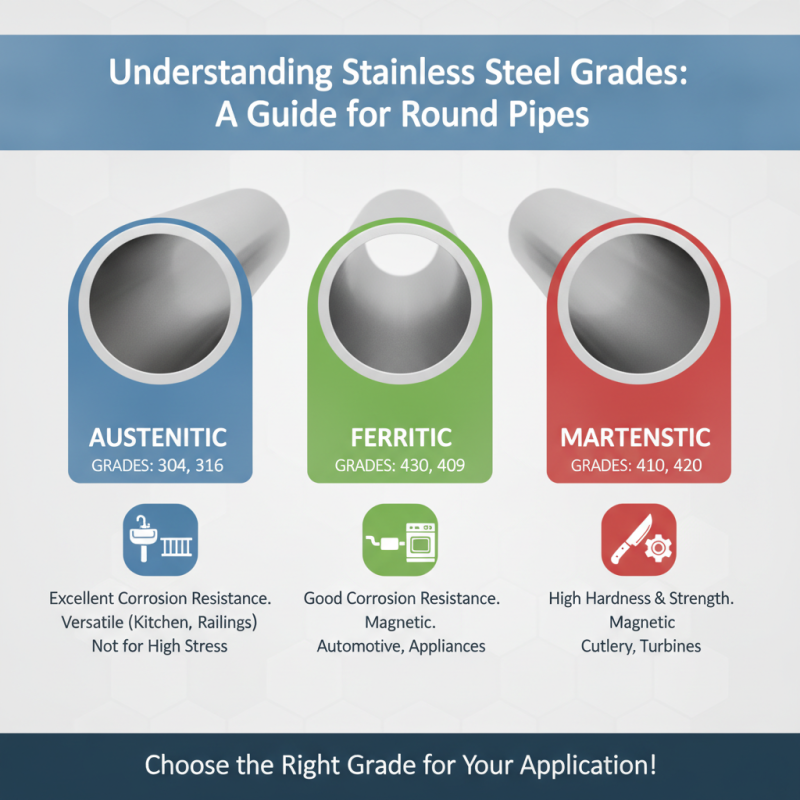
Understanding Stainless Steel Grades: A Guide for Round Pipes
When selecting stainless steel round pipes, it’s essential to understand the different grades available. Stainless steel is categorized mainly into austenitic, ferritic, and martensitic types. Austenitic stainless steels, like the common 304 and 316 grades, offer excellent corrosion resistance. These materials are suitable for various applications, from kitchen equipment to outdoor railings. However, they may not be the best choice for high-stress scenarios.
Ferritic stainless steels have magnetic properties and are less ductile. They perform well in moderate temperatures and are typically less expensive. Still, they offer less corrosion resistance than austenitic grades. In contrast, martensitic stainless steels are known for their hardness. These alloys can be heat treated, providing strength but may lack corrosion resistance. Choosing the right grade requires assessing the environment and intended use of the pipes.
Ignoring the specific requirements of your project could be costly. Improper selection of stainless steel grades might compromise the durability and longevity of your pipes. Therefore, considering factors like corrosion resistance, temperature extremes, and mechanical stress is crucial. A thoughtful approach can lead to better outcomes and fewer regrets in the long run.
Key Factors in Selecting Stainless Steel Round Pipes for Your Project
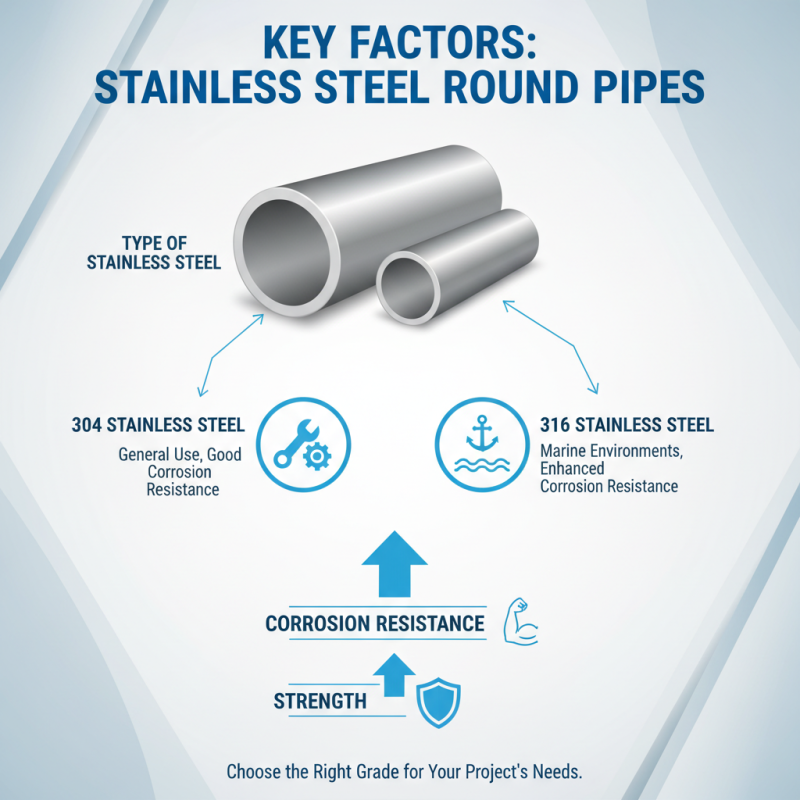
When selecting stainless steel round pipes for your project, key factors come into play. Understanding the type of stainless steel is crucial. Different grades offer varying corrosion resistance and strength. For instance, 304 stainless steel is suitable for general use, while 316 provides enhanced resistance in marine environments.
Consider the pipe dimensions that fit your needs. Diameter, thickness, and length impact both performance and aesthetics. Pipes that are too thin may not withstand pressure, while those too thick can be cumbersome. Balancing durability and weight is essential. Measure accurately to avoid costly mistakes.
Tips: Always assess the environment where the pipes will be used. For outdoor applications, opt for higher-grade stainless steel. Keep in mind, the finish of the pipe affects not only appearance but also performance. A polished finish can resist corrosion better but may require more maintenance.
Lastly, ensure you understand the manufacturing process. Welded pipes are often cheaper but may have weaknesses. Seamless pipes tend to be stronger but come at a higher price. Each option has its pros and cons. Reflect on your project requirements to make the best choice.
Comparison of Round Pipe Diameters and Wall Thickness in Different Applications
When selecting stainless steel round pipes for various projects, understanding pipe diameters and wall thicknesses is vital. These factors greatly influence performance and durability. Different applications require specific characteristics from the pipes. For instance, larger diameters provide higher flow rates, which is crucial in plumbing systems. On the other hand, smaller diameters are often sufficient for structural applications.
Tips: Consider the type of fluid or gas that will flow through the pipes. This can help determine the thickness needed to withstand pressure and prevent leaks. Excessively thick walls may add unnecessary weight and cost, while too thin walls might compromise safety. Striking a balance is essential.
In industrial applications, wall thickness can vary significantly. Thicker walls are used for high-pressure systems, while standard wall thickness can serve in low-pressure scenarios. The right choice can impact both efficiency and safety. Evaluate the project’s specific requirements carefully. Reflect on how slight miscalculations in diameter or thickness could lead to project delays or additional costs. Choosing the correct specifications is a crucial step that requires careful consideration.
Corrosion Resistance and Durability of Stainless Steel Round Pipes
When selecting stainless steel round pipes, corrosion resistance and durability are paramount. These properties make stainless steel a preferred choice for various applications. Stainless steel contains chromium, which forms a protective oxide layer. This layer prevents rust and corrosion. In environments with high moisture or chemical exposure, this feature is crucial.
The durability of stainless steel round pipes is another advantage. They can withstand considerable stress and impact. However, not all grades of stainless steel are equal. Some may be more prone to pitting or stress corrosion cracking under specific conditions. Selecting the right grade for your project is essential. Pay attention to the environment and the expected load.
Even with their strengths, stainless steel pipes may have drawbacks. They can be more expensive than alternatives like carbon steel. Additionally, their surface can scratch, affecting appearance. Regular maintenance might be necessary to keep them looking new. Always consider the balance between cost and performance when choosing materials for your projects.
Corrosion Resistance and Durability of Stainless Steel Round Pipes
Cost Efficiency and Sourcing Strategies for Quality Stainless Steel Pipes
When embarking on projects that require stainless steel round pipes, cost efficiency is paramount. Evaluating the cost of materials can significantly impact your project budget. It's essential to understand the total cost, which includes not just the purchase price but also shipping and handling fees. Seek suppliers that offer transparent pricing models. This will help you avoid unpleasant surprises later. Building a relationship with your supplier can lead to discounts for bulk purchases, enhancing overall savings.
Sourcing strategies also play a critical role. Researching potential suppliers is vital. Look for manufacturers with solid reputations and positive customer reviews. Reach out to industry experts or use online forums to gather insights. It is beneficial to obtain multiple quotes before making a decision. This not only helps maintain cost efficiency but also gives you a sense of the market rate for stainless steel pipes.
Be wary of prices that seem too low; they may compromise quality. Remember, investing in quality materials tends to pay off over time, reducing the risk of rework and maintenance issues. Understanding these aspects will empower you to make informed decisions for your projects.

 Angle Steel
 Channel Steel
 Universal Beam (l-Beam)
 H-Beam Steel
 Galvalume Steel Coil
 Galvalume Steel Sheet
 Galvanized Steel Sheet
 Color Coated Plate
 Stainless Steel Bar
 Stainless Steel Pipe
 Steel Bar
 Wire Rope
 Carbon Steel Pipe
 Carbon Steel Plate
 Aluminum Plate
 Aluminum Coil
 Aluminum Pipe
 Aluminum Bar
 Magnesium Ingot
 Fasteners