How to Choose the Right Stainless Plate for Your Project?
Choosing the right stainless plate for your project demands careful consideration. According to John Smith, a leading expert in stainless materials, "The right stainless plate can make or break your design." His words emphasize the significance of selecting a suitable type tailored to your specific needs.
The stainless plate industry offers various options, each with unique properties. Factors like thickness, grade, and finish play crucial roles in your choice. You must evaluate your project requirements, including durability and corrosion resistance. Each detail can shift the outcome of your project significantly.
Even small decisions often lead to unexpected challenges. Sometimes, what seems like a minor choice turns into a major setback. Therefore, you should take the time to gather insights from industry professionals and firsthand experiences. This process enhances your understanding and aids in making informed decisions.
Understanding the Different Types of Stainless Steel Plates
When selecting a stainless steel plate, it’s essential to understand the various types available. Stainless steel plates come in different grades, each with unique properties. The most common types are 304 and 316 stainless steels. Grade 304 is known for its excellent corrosion resistance. It is suitable for most indoor applications. However, it might not perform as well in harsh environments.
On the other hand, 316 stainless steel contains molybdenum, enhancing its resistance to salt and acidic environments. This makes it ideal for marine applications or chemical processing. Understanding these differences can make or break your project.
Also, pay attention to the plate's thickness and finish. Thicker plates provide better durability but may be heavier. The finish can impact both appearance and functionality. A brushed finish can hide scratches better than a mirror finish. Consider your project's specific needs before making a decision. It’s often a balancing act between cost, durability, and performance. Don't be afraid to evaluate and re-evaluate your choice.
Key Factors to Consider When Selecting a Stainless Steel Plate
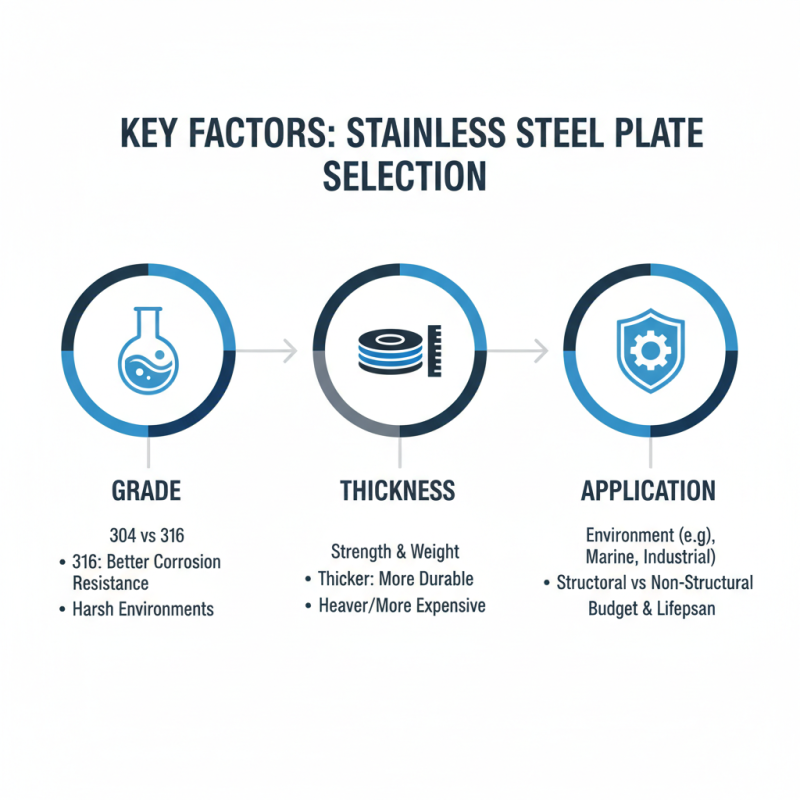
When selecting a stainless steel plate, multiple factors come into play. The grade of stainless steel significantly affects performance and durability. Common grades include 304 and 316, where 316 offers better corrosion resistance. This is crucial for projects exposed to harsh environments. The thickness is another essential aspect; it influences strength and weight. A thicker plate may be more durable but could also be heavier and more expensive.
Consider the intended application as well. Welding requirements often vary based on the intended use. Some projects may need a specific finish, like brushed or polished. Each finish offers distinct advantages, impacting both aesthetics and functionality. Additionally, assess availability and lead times. Not every supplier has the same stock, which can delay your project. Reliability of the supplier is vital; look for ones with consistent quality and service history.
Reflecting on these factors can lead to better decisions. It's easy to get overwhelmed by options. Take the time to understand each feature that impacts your project. Mistakes can be costly, both in time and resources. Prioritizing the right attributes will ultimately pay off in project success.
Evaluating Corrosion Resistance and Durability Requirements
When selecting a stainless plate for your project, evaluating corrosion resistance and durability is crucial. According to a report by the International Stainless Steel Forum, over 70% of stainless steel applications face harsh environmental conditions. This highlights the need to choose materials that withstand moisture, acids, or other harmful substances effectively.
Stainless steel grades like 304 and 316 are popular due to their corrosion resistance. Grade 316 offers better protection against chlorides and sulfides, making it suitable for marine applications. On the other hand, 304 is sufficient for indoor projects or areas with low exposure to corrosive agents.
Tip: Consider conducting a corrosion test specific to your project environment. This can provide valuable insight into how well your chosen plate will perform. Remember, not all stainless steels are created equal. Some may offer better durability but could be less resistant to certain corrosives. Reassessing your project's requirements can lead to better material choices.
In some instances, you may find that cost-effective options lack performance. This can create long-term issues that outweigh initial savings. It's essential to balance quality and budget, ensuring that the chosen plate meets both current and future demands of your project.
Assessing Cost and Availability of Stainless Steel Plates
When assessing the cost and availability of stainless steel plates, a few key factors come into play. Markets often fluctuate due to global demand. Prices can vary significantly based on thickness, finish, and grades. Steel grades like 304 and 316 are common, but premium options can add considerable cost. It is crucial to research local suppliers and compare quotes. This helps to avoid overspending.
Availability can be tricky, especially with sudden spikes in demand. Sometimes, standard sizes are in stock, while custom dimensions may lead to longer wait times. Delays can disrupt project timelines. It's practical to build relationships with suppliers. They may provide insights into upcoming price changes. Regular communication can help you stay informed.
In some instances, cheaper materials might be available but come with hidden costs. Weak quality can lead to higher maintenance over time. Consider long-term durability when making your decision. Balancing cost and performance is vital. Be prepared to reassess your choices as your project evolves. Being flexible can ultimately save time and money.
Cost and Availability of Different Stainless Steel Plates
Application-Specific Considerations for Stainless Steel Plates
When selecting stainless steel plates, the application matters significantly. Different industries have unique requirements that dictate the type of stainless steel needed. For example, in the food processing sector, plates must resist corrosion and contamination. A study by the International Stainless Steel Forum notes that AISI 304 is widely used in such applications due to its excellent resistance to oxidation.
Tips: Always consider the environment in which the steel will be used. Chemical exposure can impact the choice of material. Corrosion-resistant options are crucial for marine applications, where salt exposure is significant.
Healthcare facilities demand a different approach. Stainless steel plates in hospitals should be easy to clean and sterilize. A report from the American National Standards Institute emphasizes the need for surfaces that prevent bacterial growth. Materials with a low roughness average (Ra) are more suitable here.
Tips: Test for surface finish before making a decision. Unlike thicker plates, thinner variants may be prone to flexing under load. Assess the strain they will endure to prevent failures in critical applications.
How to Choose the Right Stainless Plate for Your Project? - Application-Specific Considerations for Stainless Steel Plates
| Application |
Stainless Steel Grade |
Thickness (mm) |
Corrosion Resistance |
Typical Uses |
| Food Processing |
304 |
3 |
Good |
Tables, utensils, equipment |
| Oil & Gas Industry |
316 |
6 |
Excellent |
Pipes, valves, fittings |
| Construction |
430 |
4 |
Moderate |
Cladding, interior panels |
| Pharmaceuticals |
316L |
5 |
Excellent |
Storage tanks, processing equipment |
| Marine Applications |
Duplex (2205) |
8 |
Outstanding |
Boat fittings, seawater applications |

 Angle Steel
 Channel Steel
 Universal Beam (l-Beam)
 H-Beam Steel
 Galvalume Steel Coil
 Galvalume Steel Sheet
 Galvanized Steel Sheet
 Color Coated Plate
 Stainless Steel Bar
 Stainless Steel Pipe
 Steel Bar
 Wire Rope
 Carbon Steel Pipe
 Carbon Steel Plate
 Aluminum Plate
 Aluminum Coil
 Aluminum Pipe
 Aluminum Bar
 Magnesium Ingot
 Fasteners