Top 10 Uses of Stainless Steel Wire in China Today?
In China’s fast-evolving industrial landscape, "Stainless Steel Wire" plays a crucial role. With a wide range of applications, it has become indispensable in various sectors. According to Dr. Li Wei, a leading expert in materials engineering, "Stainless Steel Wire is vital for innovation in engineering and construction."
The flexibility and strength of stainless steel wire enhance its use in agriculture, manufacturing, and construction. This material withstands corrosion and extreme temperatures, making it ideal for many environments. For instance, farmers utilize it for fencing, ensuring durability over many seasons. Moreover, the automotive industry integrates this wire for safety features, highlighting its importance in vehicle design.
Despite its many benefits, challenges persist. The market faces fluctuations in material prices, which can affect overall production. Additionally, the environmental impact of wire production raises questions. Businesses must consider sustainable practices moving forward. As industries evolve, the demand for high-quality stainless steel wire remains robust, shaping the future of manufacturing and innovation in China.
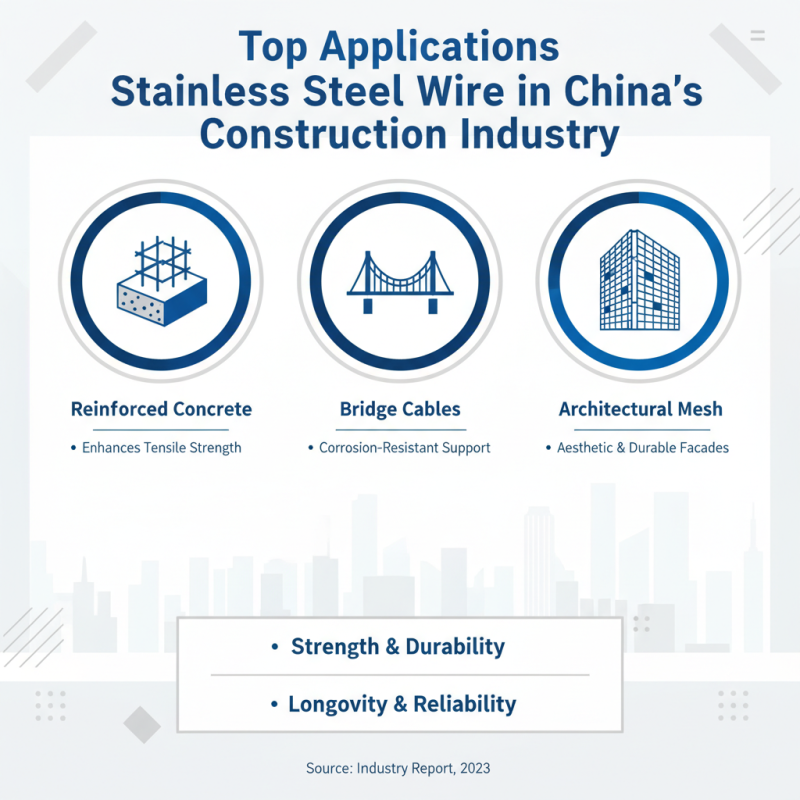
Top Applications of Stainless Steel Wire in China's Construction Industry
Stainless steel wire plays a crucial role in China's construction industry. Its strength and corrosion resistance make it a go-to material for various applications. One significant use is in reinforced concrete. Stainless steel wire enhances the tensile strength of concrete, ensuring structures are robust and long-lasting.
Another key application is in scaffolding systems. The lightweight nature of stainless steel wire makes it ideal for scaffolding, allowing for easy assembly and disassembly. This reduces labor costs and increases overall efficiency. Additionally, stainless steel wire is used for safety mesh and barriers, helping protect workers during construction.
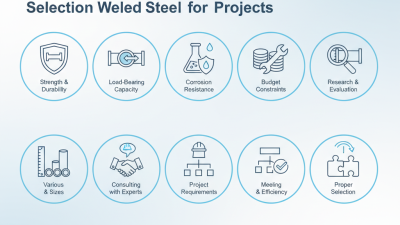
Tips: When selecting stainless steel wire, assess the specific requirements of your project. Consider factors like corrosion exposure and tensile strength. Opt for high-quality materials to ensure safety and durability. Finally, regular inspections can help you identify wear or potential failures before they become significant issues.
Utilization of Stainless Steel Wire in Manufacturing and Fabrication Processes
Stainless steel wire is integral to various manufacturing and fabrication processes in China. The versatility of stainless steel allows it to be used in countless applications. According to recent industry reports, the demand for stainless steel wire in manufacturing has grown by over 7% annually. This rise reflects its importance in construction, automotive, and machinery industries.
In construction, stainless steel wire is frequently used for reinforcing concrete and in wire mesh. It offers strength and corrosion resistance, which are crucial for building longevity. The automotive sector employs stainless steel wire for cable manufacturing and safety systems. Its lightweight and durable nature enhance vehicle performance. A notable insight is that around 30% of stainless steel wire produced is consumed by these two sectors.
Yet, challenges remain. The production of stainless steel wire can be energy-intensive and costly. Furthermore, as demand increases, supply chain issues may arise, threatening availability. Companies need to adapt to variable market conditions while maintaining quality standards. Innovation in manufacturing processes will be vital for meeting future needs. By focusing on efficiency and sustainability, the industry can optimize its use of stainless steel wire moving forward.
Role of Stainless Steel Wire in China’s Automotive Sector: An Overview
In China’s automotive sector, stainless steel wire plays a critical role. Its strength and resistance to corrosion make it a key component in various automotive applications. Many manufacturers use it for reinforcing components, ensuring durability and safety in vehicles.
Stainless steel wire is also essential for producing springs and cables. These components require high tensile strength and flexibility. Car manufacturers rely on stainless steel wire for reliability under stress. However, some challenges exist. Sourcing high-quality wire can be difficult, affecting production schedules. Additionally, fluctuations in raw material prices can pose a risk to manufacturers.
The application of stainless steel wire extends beyond structural support. It is utilized in electronic systems, ensuring proper functioning in harsh environments. Despite its advantages, manufacturers must constantly assess their wire suppliers. Quality control is vital to maintain standards. As the market grows, so does the need for innovation and efficiency.
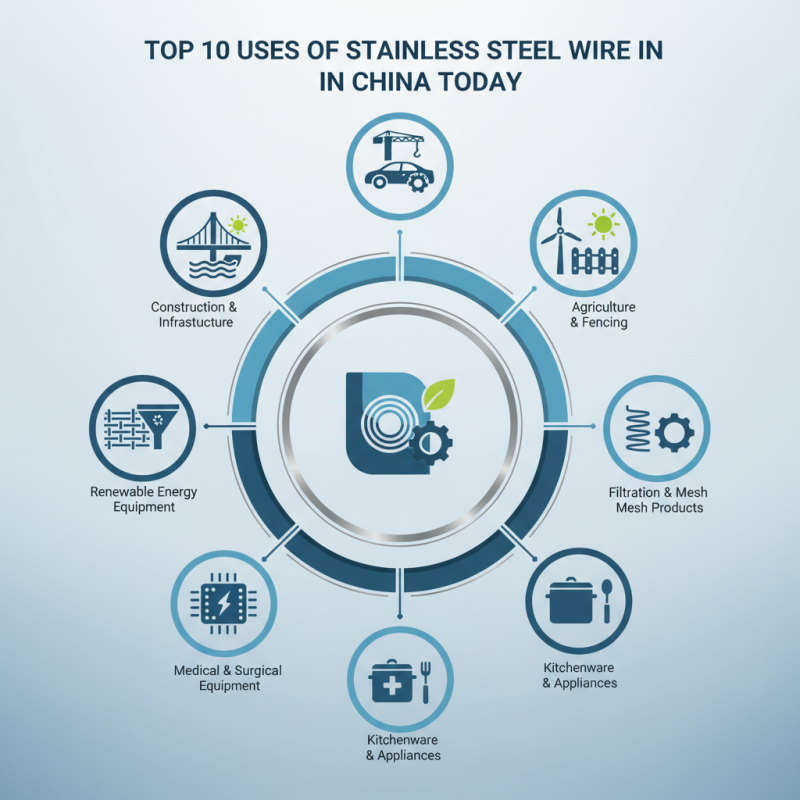
Top 10 Uses of Stainless Steel Wire in China Today
Emerging Trends in the Use of Stainless Steel Wire for Electrical Wiring
Stainless steel wire is gaining traction in electrical wiring applications across China. According to industry reports, demand for stainless steel components in electrical systems is projected to grow by 15% this year. This growth is driven by the need for durable, corrosion-resistant materials in harsh environments. Given China’s rapid urbanization and expansion of infrastructure, the role of stainless steel wire in electrical wiring has never been more critical.
Emerging trends indicate a shift towards sustainable practices, which is evident in the increasing use of stainless steel wire. Its recyclability contributes to lower environmental impact compared to traditional materials. Notably, recent studies show that stainless steel can reduce energy consumption in power transmission by up to 20%. However, challenges remain. Higher production costs and limited awareness about benefits hinder its wider adoption.
As companies adapt to these trends, collaboration with material scientists and engineers becomes essential. This partnership can optimize the use of stainless steel wire, enhancing efficiency in electrical systems. Continuous education on its advantages is vital. The industry must address these gaps to unlock the full potential of stainless steel wire in electrical wiring.
Impact of Stainless Steel Wire on China's Aerospace and Defense Applications
Stainless steel wire plays a crucial role in China's aerospace and defense sectors. Its resistance to corrosion and strength make it ideal for various applications. In aerospace, the wire is used in aircraft components, enhancing durability while reducing weight. This is vital for fuel efficiency.
The defense industry utilizes stainless steel wire in manufacturing cables and connectors. These elements require a high degree of reliability. Components made from this wire can withstand harsh environments. They enhance the overall safety and performance of military systems.
**Tip:** Consider the thickness of the stainless steel wire. Different applications may require varying gauges for optimal performance.
Another interesting use is in the production of safety equipment. Stainless steel wire is essential for manufacturing nets and barriers. These features protect both personnel and equipment in sensitive operations.
**Tip:** Regular inspections are vital for maintaining wire integrity. Corrosion can undermine performance, so monitoring is essential.
In summary, stainless steel wire’s applications continue to grow in aerospace and defense. Its properties ensure that China can meet increasing demands in these critical sectors.
Top 10 Uses of Stainless Steel Wire in China Today - Impact of Stainless Steel Wire on China's Aerospace and Defense Applications
| Use Case |
Description |
Industry Impact |
Percentage Contribution |
| Aerospace Components |
Used in manufacturing aircraft frames and engine parts for high strength and durability. |
Improves overall aircraft performance and safety. |
25% |
| Defense Equipment |
Application in vehicles, weapons, and protective gear ensuring reliability in combat situations. |
Enhances military effectiveness and troop safety. |
20% |
| Medical Devices |
Manufacturing of surgical instruments and implants with high corrosion resistance. |
Improves patient outcomes and surgical efficiency. |
15% |
| Electrical Applications |
Utilized in wiring and connectors due to excellent conductivity and resistance properties. |
Ensures enhanced electrical performance and longevity. |
10% |
| Construction Materials |
Reinforcing bars and mesh for enhanced structural integrity in buildings. |
Increases the safety and lifespan of infrastructure. |
10% |
| Automotive Manufacturing |
Used in exhaust systems and frames for durability and weight reduction. |
Improves vehicle efficiency and performance. |
5% |
| Consumer Goods |
Manufactured in kitchenware and appliances for hygiene and aesthetic appeal. |
Enhances product durability and consumer satisfaction. |
5% |
| Telecommunication Equipment |
Wires used in antennas and signal processing units. |
Improves signal strength and clarity. |
3% |
| Marine Applications |
Used in boat fittings and cable systems for resistance against saltwater corrosion. |
Increases vessel durability and operational safety. |
2% |
| Food Processing |
Used in equipment for hygiene and easy cleaning. |
Ensures food safety and quality control. |
2% |

 Angle Steel
 Channel Steel
 Universal Beam (l-Beam)
 H-Beam Steel
 Galvalume Steel Coil
 Galvalume Steel Sheet
 Galvanized Steel Sheet
 Color Coated Plate
 Stainless Steel Bar
 Stainless Steel Pipe
 Steel Bar
 Wire Rope
 Carbon Steel Pipe
 Carbon Steel Plate
 Aluminum Plate
 Aluminum Coil
 Aluminum Pipe
 Aluminum Bar
 Magnesium Ingot
 Fasteners