 Angle Steel
 Channel Steel
 Universal Beam (l-Beam)
 H-Beam Steel
 Galvalume Steel Coil
 Galvalume Steel Sheet
 Galvanized Steel Sheet
 Color Coated Plate
 Stainless Steel Bar
 Stainless Steel Pipe
 Steel Bar
 Wire Rope
 Carbon Steel Pipe
 Carbon Steel Plate
 Aluminum Plate
 Aluminum Coil
 Aluminum Pipe
 Aluminum Bar
 Magnesium Ingot
 Fasteners
Leave Your Message
-
Phone:+86-18365798883
-
E-mail:admin@sdxyy.cn
-
Whatsapp:+8618365798883
-
WeChat

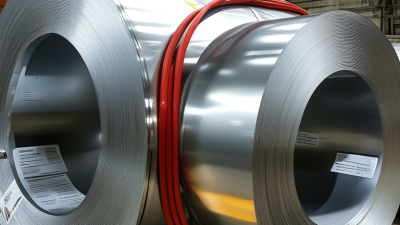
Choosing the best Stainless Coil in 2026 requires more than comparing prices or chromium percentages. Global buyers must examine grade, thickness, width, surface finish, edge condition, and production consistency. A bright 304 coil may suit kitchen equipment, architectural panels, and general fabrication. A 316L coil offers stronger resistance in coastal, chemical, and high-humidity environments. For cost-sensitive indoor applications, 430 can remain practical, although it lacks the corrosion resistance of austenitic grades.
Professor George Krauss, a respected steel metallurgist, wrote, “Steel is an alloy of iron and carbon.” His reminder matters because stainless performance depends on more than one element. Chromium creates passivation, while nickel, molybdenum, nitrogen, and processing conditions influence durability. Buyers should review mill certificates, ASTM A240 or EN 10088 compliance, surface inspection records, and mechanical test results. Small differences in annealing can affect forming behavior. They can also create unexpected production losses.
No ranking is universal. That is the uncomfortable part. A 316L coil may be excessive for a dry indoor application, while a cheaper 304 coil may fail near saltwater. Duplex 2205 can provide strength and corrosion resistance, but fabrication requirements are less forgiving. We may overvalue a low quotation and undervalue stable tolerances. In practice, the best Stainless Coil balances service conditions, processing capability, delivery reliability, and total lifecycle cost. This guide compares leading coil types for global buyers, while recognizing that supplier quality and local manufacturing realities can change the final decision.
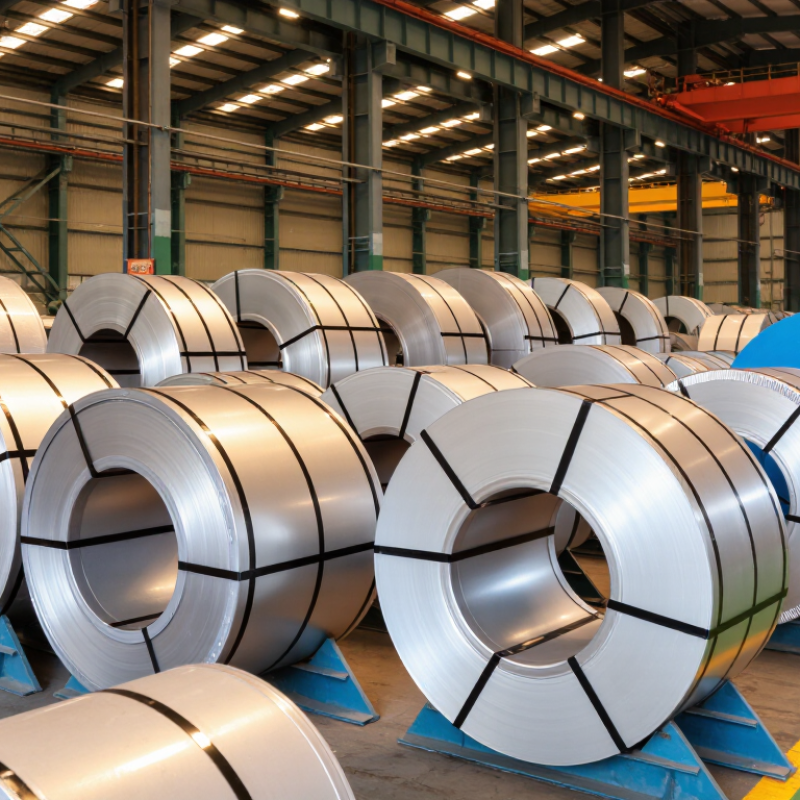
For global buyers, stainless coil selection starts with service conditions, not a fashionable grade. Austenitic coils offer strong corrosion resistance, excellent forming, and reliable welding. They suit food equipment, chemical vessels, and architectural panels. Common options include 304 and 316, but chloride exposure may demand the latter. Their weakness is cost and possible stress corrosion cracking in hot, salty environments.
Ferritic coils contain less nickel and usually cost less. They provide good oxidation resistance, magnetic behavior, and stable performance in appliances, exhaust systems, and indoor panels. However, deep forming and welding require careful control. Martensitic coils can reach higher hardness after heat treatment. They fit blades, shafts, and wear-resistant components. Corrosion resistance is generally lower. That trade-off is easy to overlook.
Duplex coils combine austenitic and ferritic structures. They offer high strength and useful resistance to chloride stress corrosion cracking. They can reduce material thickness, though welding procedures must be qualified. Precipitation-hardening, or PH, coils gain strength through aging treatment. They serve demanding shafts, springs, and aerospace-related components. Buyers should verify chemistry, thickness tolerance, surface finish, mechanical results, and mill certificates. I have seen specifications focus heavily on grade while ignoring coil edge quality. That mistake can create slitting waste. No family wins every project. Temperature, forming radius, delivery condition, and inspection depth still need honest review.
| Stainless Steel Family | Representative Coil Grades | Typical Chemical Features (Mass %) |
Magnetic Behavior | Corrosion Performance | Typical Mechanical Profile (Annealed or Solution-Treated) |
Formability and Weldability | Heat Treatment Response | Common Coil Applications | Best Buying Considerations |
|---|---|---|---|---|---|---|---|---|---|
| Austenitic | 304 / 304L 316 / 316L 321 | Chromium generally about 16–20%; nickel commonly about 8–14%; molybdenum is normally absent in 304 and approximately 2–3% in 316/316L. Low-carbon “L” grades contain a maximum carbon level of about 0.03%. | Generally nonmagnetic in the annealed condition. Cold working can produce some magnetic response. | Excellent general corrosion resistance. 316/316L provides better resistance to chlorides, marine exposure, and many chemical environments than 304/304L. Not immune to pitting or crevice corrosion. | Typical minimum tensile strength is about 515 MPa for 304/304L and about 515 MPa for 316/316L, depending on the applicable standard and product condition. High ductility and impact toughness. | Excellent deep drawing, bending, and general forming capability. Usually the easiest family to weld, although heat tint and sensitization control may be required. | Not hardenable by conventional heat treatment. Strength is increased mainly through cold working. Solution annealing is used to restore corrosion resistance and ductility. | Food and beverage equipment, kitchen and architectural products, pressure vessels, heat exchangers, chemical processing, medical equipment, and general fabrication. | Choose 304L for broad general use and 316L when chloride exposure, marine conditions, or chemical resistance is more important. Confirm surface finish, thickness tolerance, and intergranular-corrosion requirements. |
| Ferritic | 409 / 409L 430 441 | Chromium generally about 10.5–18%; nickel is usually very low, often below 1%; molybdenum may be added in selected grades. Carbon and nitrogen are controlled to support ductility and weldability. | Magnetic in both annealed and cold-worked conditions. | Good resistance to oxidation and general atmospheric corrosion. Chloride pitting resistance is generally lower than that of molybdenum-bearing austenitic or duplex grades. | Typical tensile strength is approximately 380–550 MPa, depending on grade and condition. Lower work-hardening than austenitic steels and good dimensional stability. | Moderate forming capability; suitable for many bends and shallow draws. Weldability varies by grade, thickness, and stabilization; excessive heat input can reduce toughness. | Not hardenable by conventional quenching. Annealing can restore ductility after forming. Stabilized grades such as 409L and 441 are designed to improve high-temperature and welding performance. | Automotive exhaust components, appliance panels, kitchen equipment, architectural trim, heat shields, and decorative indoor applications. | A cost-efficient option when low nickel content, magnetic behavior, and moderate corrosion resistance are acceptable. Select stabilized grades for welded or elevated-temperature service. |
| Martensitic | 410 420 440A / 440C | Chromium commonly about 11.5–18%; carbon is higher than in ferritic and austenitic grades and may range from approximately 0.08% to above 1.0% depending on grade. Nickel is generally low or absent. | Magnetic in annealed, hardened, and tempered conditions. | Moderate corrosion resistance in 410 and 420; higher-carbon grades can provide improved wear resistance but may have lower toughness and more demanding corrosion-control requirements. | Strength varies widely with heat treatment. Hardened and tempered products can reach tensile strengths above 700 MPa, with selected grades exceeding 1,000 MPa. Ductility decreases as hardness increases. | Limited forming after hardening; forming is generally performed in the annealed condition. Welding requires controlled preheating, interpass temperature, and often post-weld heat treatment. | Can be hardened by austenitizing, quenching, and tempering. Final hardness, strength, and toughness depend strongly on carbon content and tempering practice. | Cutlery, surgical instruments, pump and valve components, shafts, fasteners, wear-resistant parts, and moderate-temperature mechanical components. | Select this family when hardness, wear resistance, or high strength is more important than maximum corrosion resistance and deep formability. Specify the required hardness or tensile range. |
| Duplex | 2205 2507 2304 | A balanced ferritic-austenitic structure. Chromium is generally about 21–26%; nickel about 4.5–8%; molybdenum about 0–4%, depending on grade. Nitrogen is intentionally added to support strength and phase balance. | Magnetic because of the ferritic phase. | High resistance to chloride pitting, crevice corrosion, and stress-corrosion cracking compared with many standard austenitic grades. Super duplex grades provide higher alloying and corrosion resistance than 2205. | Typical minimum tensile strength for 2205 is about 620 MPa, with substantially higher yield strength than common 304/316 grades. Good toughness when correctly processed. | Formability is lower than that of austenitic stainless steel, particularly for tight-radius bending. Weldability is good with qualified procedures, but heat input and interpass temperature must preserve the required phase balance. | Not conventionally hardened by quenching. Solution annealing followed by rapid cooling is used; improper thermal exposure can cause undesirable intermetallic phases and reduced corrosion resistance. | Offshore and marine equipment, desalination, chemical processing, pulp and paper, heat exchangers, storage tanks, and oil and gas systems. | A strong choice for chloride-bearing service where higher strength and stress-corrosion-cracking resistance can reduce thickness or maintenance needs. Verify welding qualifications and solution-annealing condition. |
| Precipitation-Hardening (PH) | 17-4 PH 15-5 PH 17-7 PH | Typical 17-4 PH chemistry includes approximately 15–17.5% chromium, 3–5% nickel, and 3–5% copper, with niobium added for precipitation strengthening. Other PH grades use different alloying systems. | Generally magnetic, especially in the solution-treated and aged conditions. | Good general corrosion resistance, broadly comparable to some austenitic grades in suitable environments, but not a substitute for highly alloyed corrosion-resistant grades in severe chloride or chemical service. | Very high strength is available after aging. Depending on grade and aging condition, tensile strength can range from roughly 930 MPa to more than 1,300 MPa. Toughness and ductility vary with the aging condition. | Forming and machining are easiest in the solution-treated condition. Formability becomes limited after aging. Welding is possible with suitable procedures and control of heat treatment. | Strength is developed by precipitation aging after solution treatment. Different conditions, such as H900 or H1150 for 17-4 PH, trade strength against toughness and corrosion resistance. | Aerospace structures, high-strength shafts, pump parts, valves, tooling, fasteners, energy equipment, and precision mechanical components. | Choose PH stainless steel when very high strength, dimensional stability, and moderate-to-good corrosion resistance are required. Specify the exact grade, solution condition, aging condition, and mechanical-property requirements. |
Technical note: Values shown are representative ranges for commonly used grades and may vary with the applicable ASTM, ASME, EN, or ISO product standard, thickness, coil condition, heat treatment, and testing method. Buyers should confirm the material certificate, chemical composition, mechanical properties, surface finish, dimensional tolerances, and required standard before purchase.