How to Choose the Right Carbon Steel Flanges for Your Needs?
Choosing the right carbon steel flanges is crucial for any industrial application. As John Thompson, a leading expert in flange manufacturing, states, "The right flanges ensure safety and efficiency in operations." Understanding the specifications and requirements is vital.
Carbon steel flanges come in various sizes, styles, and grades. Assessing the environment of use is essential. For example, high-temperature applications require specific materials. Flanges must resist corrosion and support high pressure. This complexity can lead to mistakes if not properly evaluated.
Evaluating your project’s needs involves careful consideration. Parameters such as pipe size, pressure rating, and fluid type can’t be overlooked. Many overlook small details, leading to costly errors. Flange mismatches can cause failures, impacting safety and productivity. Therefore, understanding carbon steel flanges and making informed decisions is critical for successful outcomes.
Understanding Carbon Steel Flanges: Types and Specifications
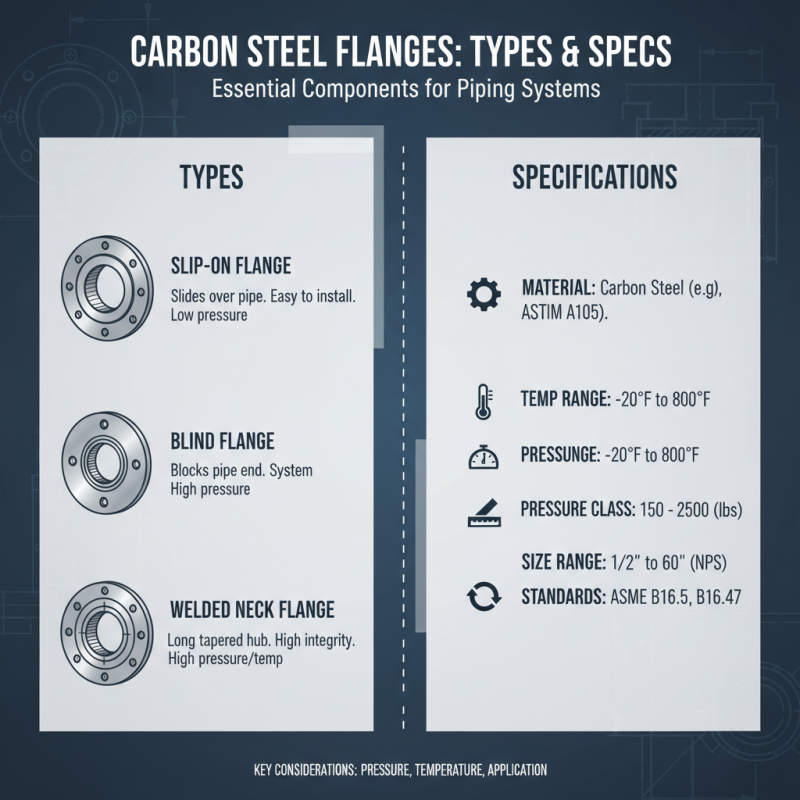
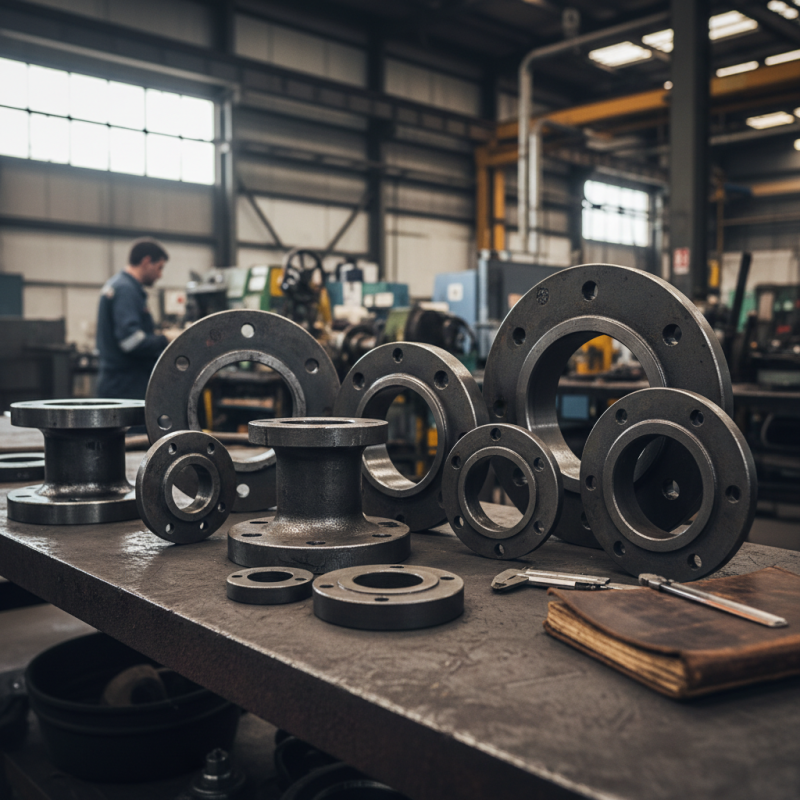
Carbon steel flanges are essential components used in piping systems. Understanding their various types and specifications is critical for effective application. Flanges come in several classifications, including slip-on, blind, and welded neck. Each type serves different purposes based on the pressure and temperature requirements of the system.
According to industry reports, carbon steel flanges typically meet standards set by organizations like ASTM and ASME. The specifications often include yield strength, tensile strength, and corrosion resistance. For example, ASTM A105 is a common specification for carbon steel flanges used in industrial applications. These flanges generally exhibit a yield strength of 36,000 psi, making them suitable for high-pressure systems.
When selecting flanges, consider factors such as size, pressure class, and environmental conditions. The choice can impact performance. Certain applications may require additional features like anti-corrosion coatings or tailored dimensions. It's crucial to assess the environment carefully to prevent failures. Regular reviews and assessments of flange conditions can lead to better maintenance practices. This, in turn, ensures system reliability and longevity.
Identifying Your Project Requirements: Size, Pressure, and Material
When it comes to selecting carbon steel flanges, understanding your project requirements is crucial. Size is often the first consideration. Flanges come in various dimensions, and matching the flange size with your piping is essential. A poorly sized flange can lead to leaks or pressure failures. Always measure the pipe diameter accurately and account for any specific installation conditions.
Pressure ratings are another critical factor. Carbon steel flanges are designed to withstand different pressure levels. Identifying the operational pressure your system will experience is vital. Using a flange rated for lower pressure can lead to catastrophic failures. Remember, safety should always be a priority.
Material compatibility is equally important. While carbon steel is versatile, it may not be suitable for all environments. Consider the corrosiveness of the fluids in the system. If you're unsure, consult with a materials expert. This can save time and costs in the long run. It's essential to evaluate all these elements carefully. A decision made without thorough consideration can have significant consequences.
Evaluating Corrosion Resistance and Temperature Tolerance
Corrosion resistance is a crucial factor when selecting carbon steel flanges. Different environments can pose unique challenges. For instance, flanges used in coastal areas may face saltwater exposure. This can lead to accelerated corrosion. Utilizing coatings or selecting alloy formulations can help mitigate these risks. Evaluate the specific conditions the flanges will encounter.
Temperature tolerance is equally vital. Carbon steel flanges can perform well within a specific temperature range. However, exceeding these limits can compromise their structural integrity. Consider the operating temperatures of your system. Higher temperatures may necessitate upgrades in materials. Assessing thermal performance can prevent failures and leaks.
When evaluating these factors, industry experience plays a significant role. Consulting with experts can provide insight into the best options. Utilizing reliable resources and performance data will guide your decisions. However, it is necessary to remember that no solution is perfect. Learn from past experiences to enhance the selection process.
How to Choose the Right Carbon Steel Flanges for Your Needs? - Evaluating Corrosion Resistance and Temperature Tolerance
| Flange Type |
Corrosion Resistance Rating |
Temperature Tolerance (°C) |
Recommended Applications |
| Carbon Steel A105 |
Moderate |
-29 to 200 |
Oil & Gas, Water Pipelines |
| Carbon Steel A350 LF2 |
Good |
-45 to 300 |
Cryogenic Services, Low Temp Applications |
| Carbon Steel A516 Gr. 70 |
Excellent |
-20 to 450 |
Pressure Vessels, Boiler Applications |
| Carbon Steel A694 F65 |
Very Good |
-29 to 400 |
High-Pressure Applications, Oil & Gas Pipelines |
| Carbon Steel A105N |
Moderate to Good |
-29 to 200 |
General Piping, Structural Applications |
Analyzing Vendor Reputation and Quality Certifications
When selecting carbon steel flanges, vendor reputation holds significant weight. Researching a supplier’s track record can offer insights into their reliability. Look for vendors with a history of positive feedback. Check online reviews and seek recommendations from industry colleagues. This can lead you to trusted sources for high-quality products.
Quality certifications are crucial in evaluating vendors. Reputable manufacturers typically hold industry-standard certifications. These certifications reflect compliance with manufacturing and safety standards. They provide assurance that the flanges meet specific performance criteria. A lack of certification may raise red flags about the quality of materials used.
It's important to note that not every vendor will have thorough certifications. Assessing their willingness to share documentation can be a telltale sign. Engage in conversations that reveal their commitment to quality. A vendor who is open about their processes tends to prioritize quality assurance. It’s a good practice to question claims and seek transparency.
Considering Cost Factors and Long-term Performance
When selecting carbon steel flanges, one must weigh cost factors against long-term performance. A study by the American Society of Mechanical Engineers (ASME) emphasizes that the selection process significantly influences material longevity. The initial price of a flange may be tempting, but lower-quality materials often lead to higher maintenance costs and increased downtime.
Investing in high-quality carbon steel flanges reduces replacement frequency and associated costs. Research shows that, over a 10-year period, switching to a more durable flange can save up to 30% in maintenance and operational expenses. Flanges designed with proper metallurgy and finishing treatments resist corrosion and stress, extending their functional lifespan significantly.
However, budget constraints often force decisions based solely on upfront costs. This approach may lead to regrets when faced with failures in critical applications. Experts recommend a comprehensive evaluation of both the immediate budget and the long-term implications. A flange that lasts longer can justify a higher initial price, reflecting an essential balance between cost and quality.
Cost Factors and Performance of Carbon Steel Flanges

 Angle Steel
 Channel Steel
 Universal Beam (l-Beam)
 H-Beam Steel
 Galvalume Steel Coil
 Galvalume Steel Sheet
 Galvanized Steel Sheet
 Color Coated Plate
 Stainless Steel Bar
 Stainless Steel Pipe
 Steel Bar
 Wire Rope
 Carbon Steel Pipe
 Carbon Steel Plate
 Aluminum Plate
 Aluminum Coil
 Aluminum Pipe
 Aluminum Bar
 Magnesium Ingot
 Fasteners