

Leave Your Message

10 Tips for Buying Stainless Steel Angle?

Buying a Stainless Steel Angle is not simply a matter of choosing a size and requesting a price. Grade, finish, tolerance, load direction, and service environment can change the result. A bright surface may look excellent, yet it may hide unsuitable chemistry or poor dimensional control.

The International Stainless Steel Forum (ISSF) reported approximately 58.4 million tonnes of stainless crude steel production in 2023. That scale reflects strong global demand, but it also reveals a crowded supply chain. Product quality can vary between mills, traders, and finishing operations. The World Steel Association also emphasizes that steel selection should consider performance, lifecycle value, and application conditions, not only purchase cost. For buyers, this means checking mill certificates, ASTM or EN compliance, heat numbers, and actual leg dimensions before payment.

Harry Brearley, credited with developing modern stainless steel, reportedly described his discovery as “a steel that did not rust.” The phrase is memorable, but incomplete. Stainless steel can stain, pit, or corrode when its grade and environment are mismatched. This outline examines ten practical buying checks, including grade selection, thickness, surface finish, straightness, corner geometry, certification, packaging, and supplier reliability.

Measure twice.

No checklist is perfect. Even experienced buyers sometimes overlook chloride exposure, welding requirements, or delivery damage. A useful decision should therefore combine technical evidence with hands-on inspection. The following tips are designed to make that process clearer, while recognizing that the cheapest Stainless Steel Angle may create higher fabrication, maintenance, or replacement costs later.
10 Tips for Buying Stainless Steel Angle?

What Stainless Steel Angle Is and Where It Is Used

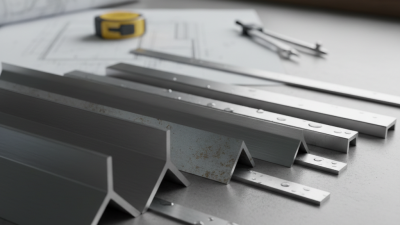
Stainless steel angle is an L-shaped section made by joining two legs at 90 degrees. It supports frames, guards, brackets, shelving, and structural edges. Its strength comes from the shape, not just the metal thickness. In practice, a 304 angle suits many indoor and general industrial settings, while 316 performs better near saltwater, chlorides, and chemical exposure.

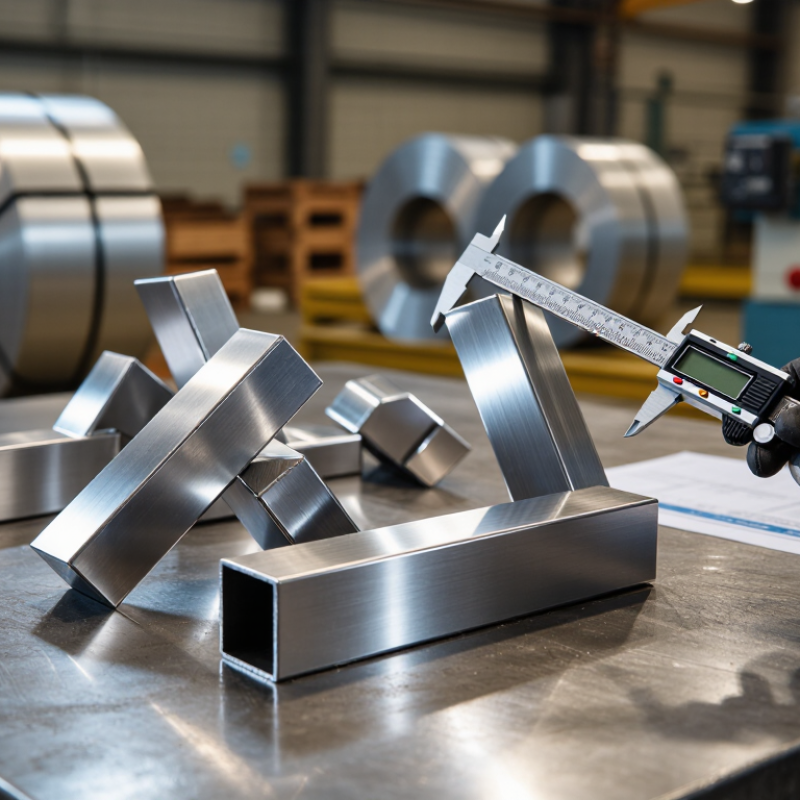
Choose the grade carefully. Check ASTM A276 or EN 10088 compliance, then confirm the heat number, mill certificate, and chemical composition. Measure both legs, thickness, length, corner radius, and straightness. A polished surface may look attractive, but a brushed finish often hides handling marks better.

Inspect the edges for burrs and the inside corner for cracks. Small details matter.

The World Stainless Association reported approximately 58.4 million tonnes of stainless steel production in 2023. That scale reflects broad demand, but it does not guarantee every angle has equal quality. Compare tolerances, corrosion conditions, welding requirements, and load calculations before buying.

For welded assemblies, ask whether the grade and finish match the fabrication process. One overlooked issue is contamination from carbon-steel tools. It can create rust stains later.

I have seen buyers focus on price and ignore documentation. That choice can become expensive. Thin angles may twist during transport, too. Consider protective packaging, cut accuracy, and traceability before approving the order.
How to Identify the Right Stainless Steel Grade

Buying stainless steel angle starts with identifying the correct grade, not admiring its surface finish. A bright angle can still be chemically wrong. Check the service environment, temperature, load, welding method, and cleaning chemicals. Grade 304 suits many indoor and mildly corrosive applications. Grade 316 offers stronger resistance to chlorides, especially near seawater. Grade 430 is magnetic and often works in dry, decorative conditions. Duplex grades provide higher strength, but fabrication requires tighter control.

Use ten checks before approving an order: confirm the standard, grade, dimensions, thickness, surface finish, heat number, mill test certificate, corrosion exposure, welding requirements, and delivery condition. ASTM A240/A240M covers stainless plate, sheet, and strip used for formed components, but the angle’s complete specification still needs verification. Ask for chemical analysis, including chromium, nickel, molybdenum, and carbon. Portable X-ray fluorescence can screen alloy chemistry, but it cannot reliably measure carbon. That limitation is easy to miss.

The World Stainless Association reported global crude stainless steel production of about 58.4 million tonnes in 2023. High volume does not guarantee the right alloy. For a coastal handrail, a 316 angle with documented molybdenum content is more defensible than an unverified “marine grade.” I have seen buyers focus on price and polish, then discover tea staining after installation. That mistake is preventable. Compare the certificate with the marking, inspect cut edges, and retain a small sample for independent testing when the application is critical. Supplier claims deserve evidence.

10 Tips for Buying Stainless Steel Angle? - How to Identify the Right Stainless Steel Grade

No. Buying Tip What to Check Useful Grade or Data Why It Matters
1 Confirm the grade designation Request the material certificate and verify the ASTM, EN, or equivalent designation. Common grades include 304, 304L, 316, 316L, 321, 310S, and 430. A similar appearance does not mean that two stainless steel angles have the same corrosion resistance, weldability, or strength.
2 Match the grade to the environment Consider chlorides, salt spray, humidity, acids, cleaning chemicals, and temperature. 316/316L contains approximately 2–3% molybdenum and generally resists chloride exposure better than 304. Molybdenum improves resistance to localized pitting, but 316 is not immune to severe chloride corrosion.
3 Use 304 for general-purpose applications Check whether the angle will be exposed to ordinary indoor, architectural, food-processing, or mildly corrosive conditions. 304 typically contains about 18–20% chromium and 8–10.5% nickel, depending on the applicable standard. 304 provides a widely used balance of corrosion resistance, formability, weldability, and cost.
4 Consider 430 when nickel reduction is acceptable Confirm that the application does not require the corrosion resistance or deep forming performance of an austenitic grade. 430 is a ferritic grade with approximately 16–18% chromium and is normally magnetic. 430 can be suitable for dry indoor applications, but it generally offers lower corrosion resistance and weldability than 304.
5 Choose the correct carbon level for welding If welding is required, check the carbon limit and the need for post-weld corrosion resistance. 304L and 316L have a maximum carbon content of 0.03% in common specifications. The lower carbon content reduces the risk of chromium-carbide precipitation and intergranular corrosion after welding.
6 Check high-temperature requirements Specify continuous temperature, intermittent temperature, oxidation exposure, and thermal cycling. 310S typically contains about 24–26% chromium and 19–22% nickel and is designed for high-temperature service. High-temperature performance depends on the complete design, atmosphere, loading, and exposure duration—not grade alone.
7 Use stabilized grades when appropriate For welded parts exposed to elevated temperatures, ask whether stabilization is required. 321 is titanium-stabilized; common specifications require titanium of at least five times the carbon content, subject to maximum limits. Titanium stabilization helps reduce sensitization during certain welding and elevated-temperature conditions.
8 Verify mechanical properties Check yield strength, tensile strength, elongation, hardness, and the product condition specified by the design. Mechanical values vary with grade, thickness, heat treatment, cold work, and product standard. The same grade can have different properties in annealed and cold-worked conditions, so the certificate must match the purchase requirement.
9 Specify surface finish and cleanliness Define mill finish, polished finish, brushed finish, pickling, passivation, and allowable scratches or discoloration. Surface roughness and finish designations differ by standard and manufacturing process. A clean, suitable surface supports corrosion resistance; iron contamination, heat tint, and embedded particles can cause staining or corrosion.
10 Confirm dimensions and tolerances Check leg length, thickness, inside radius, length, squareness, straightness, and applicable dimensional tolerance. Specify the product standard, such as ASTM A276/A479 or EN 10056 where applicable, together with the required size and tolerance class. Correct grade selection cannot compensate for an angle that does not fit the structural, fabrication, or installation requirements.
Note: Chemical compositions and mechanical requirements are typical guidance values. Exact limits and tolerances depend on the specified product form, thickness, manufacturing standard, and material certificate.

How to Choose the Correct Angle Size and Thickness

Choosing stainless steel angle starts with the load, not the catalog photo. Define whether the angle supports compression, bending, bracing, or a light trim panel. Then select equal legs, such as 50×50 mm, or unequal legs, such as 75×50 mm. The longer leg can improve connection coverage, but it may increase twisting. Check the span, support points, fastener locations, and indoor or outdoor exposure. Small details matter.

Thickness controls stiffness, weight, weld preparation, and resistance to local buckling. A 50×50×3 mm angle may suit guarding, while 50×50×5 mm offers better rigidity for frames. Do not choose thickness by appearance alone. Calculate section properties and verify deflection under service loads. For structural work, compare the purchase specification with ASTM A276 and the project design code. The International Stainless Steel Forum reported 58.4 million tonnes of stainless crude steel production in 2023, showing the material’s broad industrial use. That scale does not remove the need for precise selection.

Confirm the grade against chloride, moisture, heat, and cleaning chemicals. Request mill certificates, chemical composition, mechanical properties, and dimensional tolerances. Inspect the angle for bent legs, deep scratches, and rough cut ends. World Steel Association reported 1.89 billion tonnes of crude steel production in 2023; stainless remains a specialized material, not a universal substitute. I would recheck every calculation. A thicker angle is not always safer, and my first estimate may still be wrong. Also review connection strength, weld distortion, transport length, and available stock before ordering.

How to Compare Strength, Finish, and Corrosion Resistance

Buying stainless steel angle starts with separating three questions: strength, finish, and corrosion resistance. ASTM A276/A276M lists typical minimum values of 205 MPa yield strength and 515 MPa tensile strength for common austenitic grades. These figures describe material performance, not the complete angle capacity. Leg length, thickness, unsupported span, and buckling can change the result. Check the mill certificate. Do not guess.

Grade selection should match the environment. Industry corrosion research from the NACE IMPACT study estimated global corrosion costs at about US$2.5 trillion, or 3.4% of global GDP. That figure explains why a cheaper grade can become expensive after installation. In chloride areas, 316 usually offers better resistance than 304 because of its molybdenum content. Nickel Institute guidance places their approximate PREN values near 24–26 and 18, respectively. PREN helps compare grades. It is not a guarantee.

Finish matters more than many buyers expect. ASTM A480/A480M identifies finishes such as 2B and No. 4, but appearance alone does not prove corrosion performance. A smooth surface usually holds less dirt and salt. Weld discoloration, trapped moisture, and rough cut edges still need attention. Inspect flatness, corner damage, film protection, and surface roughness when possible. Measure twice. A practical but imperfect approach is ordering samples, exposing them to the real cleaning chemicals, and reviewing the result after several weeks. This small test can challenge assumptions made from polished photographs.

How to Verify Suppliers, Pricing, Standards, and Delivery Terms

Buying stainless steel angle is less about finding the lowest quotation and more about verifying every assumption behind it. Ask the supplier for a complete specification sheet, including grade, thickness, leg dimensions, finish, and dimensional tolerances. Request a recent mill test certificate with the heat number. That number should match the material marking and packing list. Check whether the supplier can provide independent inspection or production samples. A polished photo proves very little. Physical evidence matters.

Compare prices on an equal basis. Confirm the price per kilogram or per length, then include cutting, surface treatment, packaging, freight, insurance, and taxes. Ask about minimum order quantities and possible alloy surcharges. A low unit price may hide expensive delivery terms. I have seen buyers compare three quotations while missing different thickness tolerances. That mistake can distort the entire decision. Recheck the calculation.

Standards must match the application and destination. Confirm the required grade and standard, such as ASTM or EN specifications, with your engineer or inspector. Do not accept “equivalent” without written technical approval. Delivery terms also deserve careful review. Clarify the Incoterm, loading port, estimated production date, shipment window, and responsibility for damage. Use moisture-resistant wrapping and corner protection for long angles. Get photos before dispatch. Keep all revisions in writing. Suppliers can sound precise and still leave gaps. A short contract with measurable requirements is safer than a friendly promise.