 Angle Steel
 Channel Steel
 Universal Beam (l-Beam)
 H-Beam Steel
 Galvalume Steel Coil
 Galvalume Steel Sheet
 Galvanized Steel Sheet
 Color Coated Plate
 Stainless Steel Bar
 Stainless Steel Pipe
 Steel Bar
 Wire Rope
 Carbon Steel Pipe
 Carbon Steel Plate
 Aluminum Plate
 Aluminum Coil
 Aluminum Pipe
 Aluminum Bar
 Magnesium Ingot
 Fasteners
Leave Your Message
-
Phone:+86-18365798883
-
E-mail:admin@sdxyy.cn
-
Whatsapp:+8618365798883
-
WeChat

In 2026, global buyers will face a wider Stainless Plate market, shaped by energy projects, food processing, shipbuilding, and architectural demand. Grades may look similar on paper. Their performance can differ sharply in chloride exposure, welding, forming, and service temperature. A plate that survives a dry warehouse may fail near a salty coastline.
Metallurgist Dr. John D. Verhoeven offers a useful reminder: “Stainless steel is a family of steels, not a single grade.” This principle guides the discussion. Austenitic 304 and 316L remain familiar choices, while duplex 2205, lean duplex grades, ferritic plates, and precipitation-hardening types serve more demanding conditions. Buyers must examine chromium, nickel, molybdenum, nitrogen, carbon, and heat-treatment requirements. They should also verify thickness tolerance, surface finish, test certificates, and applicable ASTM or EN specifications.
Small details matter. A bright No. 8 finish is not equivalent to a rough hot-rolled surface. A mill certificate is valuable, but it does not replace independent inspection when the project risk is high. In practice, buyers often focus on price first. That can be a costly habit. Freight, cutting loss, welding consumables, corrosion allowance, and delayed delivery may change the real purchase cost.
This guide compares the top Stainless Plate types for global buyers in 2026. It considers practical selection, not only laboratory data. Some recommendations remain conditional. Local water chemistry, fabrication skill, and supplier consistency can overturn a simple ranking. No universal “best” plate exists. The right choice is usually the one that meets service needs without adding unnecessary alloy cost.
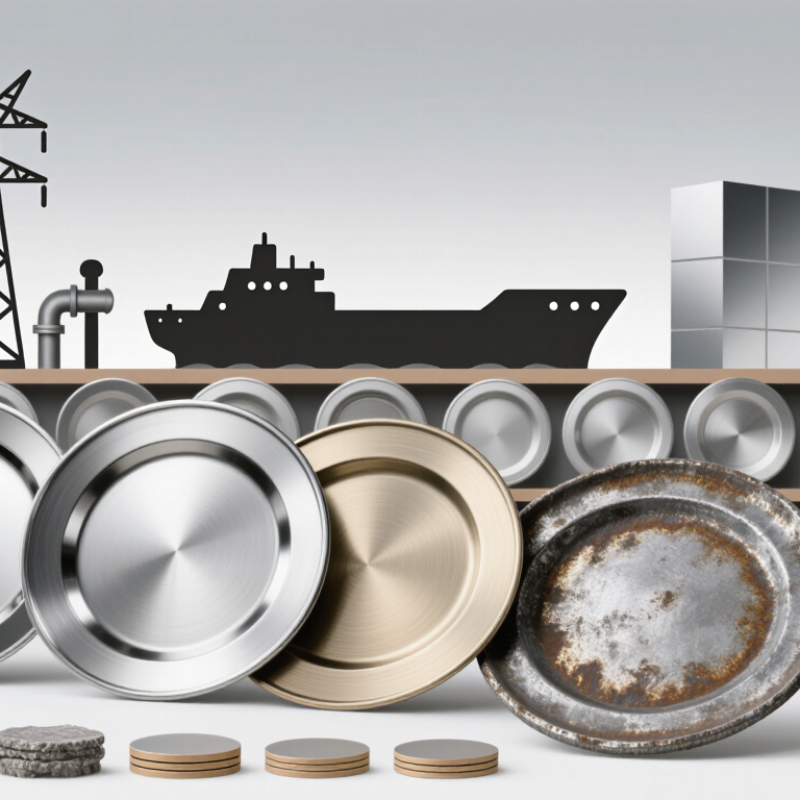
2026 Top Stainless Plate Types for Global Buyers
Stainless steel plate classification starts with metallurgy, not surface appearance. Austenitic grades, such as 304 and 316, contain chromium and nickel. They offer strong corrosion resistance and easy fabrication. Grade 316 performs better around chlorides because of its molybdenum content. Ferritic grades, including 430, contain little or no nickel. They cost less, but their formability and low-temperature toughness can be limited. Martensitic grades, such as 410, provide higher hardness after heat treatment. Duplex grades combine ferritic and austenitic structures, giving higher strength and useful chloride resistance.
The market is substantial. World Stainless reported approximately 62.6 million metric tonnes of global stainless crude steel production in 2024. That volume supports broad plate availability, but it also creates specification confusion. A buyer should check the grade, thickness tolerance, heat number, and test certificate. ASTM A240/A240M is widely used for flat-rolled stainless plate requirements. EN 10088 provides another common classification route for international projects. These systems are related, but they are not interchangeable in every detail.
In practice, I compare the service environment before choosing a grade. A food-processing floor may need a cleanable 304 surface. A coastal support frame may justify 316 or duplex plate. A heated machine component may need martensitic steel instead. Surface finish matters, too. Pickled plate, polished plate, and hot-rolled plate behave differently during fabrication. Classification is only a starting point. The boundary is not always tidy. Designers sometimes over-specify nickel-bearing grades, while others ignore weldability. That mistake deserves review. Data should guide the purchase, but operating conditions should decide it.
| Stainless Steel Family | Common Grade | UNS Designation | Common EN Designation | Typical Alloy Characteristics | Magnetism | Corrosion Performance | Typical Plate Applications | Common Surface Finishes | Key Purchasing Considerations |
|---|---|---|---|---|---|---|---|---|---|
| Austenitic | 304 / 304L | S30400 / S30403 | 1.4301 / 1.4307 | Approximately 18% chromium and 8% nickel. The low-carbon 304L version improves weldability and reduces the risk of sensitization after welding. | Generally non-magnetic in the annealed condition; light magnetism may occur after cold working. | Good general resistance to atmospheric corrosion, moisture, food-processing environments, and many organic chemicals. Not preferred for high-chloride service. | Food and beverage equipment, architectural panels, kitchen equipment, tanks, pressure vessels, general fabrication, and transport equipment. | 2B, No. 1, No. 4, brushed, satin, BA, and polished surfaces. | One of the most widely specified stainless plate grades. Confirm carbon level, heat treatment, impact requirements, and applicable product standard. |
| Austenitic | 316 / 316L | S31600 / S31603 | 1.4401 / 1.4404 | Contains molybdenum, normally around 2% to 3%, in addition to chromium and nickel. 316L has reduced carbon for improved welded corrosion resistance. | Generally non-magnetic in the annealed condition; cold forming can produce some magnetism. | Better resistance than 304 to chlorides, marine atmospheres, and many chemical environments. It is not immune to chloride pitting or stress-corrosion cracking. | Marine structures, chemical-processing equipment, pharmaceutical equipment, desalination systems, heat exchangers, and hygienic installations. | 2B, No. 1, No. 4, HL, BA, and polished surfaces. | Specify 316L for welded construction where low-carbon chemistry is required. Check molybdenum content and corrosion-service conditions. |
| Austenitic | 321 | S32100 | 1.4541 | Titanium-stabilized chromium-nickel stainless steel designed to resist intergranular corrosion after exposure to elevated temperatures. | Generally non-magnetic in the annealed condition; some magnetism can result from forming. | Good general corrosion resistance and improved resistance to sensitization during high-temperature service compared with unstabilized grades. | Furnace components, exhaust systems, thermal equipment, expansion joints, aircraft components, and high-temperature welded assemblies. | No. 1, 2B, and mechanically finished surfaces depending on thickness and supply route. | Useful where service temperatures and welding history make stabilization important. Confirm titanium stabilization requirements and temperature range. |
| Austenitic | 347 | S34700 | 1.4550 | Niobium-stabilized chromium-nickel stainless steel. It is designed for improved resistance to intergranular corrosion after heating. | Generally non-magnetic in the annealed condition. | Good general corrosion resistance with useful high-temperature performance and resistance to sensitization. | High-temperature piping, pressure vessels, chemical equipment, aircraft exhaust components, and thermal-processing equipment. | No. 1, 2B, and other mill or mechanically finished surfaces. | Often selected for elevated-temperature welded service. Verify stabilization, heat-treatment, and pressure-equipment requirements. |
| Ferritic | 430 | S43000 | 1.4016 | Chromium-based stainless steel with little or no nickel. It offers useful oxidation resistance and a lower alloy cost than many austenitic grades. | Magnetic. | Good resistance in mild atmospheric and indoor environments; lower chloride and forming performance than 304. | Appliance panels, decorative trim, automotive components, commercial interiors, kitchen equipment, and low-severity architectural applications. | 2B, BA, No. 4, brushed, and decorative polished surfaces. | Check forming radius, surface appearance, weldability, and resistance requirements. Not normally the first choice for severe chloride exposure. |
| Ferritic | 444 | S44400 | 1.4521 | Low-carbon, stabilized ferritic stainless steel with approximately 17% to 19% chromium and molybdenum for improved corrosion resistance. | Magnetic. | Better chloride and atmospheric corrosion resistance than 430; can be suitable for many potable-water and outdoor applications. | Hot-water tanks, solar-water systems, exhaust components, outdoor equipment, and selected architectural applications. | 2B, BA, No. 4, and brushed surfaces. | Confirm stabilization, weldability, surface quality, and required corrosion performance. Ferritic grades may have lower formability than austenitic grades. |
| Martensitic | 410 | S41000 | 1.4006 | Chromium martensitic stainless steel that can be heat treated to obtain higher strength and hardness than common austenitic grades. | Magnetic. | Moderate corrosion resistance in mildly corrosive environments; generally below 304 and 316 grades. | Industrial components, pump parts, valves, fasteners, cutlery, shafts, and wear-resistant fabricated parts. | No. 1, 2B, polished, ground, and machined surfaces. | Choose the required heat-treatment condition carefully. Balance hardness, toughness, weldability, and corrosion resistance for the application. |
| Martensitic | 420 | S42000 | 1.4021 | Higher-carbon martensitic stainless steel capable of achieving greater hardness than 410 after suitable heat treatment. | Magnetic. | Moderate corrosion resistance when properly hardened and finished; requires appropriate maintenance in wet or chloride environments. | Cutting tools, surgical instruments, molds, wear parts, knife components, and mechanical parts. | 2B, polished, ground, and precision-machined surfaces. | Specify hardness, tempering condition, flatness, and surface finish. Welding may require controlled procedures and post-weld treatment. |
| Duplex | 2205 | S32205 / S31803 | 1.4462 | Mixed austenitic-ferritic microstructure with approximately 22% chromium, 5% nickel, and 3% molybdenum. It combines high strength with strong corrosion resistance. | Magnetic, usually more noticeably than austenitic grades. | Very good resistance to chloride pitting, crevice corrosion, and stress-corrosion cracking compared with many standard austenitic grades. | Offshore structures, chemical tanks, pressure vessels, desalination equipment, pipelines, heat exchangers, and marine engineering. | No. 1, 2B, pickled, blasted, ground, and mechanically finished surfaces. | Control heat input and interpass temperature during welding. Verify phase balance, solution annealing, impact toughness, and corrosion test requirements. |
| Precipitation-Hardening | 17-4 PH | S17400 | 1.4542 | Chromium-nickel-copper precipitation-hardening stainless steel that develops high strength through aging treatments. | Magnetic. | Good general corrosion resistance, usually comparable to or better than 304 in many environments, but not a substitute for 316 in all chloride services. | Aerospace parts, shafts, pumps, valves, high-strength fasteners, tooling, and structural components. | No. 1, 2B, ground, polished, and machined surfaces. | Specify solution-treated or aged condition, tensile requirements, hardness, dimensional tolerances, and heat-treatment condition. |
| Selection Dimension | Common Categories | What It Means for Buyers | Typical Standards or References |
|---|---|---|---|
| Product Form | Plate, sheet, and strip | Plate is generally supplied in heavier thicknesses, while sheet and strip are thinner products. Exact product boundaries depend on the governing standard and market practice. | ASTM A240/A480, EN 10088, JIS G4304, and applicable national standards. |
| Thickness Range | Light plate, medium plate, heavy plate | Commercial availability varies by grade, mill capability, width, length, heat treatment, and surface condition. Buyers should state exact thickness and allowable tolerance rather than relying only on the word “plate.” | ASTM, EN, JIS, and project-specific dimensional tolerance requirements. |
| Surface Finish | 2B, No. 1, No. 4, HL, BA, polished, blasted, and ground | 2B is a common cold-rolled finish; No. 1 is a hot-rolled, heat-treated, and descaled finish; No. 4 and HL are mechanically finished decorative surfaces. Finish availability depends on thickness and grade. | ASTM A480, EN 10088-2, and customer-approved surface samples where appearance is critical. |
| Edge Condition | Mill edge, slit edge, trimmed edge, and cut edge | Edge condition affects fabrication, dimensional control, handling, and preparation for welding or machining. | Defined in the purchase specification, drawing, or applicable product standard. |
| Heat Treatment | Annealed, solution annealed, quenched and tempered, or precipitation aged | Austenitic and duplex grades commonly require solution treatment; martensitic and precipitation-hardening grades depend strongly on heat-treatment condition for mechanical properties. | Grade-specific ASTM, EN, JIS, or pressure-equipment requirements. |
| Mechanical Properties | Yield strength, tensile strength, elongation, hardness, and impact toughness | Use the property requirements from the actual design code and service temperature. Strength values vary with grade, product thickness, and delivery condition. | ASTM A240, EN 10088, ASME Section II, and project specifications. |
| Corrosion Service | Atmospheric, food-processing, marine, chloride, chemical, high-temperature, and sour-service environments | Grade selection must consider chlorides, temperature, pH, oxidizing or reducing conditions, crevices, welds, and cleaning chemicals. No stainless grade is universally corrosion-proof. | Application-specific corrosion testing, design codes, and engineering evaluation. |
| Documentation | Mill test certificate, heat number, chemical analysis, mechanical test results, dimensions, and inspection records | Traceability is important for pressure equipment, structural work, food-processing systems, marine projects, and regulated applications. | EN 10204 Type 3.1 or 3.2, ASTM certification requirements, and contract inspection plans. |