 Angle Steel
 Channel Steel
 Universal Beam (l-Beam)
 H-Beam Steel
 Galvalume Steel Coil
 Galvalume Steel Sheet
 Galvanized Steel Sheet
 Color Coated Plate
 Stainless Steel Bar
 Stainless Steel Pipe
 Steel Bar
 Wire Rope
 Carbon Steel Pipe
 Carbon Steel Plate
 Aluminum Plate
 Aluminum Coil
 Aluminum Pipe
 Aluminum Bar
 Magnesium Ingot
 Fasteners
Leave Your Message
-
Phone:+86-18365798883
-
E-mail:admin@sdxyy.cn
-
Whatsapp:+8618365798883
-
WeChat

Choosing among China’s top 10 Carbon Steel Channel manufacturers requires more than comparing factory prices. The real test begins with steel grade, dimensional accuracy, mill capacity, and delivery discipline. A channel may look identical in a catalog. Its performance can differ significantly on a construction site.
Charlie Carter, former president of the American Institute of Steel Construction, often stresses this practical principle: “Good steel design begins with clear communication.” That idea applies directly to sourcing. Buyers should confirm ASTM, EN, or GB compliance before requesting quotations. They should also review material certificates, heat numbers, inspection records, and welding performance. Reliable manufacturers explain tolerances clearly. Strong suppliers do not hide behind attractive photographs.
This guide examines ten leading Chinese producers through a practical purchasing lens. It considers production equipment, export experience, inventory depth, surface condition, cutting services, packaging, and after-sales support. Some manufacturers excel at large structural projects. Others serve smaller fabricators with flexible minimum orders. That difference matters. A low quotation can become expensive when bundles arrive bent, poorly marked, or late. Still, no ranking is perfect. Public information can be incomplete, and factory capabilities may change quickly. Readers should verify certifications, recent references, and actual samples before signing a contract. In steel procurement, confidence should be earned. Not assumed.
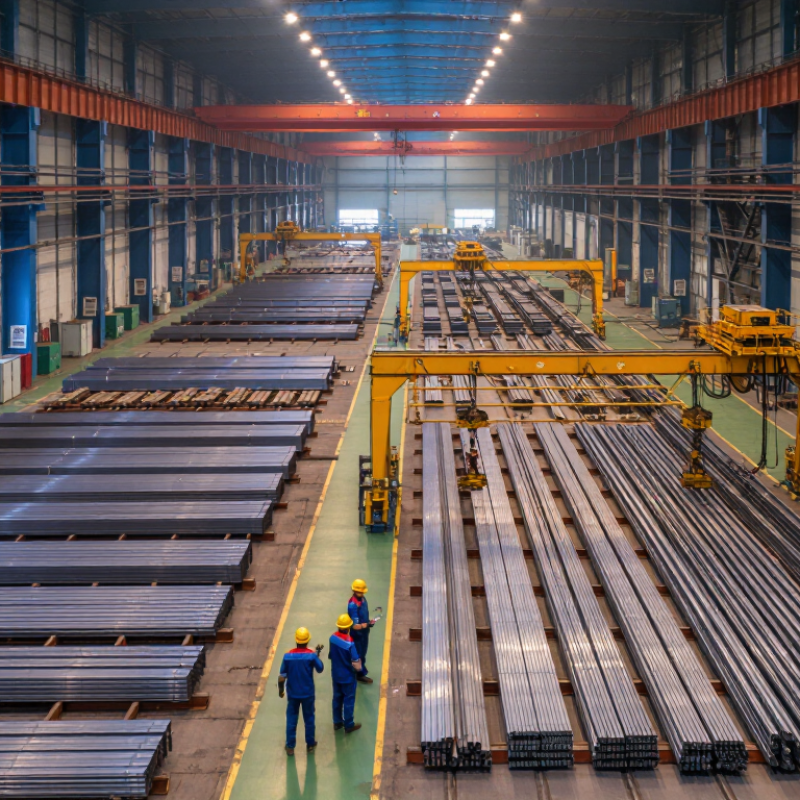
Carbon steel channel is a hot-rolled structural section with a U-shaped or C-shaped profile. Its web carries shear, while the flanges resist bending and support connections. Common uses include building frames, equipment bases, cable supports, and vehicle structures. In practice, buyers check section depth, flange width, wall thickness, straightness, surface scale, and mill certificates. A channel may look simple, but small dimensional errors can complicate welding and assembly.
China is a major producer because it combines large-scale ironmaking, rolling capacity, engineering expertise, and extensive transport infrastructure. The World Steel Association reported about 1,005 million tonnes of crude steel production in China during 2024. That represented roughly 53% of global output. This scale supports many channel sizes, including metric and export-oriented specifications. China’s industrial clusters also shorten the distance between mills, galvanizing facilities, fabricators, and ports.
However, national steel output does not equal channel output. Public statistics often group channels with other hollow or structural sections under broader trade classifications. UN Comtrade data, including HS headings for iron or non-alloy steel sections, should therefore be read carefully. A credible supplier should provide recent test certificates, chemical composition, yield strength, tensile strength, and dimensional inspection records. Price alone is a weak selection method. I have seen apparently competitive offers become expensive after correcting poor straightness, inconsistent thickness, or unsuitable packaging. The “top ten” ranking remains subjective without verified capacity, delivery performance, and independent quality evidence.
Manufacturer-neutral comparison of ten widely produced carbon steel channel sections used in construction, machinery, infrastructure, and general fabrication.
| Rank | Representative Channel Section | Nominal Height (mm) |
Nominal Width (mm) |
Approx. Wall Thickness (mm) |
Approx. Theoretical Mass (kg/m) |
Common Steel Grades | Typical Production Standard | Common Applications |
|---|---|---|---|---|---|---|---|---|
| 1 | 5# | 50 | 37 | 4.5 | 5.44 | Q235B, Q355B | GB/T 706 | Light structural frames, supports, brackets |
| 2 | 6.3# | 63 | 40 | 4.8 | 6.63 | Q235B, Q355B | GB/T 706 | Equipment bases, building components, fabrication |
| 3 | 8# | 80 | 43 | 5.0 | 8.05 | Q235B, Q355B | GB/T 706 | Structural supports, platforms, frames |
| 4 | 10# | 100 | 48 | 5.3 | 10.01 | Q235B, Q355B | GB/T 706 | Industrial structures, machinery, vehicle components |
| 5 | 12.6# | 126 | 53 | 5.5 | 12.32 | Q235B, Q355B | GB/T 706 | Steel platforms, columns, construction frames |
| 6 | 14a | 140 | 58 | 6.0 | 14.54 | Q235B, Q355B | GB/T 706 | Heavy-duty supports, bridges, industrial facilities |
| 7 | 16a | 160 | 63 | 6.5 | 17.24 | Q235B, Q355B | GB/T 706 | Building frames, transport equipment, machinery bases |
| 8 | 18a | 180 | 68 | 7.0 | 20.17 | Q235B, Q355B | GB/T 706 | Industrial buildings, structural reinforcement, platforms |
| 9 | 20a | 200 | 73 | 7.0 | 22.64 | Q235B, Q355B | GB/T 706 | Heavy structural frames, infrastructure, machinery |
| 10 | 25a | 250 | 78 | 7.0 | 27.41 | Q235B, Q355B | GB/T 706 | Large-scale construction, bridges, heavy industrial structures |
Note: Carbon steel channel is a hot-rolled structural section with a web and two flanges. The listed dimensions and theoretical masses are representative values for standard Chinese channel sections under GB/T 706. Actual availability, tolerances, steel grades, surface condition, lengths, and inspection certificates may vary by production mill and purchase specification. Q235B is a general structural carbon steel grade, while Q355B provides higher specified yield strength.