

Choosing the right Stainless Coil supplier can influence product quality, production stability, and long-term purchasing costs. It is not simply a matter of comparing the lowest quotation. Buyers should examine material grades, coil dimensions, surface finishes, tolerances, and documentation before making a decision. A reliable supplier should clearly explain whether the coil meets standards such as ASTM, EN, or JIS requirements. Small details matter. A clean edge can reduce processing waste. Consistent thickness can protect downstream forming equipment.
Practical experience also matters when evaluating a supplier. Ask how the company handles raw material inspection, coil testing, packaging, and shipment tracking. Request mill test certificates, inspection records, and recent production photographs when appropriate. A professional supplier should answer technical questions with specific data, not vague promises. Their warehouse should protect coils from moisture, impact, and contamination. Packaging should fit the transport method. Stainless steel can still suffer surface damage when handled carelessly.
Price deserves attention, but it should not control the entire decision. A cheaper Stainless Coil may create hidden costs through rejected batches, delayed delivery, or difficult communication. Check production capacity, export experience, response time, and after-sales support. References from comparable industries can provide useful evidence. Still, references are not perfect proof. Your own trial order remains important. Test the material under real production conditions. Review the results honestly, even when they challenge your initial supplier choice. The best partnership develops through transparent communication, consistent quality, and measurable performance over time.
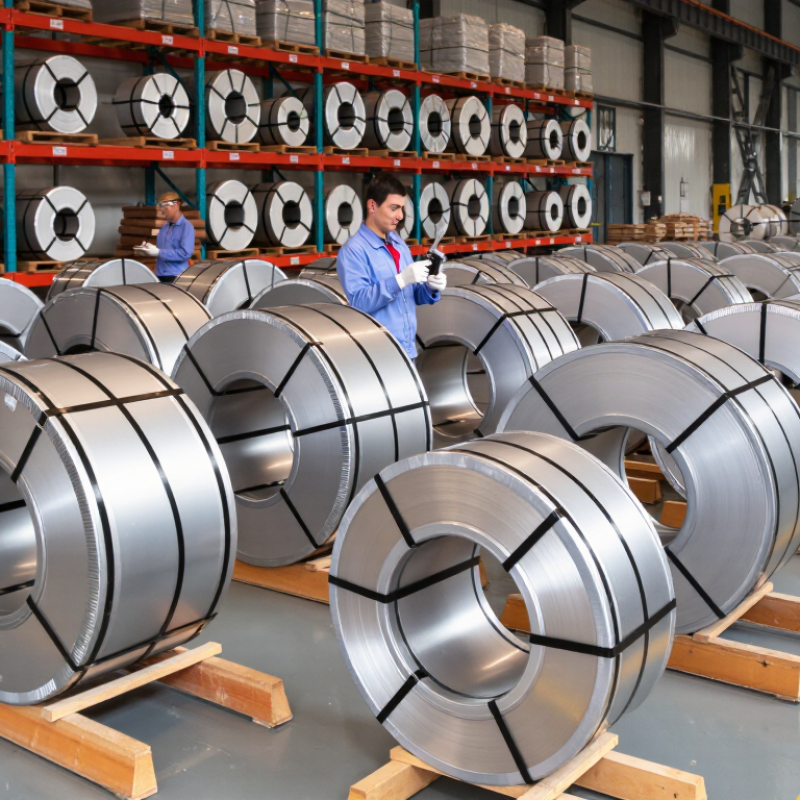
A reliable stainless steel coil supplier proves quality through consistent, verifiable processes. A polished website is not proof. Ask for recent mill test certificates, heat numbers, and chemical composition reports. These documents should match the coil delivered to your facility.
Experienced suppliers understand how grade, thickness, width, surface finish, and temper affect production. They should explain whether 304, 316L, or another grade suits your application. Their advice must include practical details, such as corrosion exposure, forming requirements, and expected service conditions. Ask for samples when surface quality matters. Small scratches can become expensive problems after processing.
Traceability is equally important. Each coil should carry clear identification from production through shipment. Reliable suppliers also explain inspection methods, tolerances, packaging, and delivery schedules before receiving payment. Visit the warehouse or request a live inspection when the order is significant. Real experience is often visible in organized storage and careful handling.
Communication reveals more than promises. Does the supplier report delays early? Do technical staff answer precise questions? Do they admit limitations? No supplier is perfect, and I would question anyone claiming otherwise. A dependable partner corrects mistakes openly and records corrective actions. Ask for references from similar applications, but verify them independently. Check production capacity, export documentation, and after-sales support. Details matter.
How to Define Your Stainless Steel Coil Requirements
Choosing a stainless steel coil begins with the application, not the supplier’s sales description. Identify the working environment first. Food equipment, outdoor panels, chemical tanks, and decorative parts need different performance levels. Then specify the steel grade, thickness, width, coil weight, inner diameter, and outer diameter. These details prevent unsuitable quotations and production delays.
Surface finish also matters. Brushed, bright, matte, and polished surfaces behave differently during fabrication. State the required finish clearly, including acceptable scratches or color variation. Define edge condition, flatness, thickness tolerance, and hardness when your process depends on them. Request a material test certificate and verify chemical composition, mechanical properties, and inspection results against the applicable standard. From practical sourcing experience, vague terms such as “high quality” create more disputes than they solve.
Tips: Share drawings, estimated monthly demand, cutting requirements, and delivery location. Mention welding, stamping, bending, or slitting operations. Ask how the coils are protected against moisture during transport. A sample inspection can reveal surface marks that photographs hide. Do not assume a standard width will fit your line. It may waste material. I have also seen buyers overlook coil weight, then discover their machine cannot safely load it. Recheck every measurement before approval. That small pause can prevent expensive rework.
| Requirement Dimension | Recommended Specification Options | Typical Selection Guidance | Information to Confirm Before Ordering |
|---|---|---|---|
| Stainless Steel Grade | 304/304L, 316/316L, 430, 409, or 410 | 304 is widely used for general corrosion-resistant applications. 316/316L provides improved resistance in chloride and marine environments. 430 is a ferritic grade commonly used for indoor and decorative applications. 409 is frequently used in automotive exhaust systems. | Specify the grade designation, whether a low-carbon “L” grade is required, and the required mechanical and chemical test reports. |
| Applicable Standard | ASTM A240/A240M, ASTM A480/A480M, EN 10088-2, JIS G4305, or equivalent project standard | ASTM A240/A240M covers chromium and chromium-nickel stainless steel plate, sheet, and strip for pressure vessels and general applications. ASTM A480/A480M covers general requirements for flat-rolled stainless products. | State the required standard, edition, grade equivalency, inspection level, and any project-specific requirements. |
| Product Form | Cold-rolled coil or hot-rolled coil | Cold-rolled coil is normally selected for thinner gauges, tighter surface requirements, and better dimensional control. Hot-rolled coil is commonly selected for heavier gauges and applications where surface appearance is less critical. | Confirm whether the material must be supplied as coil, slit coil, or cut-to-length sheet. |
| Thickness | Common examples: 0.30–3.00 mm for cold-rolled coil; above 3.00 mm for heavier applications | Choose the thickness according to strength, forming requirements, weight, corrosion exposure, and fabrication method. The available range depends on the selected grade, width, finish, and production route. | Provide the nominal thickness and permitted thickness tolerance according to the selected standard or drawing. |
| Width | Common slit widths: 20–1,250 mm; wider master coils may be available according to equipment capacity | Width should match the slitting plan, fabrication yield, and downstream forming equipment. Narrower slit coils can reduce cutting waste when the required strip width is known. | Specify nominal width, width tolerance, edge condition, and whether the coil will be supplied in master or slit form. |
| Length or Coil Weight | Coil weight is commonly specified by maximum allowable weight, such as 1–10 metric tonnes per coil | Coil weight should be compatible with the customer’s decoiler, crane, storage area, transport limits, and production line capacity. | Confirm minimum and maximum coil weight, maximum outside diameter, and whether partial coils are acceptable. |
| Inside Diameter | Typical values include 508 mm or 610 mm, depending on the processing line and coil weight | A 508 mm inside diameter is widely used for many flat-rolled coil applications. The correct value must match the customer’s uncoiler mandrel. | Provide the required inside diameter and verify mandrel compatibility before production. |
| Outside Diameter | Often controlled within approximately 1,200–2,000 mm, subject to coil weight and equipment limits | A smaller outside diameter may be necessary for limited storage or handling capacity, while a larger diameter can reduce coil changes during production. | State the maximum permitted outside diameter and confirm transport and unloading restrictions. |
| Surface Finish | 2B, BA, No. 1, No. 3, or No. 4 | 2B is a common smooth cold-rolled finish. BA is a bright annealed finish. No. 1 is a rougher hot-rolled finish. No. 4 is a brushed finish typically used where a directional decorative appearance is required. | Specify the finish designation, surface brightness, roughness requirement if applicable, and whether protective film is needed. |
| Edge Condition | Mill edge or slit edge | Mill edge is retained from the rolling process. Slit edge is produced by longitudinal cutting and is used when a defined strip width is required. | Confirm edge type, burr limits, camber limits, and whether deburring or edge conditioning is required. |
| Mechanical Properties | Tensile strength, yield strength, elongation, and hardness according to the specified grade and standard | Mechanical requirements vary with grade and temper. Annealed material is generally more suitable for forming, while harder tempers may be selected for improved strength or spring properties. | Provide the required temper, minimum tensile strength, minimum yield strength, elongation, and hardness range. |
| Forming and Fabrication Method | Stamping, deep drawing, bending, roll forming, laser cutting, welding, or general fabrication | Deep drawing and complex forming usually require a suitable annealed grade and controlled surface quality. Welding requirements may influence the choice between standard and low-carbon grades. | Describe the forming radius, draw depth, welding process, cutting method, and any surface-critical areas. |
| Corrosion Environment | Indoor atmosphere, food-processing environment, coastal exposure, chloride service, high-temperature service, or exhaust service | Grade selection should reflect exposure to moisture, chlorides, chemicals, temperature, and cleaning agents. No stainless grade is universally resistant to every environment. | Identify operating temperature, chemical media, chloride exposure, cleaning chemicals, and expected service life. |
| Surface Protection | Interleaving paper, PVC film, PE film, or no film | Protective film can reduce scratching during transportation and fabrication. Film type and adhesion should be suitable for the intended surface finish and processing temperature. | Specify film thickness if required, single- or double-sided application, film removability, and maximum storage duration. |
| Inspection and Documentation | Mill test certificate, dimensional inspection report, surface inspection, chemical analysis, mechanical test results, and third-party inspection when required | Inspection documents should demonstrate compliance with the agreed grade, standard, dimensions, surface condition, and mechanical properties. | Confirm document language, certificate type, heat number traceability, sampling frequency, and third-party inspection requirements. |
| Packaging and Marking | Horizontal or vertical coil packaging with moisture protection, steel or fiber edge protection, and clearly identified labels | Packaging should protect the coil from moisture, impact, contamination, and edge damage during handling and transport. | Specify packing orientation, skid requirements, waterproof wrapping, lifting method, label information, and marking position. |
| Order Quantity and Delivery | Metric tonnes, coils, or slit strips; delivery schedule defined by production and shipping requirements | Accurate quantity planning should include the usable yield, dimensional tolerances, minimum order quantity, and possible coil-weight variation. | Provide total quantity, quantity tolerance, required delivery date, destination, shipping terms, and preferred shipment split. |
China Best Stainless Coil Supplier How to Choose?
A supplier’s production capability should be checked beyond polished certificates. The International Stainless Steel Forum reported 58.4 million tonnes of global stainless crude steel production in 2023. This scale creates price pressure, but it does not guarantee consistent coil quality. Ask for heat numbers, mill test certificates, and complete chemical analysis. The certificate should match the coil label, packing list, and inspection records. Small mismatches matter.
Visit the mill or request a recorded production audit. Check melting, refining, hot rolling, annealing, pickling, and slitting equipment. A capable supplier can explain furnace capacity, thickness tolerance, width control, and surface grades without vague answers. Request recent test results for tensile strength, elongation, hardness, and corrosion resistance. ASTM A480/A480M provides useful dimensional and surface requirements for stainless steel flat products. ISO 9001 certification can support process control, but it is not a substitute for product testing. It happens.
Ask for samples from different heats, not only one attractive coil. Measure thickness at several points across the strip. Inspect edges under bright light for burrs, cracks, and uneven trimming. Review nonconformity records and corrective actions. I have found that honest suppliers admit occasional defects and explain prevention measures. Perfect claims deserve more questions. ISSF production statistics help assess market context, while traceable inspection data reveals the supplier’s real manufacturing discipline.
China Best Stainless Coil Supplier: How to Choose?
When comparing stainless coil suppliers, certifications should match your actual application. Ask for ISO 9001 records, material test certificates, and product standards such as ASTM or EN. A certificate alone proves little. Check the issuing body, expiry date, scope, and covered production site. Request a sample MTC showing grade, thickness, surface finish, tensile results, and heat number. Check heat numbers.
In my purchasing experience, reliable suppliers answer these questions without hesitation. They explain testing methods and provide traceable documents before payment. However, I once accepted a low quotation because the certificate file looked complete. The delivered coils had inconsistent surface quality. My inspection process was too relaxed. That mistake still affects how I compare suppliers. Ask for recent inspection photos and, when possible, an independent pre-shipment inspection.
Price comparisons should include the full landed cost. Review coil weight tolerance, slitting fees, packaging, inland transport, insurance, duties, and payment terms. A cheaper ton price may hide higher scrap or rework costs. Delivery terms need equal attention. Confirm production lead time, stock availability, loading port, Incoterm, shipping schedule, and delay responsibility. Request a written plan with dates, not a promise in a chat message. Delays are expensive. Even experienced buyers can overlook port congestion or holiday shutdowns. Leave a practical buffer, especially for custom thicknesses, narrow widths, or special finishes.
A reliable supplier should provide heat numbers, mill certificates, coil dimensions, surface grades, and test results. Check whether each document matches the physical coil label.
Ask for independent testing when chemistry or mechanical properties are critical. ASTM and EN references should appear clearly in the inspection documents.
The OECD’s steel market reports repeatedly highlight overcapacity and market volatility, making delivery promises worth testing. Request production schedules, shipment history, and backup plans for delayed vessels.
Try a small trial order before committing to annual volume. Measure thickness at several points, inspect edges under strong light, and record packaging damage on arrival.
Ask how quickly the supplier answers a technical complaint. Under 24 hours is a useful internal benchmark, not a universal rule.
I would not trust vague claims like “best quality.” One practical weakness remains: even detailed audits can miss problems between batches.
Keep retained samples, define acceptance limits, and review performance every quarter. Reliability is demonstrated through repeated deliveries, accurate documents, and honest correction when something goes wrong.