Top Quality Stainless Steel Rods for Global Buyers?
In the competitive landscape of manufacturing and construction, top quality stainless steel rods are an essential component. William Hartman, an expert in metallurgy, highlights, “The demand for quality stainless steel rods is rising in every sector.” This statement underscores the critical role that stainless steel rods play in producing reliable and durable products.
High-grade stainless steel rods offer strength and resistance to corrosion. Industries worldwide rely on these materials for everything from auto parts to architectural applications. Many buyers face challenges in sourcing the best options. Quality can vary significantly among suppliers, making it crucial to choose wisely and prioritize established manufacturers.
It's essential to evaluate the credibility of suppliers. However, buyers often overlook this step, leading to potential issues later. Not every supplier meets the rigorous standards needed for stainless steel rods. Ensuring a reliable source enhances the quality of the final product. Serious consideration must be given to sourcing practices to guarantee long-term success.
Global Market Overview of Stainless Steel Rods
The global market for stainless steel rods is dynamic and competitive. With rising demand across various industries, manufacturers are continuously adapting to market needs. These rods are essential in construction, automotive, and aerospace applications. Their resilience and corrosion resistance make them ideal materials.
Recent trends show a growing preference for customized solutions. Consumers seek products that meet specific requirements. This shift poses challenges for suppliers. They must invest in research and development to stay relevant. Quality control becomes crucial. Buyers often struggle to find suppliers who meet their standards consistently.
In the face of these challenges, transparency is vital. Buyers should demand detailed specifications and certifications. This ensures the materials meet international standards. Continuous dialogue between suppliers and buyers can foster trust. The evolving landscape of stainless steel rods offers opportunities for growth. Yet, it also requires careful navigation of quality and reliability.
Top Quality Stainless Steel Rods for Global Buyers - Global Market Overview of Stainless Steel Rods
| Region |
Market Size (USD Billion) |
Growth Rate (%) |
Key Applications |
Average Price (USD/kg) |
| North America |
8.5 |
4.3 |
Construction, Automotive |
3.20 |
| Europe |
6.7 |
3.9 |
Manufacturing, Aerospace |
3.50 |
| Asia-Pacific |
12.0 |
5.1 |
Electronics, Energy |
2.90 |
| Latin America |
3.2 |
4.0 |
Oil & Gas, Construction |
3.10 |
| Middle East & Africa |
2.5 |
3.5 |
Construction, Manufacturing |
3.30 |
Key Types and Grades of Stainless Steel Rods
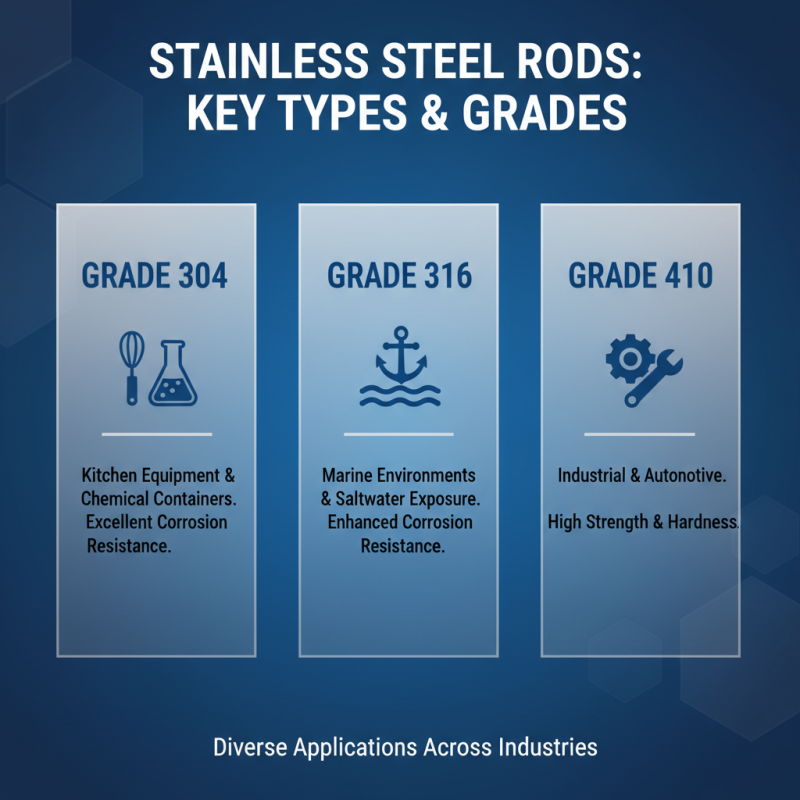
Stainless steel rods come in various types and grades, each serving unique industries and applications. The most common grades include 304, 316, and 410. Grade 304 is widely recognized for its excellent corrosion resistance. It is often used in kitchen equipment and chemical containers. In contrast, grade 316 offers enhanced corrosion resistance in marine environments. It is a preferred choice for applications exposed to saltwater.
Recent industry reports indicate that the demand for stainless steel rods is increasing. According to a market research study, the global stainless steel rod market is expected to grow at a CAGR of 5.2% through 2026. This rise is driven by the growing construction and automotive sectors. People are often drawn to the shiny, appealing finish of stainless steel rods, and many industries prioritize quality over mere aesthetics.
However, some challenges persist. Not all suppliers can maintain top-notch quality. Variations exist even within the same grade due to different manufacturing processes. This inconsistency can lead to defects or failures in critical applications. Therefore, buyers must do thorough research to identify reliable suppliers. Ensuring thorough quality checks remains essential in mitigating risks associated with subpar products.
Factors Influencing the Quality of Stainless Steel Rods
Stainless steel rods are vital in various industries, including construction and manufacturing. Quality is a key concern for global buyers. The factors influencing this quality are multifaceted. One significant factor is the composition of the stainless steel itself. The grade of stainless steel used directly affects its corrosion resistance and durability. Reports show that higher chromium and nickel content generally leads to better quality rods.
Manufacturing processes also play a critical role. Techniques like cold drawing and hot rolling can enhance the mechanical properties of stainless steel rods. According to research, rods processed through these methods exhibit improved tensile strength and enhanced surface finish. However, not all manufacturers adhere to the same quality standards. This inconsistency can lead to variability in product performance, emphasizing the need for rigorous quality control.
Another aspect is the heat treatment process. Proper heat treatment can significantly influence the toughness and ductility of stainless steel rods. Data indicates that inadequate or incorrect heat treatment results in inferior products. Buyers must consider the manufacturer's track record in heat treating. Overall, understanding these factors allows buyers to make informed choices, although the complexity of quality assurance in the industry can be daunting.
Applications of Stainless Steel Rods in Various Industries
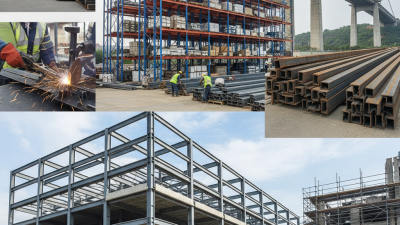
Stainless steel rods are vital in various industries due to their durability and resistance to corrosion. In construction, they reinforce concrete structures, providing strength and longevity. These rods can withstand harsh environmental conditions, making them ideal for bridges and skyscrapers. Their versatility allows for easy fabrication into different shapes, meeting specific engineering needs.
In the automotive sector, stainless steel rods play a crucial role in manufacturing components. They are used in exhaust systems and chassis parts. The high-temperature resistance of these rods enhances vehicle performance. However, the integration of stainless steel requires careful selection to ensure compatibility and minimize weight.
The medical field also benefits from stainless steel rods. They are often used in surgical instruments and implants. These rods are sterilizable and biocompatible, which is essential for patient safety. Yet, quality control during production is vital. Any flaws can lead to severe consequences. Industries must continuously assess their processes to ensure the highest standards.
Best Practices for Sourcing Stainless Steel Rods Internationally
Sourcing stainless steel rods internationally requires careful consideration. First, buyers should understand the specific grades needed, such as 304 or 316 stainless steel. Each grade serves different applications and environments, influencing the choice. Researching material specifications increases confidence in the selection process.
Engaging with suppliers directly can reveal insights often overlooked. Establishing a clear communication channel is vital. Ask about production processes, quality control measures, and lead times. Sometimes, international suppliers may lack transparency. Inspecting the production facility may be necessary, but this isn’t always feasible for smaller buyers.
Import regulations can be complex. Different countries have varying standards that affect imports. Ensure compliance with local regulations to avoid delays and additional costs. It’s beneficial to work with a reliable freight forwarder to navigate these challenges. Fostering relationships with suppliers enables ongoing improvement in sourcing practices. However, challenges in quality assurance may persist, requiring dedicated efforts to uphold standards.

 Angle Steel
 Channel Steel
 Universal Beam (l-Beam)
 H-Beam Steel
 Galvalume Steel Coil
 Galvalume Steel Sheet
 Galvanized Steel Sheet
 Color Coated Plate
 Stainless Steel Bar
 Stainless Steel Pipe
 Steel Bar
 Wire Rope
 Carbon Steel Pipe
 Carbon Steel Plate
 Aluminum Plate
 Aluminum Coil
 Aluminum Pipe
 Aluminum Bar
 Magnesium Ingot
 Fasteners