

Choosing the right tube can influence a project’s safety, service life, and maintenance budget. Stainless Square Pipe offers a practical balance of strength, corrosion resistance, and clean geometry. Its four flat sides support accurate alignment, neat joints, and efficient space planning. These qualities matter in handrails, equipment frames, architectural structures, and hygienic processing areas.
In real installations, material selection depends on more than appearance. Grade, wall thickness, surface finish, weld quality, and load conditions must match the environment. For example, a 304 stainless square pipe may suit indoor fabrication, while 316 can provide better resistance near saltwater or chemical exposure. A measured site review helps prevent costly assumptions. Details matter.
Stainless steel also reduces repeated coating work when properly specified and maintained. Its smooth surface can be easier to clean, especially where dust, moisture, or food residue may collect. However, it is not automatically the best choice for every project. Galvanic contact, poor drainage, contaminated tools, or badly finished welds can still create problems. I have seen attractive frames fail early because installation details were ignored. That experience is easy to overlook.
Reliable decisions should combine supplier documentation, applicable engineering guidance, and practical fabrication advice. Requesting mill certificates and checking dimensions can improve confidence before cutting begins. Budget, availability, welding capability, and long-term exposure deserve equal attention. Stainless Square Pipe performs well when these factors are considered together. It is not magic. It is disciplined specification, careful workmanship, and realistic review.
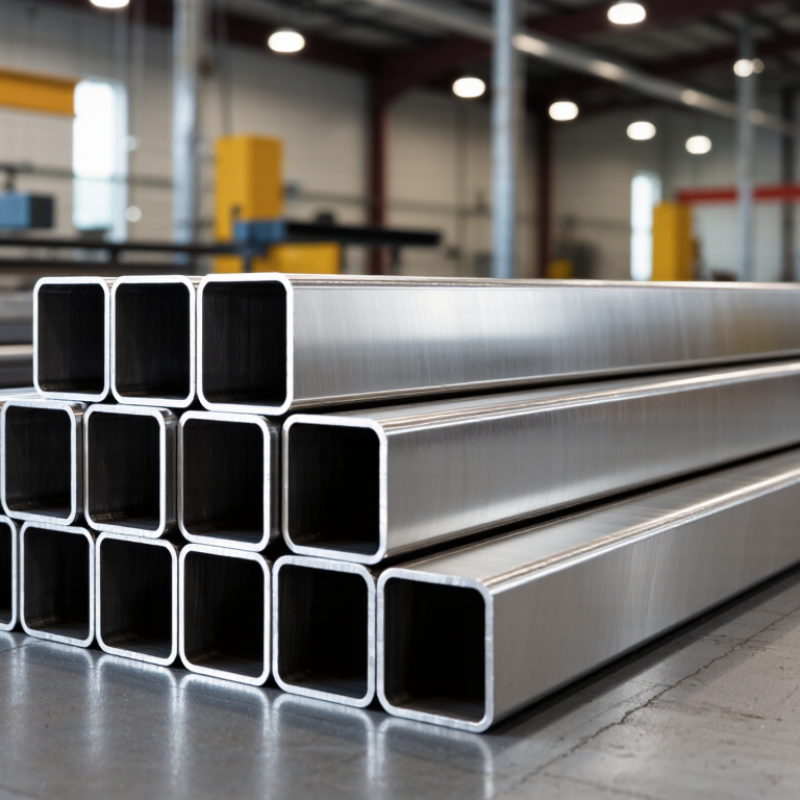
Why Choose Stainless Square Pipe for Your Project?
What Is a Stainless Square Pipe?
A stainless square pipe is a hollow section with four equal sides and a continuous internal void. Fabricators usually form it from stainless sheet, then weld and size the seam. The result is a clean, rigid profile for frames, handrails, equipment supports, and architectural details. In technical drawings, it may be called a square hollow section, or SHS.
Material choice matters. World Stainless reported approximately 59.1 million tonnes of stainless crude steel production in 2023. This large output reflects widespread use across construction, transport, food processing, and industrial equipment. Specifications such as ASTM A554 can define welded stainless mechanical tubing, while EN 10088 identifies stainless steel grades and properties. These references help engineers verify dimensions, finish, and mechanical performance.
The shiny surface can mislead. Grade 304 suits many indoor and mild outdoor settings, while chloride-heavy locations may require molybdenum-bearing 316. The NACE IMPACT study estimated global corrosion costs at 3.4% of GDP, showing why material selection deserves careful attention. Square corners simplify alignment, but they can hold moisture near joints. Weld discoloration also needs proper cleaning and passivation. A polished finish looks attractive, yet it may reveal scratches quickly. In practice, drainage, wall thickness, weld quality, and maintenance can matter as much as the grade itself.

Stainless square pipe is a hollow structural section with four equal sides, manufactured from corrosion-resistant stainless steel. The chart compares typical densities of widely used stainless steel grades. Lower density can help reduce component weight, while grades such as 304 and 316 provide strong durability and corrosion resistance for construction, food-processing, architectural, and industrial applications.
Density values are representative room-temperature values published in stainless steel material data references: 304 ≈ 8.00 g/cm³, 316 ≈ 8.00 g/cm³, and 430 ≈ 7.70 g/cm³.
Why Choose Stainless Square Pipe for Your Project?
How Stainless Square Pipes Are Made
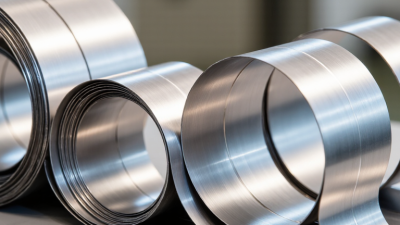
A stainless square pipe usually begins as a flat coil or sheet. The mill slits it into a controlled-width strip. Roll-forming stands gradually bend the strip into a square shape. This staged forming reduces sharp stress and keeps the corners more consistent. The open seam is then welded, often using a controlled electric process. After welding, sizing rolls correct the outside dimensions and improve straightness. Some pipes receive heat treatment to reduce forming stress. Pickling and passivation can remove surface oxides and support corrosion resistance. Each production route has limits. Tight corners may still show small dimensional variation.
Quality checks are practical, not decorative. Technicians measure wall thickness, side length, squareness, and weld appearance. They may also use non-destructive testing when the application demands it. Surface inspection matters near welds, where discoloration can signal incomplete cleaning. From project experience, stainless square pipe performs well in frames, handrails, supports, and hygienic structures. However, grade selection must match chemicals, temperature, and moisture exposure. A polished surface does not automatically make the pipe suitable for every environment.
Tips: Confirm the required grade before fabrication. Check whether welded or seamless construction fits the design. Ask for mill certificates and dimensional inspection records. Keep protective film on during cutting when appearance matters. Avoid carbon-steel tools, because embedded particles can later create rust-colored marks. Small details matter.
Why Choose Stainless Square Pipe for Your Project?
Stainless square pipe combines clean geometry with dependable mechanical performance. Its four flat sides simplify alignment, framing, and connection work. Austenitic grades usually provide strong corrosion resistance in humid or mildly chemical environments. This makes them practical for handrails, food-processing structures, furniture frames, and architectural details. The smooth surface also reduces dirt collection and supports easier cleaning.
From field experience, fabrication quality matters as much as the material itself. Accurate cutting helps maintain square corners during assembly. Proper welding prevents discoloration, distortion, and weak joints. Stainless steel tolerates temperature changes well, but heat can still affect its appearance and strength. Wall thickness should match the expected load, span, and fixing method. A polished finish looks attractive, although a brushed finish may hide small marks better. It is not automatically the best choice for every project. Grade selection, surface exposure, and maintenance conditions require careful review.
Tips: Confirm the grade and wall thickness before ordering. Check straightness, corner consistency, and surface defects on arrival. Keep stainless pipe away from carbon-steel dust, which can cause surface contamination and rust-like stains. If the project involves salt spray or strong chemicals, request compatibility data from a qualified material specialist. Small oversights happen. Reviewing drawings and weld procedures early can prevent expensive rework.
| Property / Dimension | Typical Data | Project Benefit | Important Considerations |
|---|---|---|---|
| Common stainless grades | 304/304L for general applications; 316/316L for chloride, marine, and chemical environments | Allows material selection based on corrosion exposure, fabrication needs, and service conditions | The exact grade should be selected according to the environment and applicable product standard |
| Density | Approximately 8.0 g/cm³ for austenitic stainless steel | Provides substantial rigidity and impact resistance in structural and fabricated assemblies | Weight depends on outside dimensions, wall thickness, and actual grade |
| Minimum yield strength | About 205 MPa (30 ksi) for annealed 304/304L and 316/316L tubing under common ASTM requirements | Supports load-bearing frames, guards, supports, and equipment structures | Actual strength varies with grade, heat treatment, cold work, dimensions, and specification |
| Minimum tensile strength | About 515 MPa (75 ksi) for annealed 304/304L and 316/316L under common ASTM requirements | Provides resistance to pulling, bending, and impact-related stresses | Engineering calculations must use certified mill data for the selected pipe |
| Corrosion resistance | Chromium content of at least about 10.5% forms a self-healing passive oxide film; 316 additionally contains molybdenum | Reduces rusting, coating requirements, maintenance, and replacement frequency | Resistance is not unlimited; stagnant chlorides, crevices, weld heat tint, and contamination can cause localized corrosion |
| Operating temperature capability | Austenitic stainless steels retain useful toughness across a broad temperature range and do not undergo a sharp ductile-to-brittle transition like many carbon steels | Suitable for many indoor, outdoor, thermal, and process applications | Allowable stress, oxidation, thermal cycling, and code limits must be checked for the service temperature |
| Thermal expansion | Approximately 17.2 × 10⁻⁶/°C for 304 and 16.0 × 10⁻⁶/°C for 316 near room temperature | Predictable expansion supports reliable design of long runs and heated assemblies | Expansion joints, sliding supports, or flexible connections may be required |
| Thermal conductivity | Approximately 16.2 W/m·K for 304 and 14.6 W/m·K for 316 at room temperature | Transfers heat less readily than carbon steel, which can help reduce heat spreading in some assemblies | Thermal conductivity and heat dissipation should be considered in high-temperature designs |
| Fabrication and weldability | 304L and 316L provide low-carbon options designed to reduce sensitization risk during welding | Can be cut, formed, drilled, and welded for custom frames, handrails, enclosures, and process systems | Use suitable filler metal, shielding, heat control, and post-weld cleaning or passivation procedures |
| Surface finish | Common finishes include mill finish, 2B, brushed, and polished surfaces | Supports both functional cleanliness and architectural appearance | A smoother, properly cleaned surface generally makes soil removal easier, but finish alone does not prevent corrosion |
| Hygiene and cleanability | Nonporous metal surface with no paint film required for basic corrosion protection | Well suited to food-processing areas, commercial kitchens, laboratories, healthcare spaces, and clean environments | Design should minimize crevices and include appropriate cleaning, sanitizing, and drainage practices |
| Dimensional flexibility | Available in a wide range of square outside dimensions and wall thicknesses, depending on the manufacturing standard | Makes it easier to balance load capacity, appearance, clearance, and material usage | Specify outside size, wall thickness, length tolerance, corner radius, finish, and grade on the purchase order |
| Relevant standards | Common references include ASTM A554 for welded mechanical tubing and ASTM A312 for certain seamless or welded austenitic stainless steel pipe applications | Provides a basis for material, manufacturing, testing, dimensions, and inspection requirements | The correct standard depends on whether the product is structural tubing, mechanical tubing, pressure pipe, or an architectural section |
Note: Values shown are representative reference data for common austenitic stainless steels. Final design decisions should be based on the selected grade, product specification, service environment, and applicable engineering code.
Stainless square pipe is widely used where strength, hygiene, and a clean appearance matter. In construction, it supports handrails, balcony frames, stair barriers, and lightweight structural sections. Its straight sides simplify cutting, welding, and alignment on busy job sites. A polished surface also suits entrance canopies, interior partitions, and exposed architectural frames. In coastal buildings, stainless steel can resist humid air better than ordinary carbon steel.
Its value extends beyond visible structures. Food-processing facilities use it for equipment frames, guardrails, work tables, and washdown areas. The smooth surface leaves fewer places for moisture and residue to collect. Pharmaceutical rooms, laboratories, and hospitals may use stainless square pipe for carts, supports, and protective barriers. In factories, it appears in conveyor frames, machine guards, storage racks, and service platforms. It tolerates repeated cleaning and moderate temperature changes when the correct grade is selected.
Details matter more than many project drawings suggest. Pipe wall thickness must match span, load, vibration, and connection design. A thin section may look strong but deform during welding. Poorly finished welds can trap dirt and weaken corrosion resistance. Grade selection also depends on chlorides, chemicals, and outdoor exposure. In practice, stainless steel is not always the cheapest option. Yet lower maintenance can change the long-term calculation. Engineers should verify local codes, fabrication procedures, and surface requirements before ordering. Mistakes still happen when appearance receives more attention than drainage, access, or thermal movement.
Selecting the right stainless square pipe starts with the working environment. Indoor frames may suit 304 stainless steel, while coastal air often requires 316 stainless steel. Salt, moisture, cleaning chemicals, and heat can change that decision. Check the actual exposure, not just the project location.
Dimensions matter as much as grade. Confirm the outside size, wall thickness, length, and allowable tolerance. A thin wall may reduce weight, but it can deform during welding or handling. For a handrail, appearance and smooth finishing may lead the choice. For a support frame, load calculations and connection details deserve more attention.
Surface finish also affects maintenance. Brushed surfaces can hide small marks, while polished surfaces show poor workmanship quickly. Ask for material certificates and inspection records from the supplier. Review weld quality, corner consistency, and straightness before installation. These details often reveal problems early.
A common mistake is choosing the highest grade automatically. It may increase cost without improving performance. Another mistake is trusting a catalog description alone. Conditions on site can be messier than drawings suggest. Recheck drainage, trapped water, and contact with dissimilar metals. No selection is perfect, and a second review may expose assumptions that looked reasonable at first.