2026 How to Choose the Best Welded Steel Pipe for Your Projects?
Choosing the right welded steel pipe for your projects can be challenging. Industry expert John Smith emphasizes, "The right choice can make or break your project." His insight reflects the importance of careful consideration.
Welded steel pipe offers various advantages. It’s known for its strength and cost-effectiveness. However, not all welded pipes are created equal. Variations in material and design can impact performance. Understanding these differences is crucial for any project.
Many factors influence the selection process. Project requirements, budget, and environmental conditions must be weighed. The decisions may involve some uncertainty. It’s important to seek guidance from professionals. A well-informed choice can save time and resources in the long run.
Factors to Consider When Selecting Welded Steel Pipe
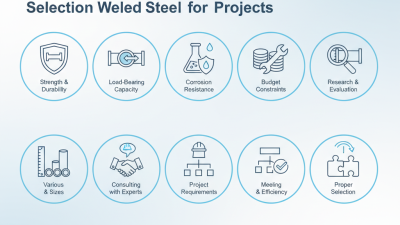
Choosing the right welded steel pipe for your projects involves careful consideration of several factors. First, you should evaluate the application of the pipe. The environment in which the pipe will be used dictates material specifications. For instance, pipes used in high-pressure situations must meet stringent guidelines. Evaluating pressure ratings and temperature ranges is essential.
Material types are also crucial. Different grades of steel offer varying levels of strength and corrosion resistance. Carbon steel pipes are commonly used for structural purposes, while stainless steel provides better durability in corrosive environments. It's vital to understand the trade-offs between cost and performance. Sometimes, cheaper options may lead to higher maintenance costs later.
Lastly, inspect the welding process. The quality of the weld can impact the pipe's overall integrity. Poorly welded pipes may fail under stress. Look for certifications that ensure adherence to industry standards. Additionally, seek guidance from experts when in doubt. Their knowledge can help you avoid costly mistakes. Identifying these factors can lead to better project outcomes.
Types of Welded Steel Pipe and Their Applications
When selecting welded steel pipes for projects, knowing their types and applications is key. Various welded steel pipes serve different purposes. For example, ERW (Electric Resistance Welded) pipes are ideal for low-pressure applications. They are commonly used in oil and gas industries.
Another type is LSAW (Longitudinal Submerged Arc Welded) pipes, known for their strength. These are often utilized in high-pressure systems. Their robust design makes them suitable for transportation of natural gas. Additionally, SSAW (Spiral Submerged Arc Welded) pipes are advantageous for large-diameter applications. They offer flexibility for various infrastructure projects.
Tips: Always consider the environment of the application. Corrosion resistance is vital in harsh conditions. Investigate various coating options to enhance durability. Proper selection saves costs in the long run. Evaluate the pipeline dimensions and pressure rating before making a decision. Don't forget to consult industry experts if unsure about specifications. Their insights can guide toward better choices.
Key Specifications and Standards for Welded Steel Pipe
When selecting welded steel pipes, understanding key specifications is crucial. Various standards dictate quality and performance. For instance, the American Society for Testing and Materials (ASTM) sets guidelines for pipe dimensions, thickness, and material properties. Familiarizing yourself with ASTM standards helps ensure compliance and selection of suitable products.
The diameter and wall thickness are critical considerations in your projects. These specifications impact the pipe's strength and pressure rating. A thinner wall may save costs but can lead to failures. It’s essential to balance thickness and budget while assessing operational needs. Pay attention to the type of steel used; different alloys can enhance durability and resistance to corrosion.
Lastly, the welding process also matters. Different methods like TIG or MIG welding can affect the integrity of the pipe. Inspect the weld quality to prevent issues in the future. While it’s easy to overlook these details, they are vital for project longevity. Conduct thorough research to identify what works best in your context. Making informed choices will set a solid foundation for your projects.
Common Mistakes to Avoid When Choosing Welded Steel Pipe
Choosing the right welded steel pipe is critical for your projects. However, many make common mistakes that can lead to costly issues. A prevalent error is underestimating the importance of material specifications. Not all welded steel pipes have the same durability or strength. Thus, understanding the exact requirements for your project is essential.
Another common pitfall is neglecting to consider the environment where the pipe will be used. For instance, pipes in corrosive environments require specific coatings or materials. Failing to evaluate these factors can result in premature failures. Additionally, ignoring the size and wall thickness can affect the pipe’s performance.
It's easy to overlook these details in the selection process. However, taking the time to research and reflect on your choices can save you headaches later. Work closely with suppliers to discuss your needs. Don't hesitate to ask questions. This proactive approach ensures you choose the best welded steel pipe for your project.
2026 How to Choose the Best Welded Steel Pipe for Your Projects? - Common Mistakes to Avoid When Choosing Welded Steel Pipe
| Dimension |
Material Grade |
Pipe Thickness (mm) |
Outer Diameter (mm) |
Length (m) |
Common Applications |
| API 5L |
GR B |
5 |
219 |
6 |
Oil and Gas Pipelines |
| ASTM A53 |
Grade A |
4 |
114 |
6 |
Structural Support |
| EN 10219 |
S235 |
3 |
100 |
12 |
Construction |
| API 5CT |
J55 |
6 |
89 |
9 |
Casing for Oil Wells |
| ISO 3183 |
L245 |
5 |
273 |
12 |
Water Supply |
Maintenance and Longevity Considerations for Welded Steel Pipe
When choosing welded steel pipe for a project, maintenance and longevity are paramount. Regular inspection is crucial. Look for signs of corrosion, which can weaken the integrity of the pipe over time. Some factors that affect corrosion include exposure to moisture, chemicals, and the environment. Understanding these elements is vital for long-term durability.
Proper installation also plays a role in longevity. Misalignment during installation can lead to stress points. These stress points may cause premature failure. Ensuring proper support and spacing can mitigate such risks. Another consideration is the impact of external loads. Over time, heavy loads can cause deformation. This deformation may lead to leaks and costly repairs.
Choosing the right protective coating can enhance the lifespan of welded steel pipes. However, applying the coating correctly requires skilled labor. It is not enough to buy the best materials. Poor application can negate the benefits of high-quality coatings. Regular maintenance, including timely repairs, can further prolong the life of welded steel pipes, ensuring that they remain functional for many years.

 Angle Steel
 Channel Steel
 Universal Beam (l-Beam)
 H-Beam Steel
 Galvalume Steel Coil
 Galvalume Steel Sheet
 Galvanized Steel Sheet
 Color Coated Plate
 Stainless Steel Bar
 Stainless Steel Pipe
 Steel Bar
 Wire Rope
 Carbon Steel Pipe
 Carbon Steel Plate
 Aluminum Plate
 Aluminum Coil
 Aluminum Pipe
 Aluminum Bar
 Magnesium Ingot
 Fasteners